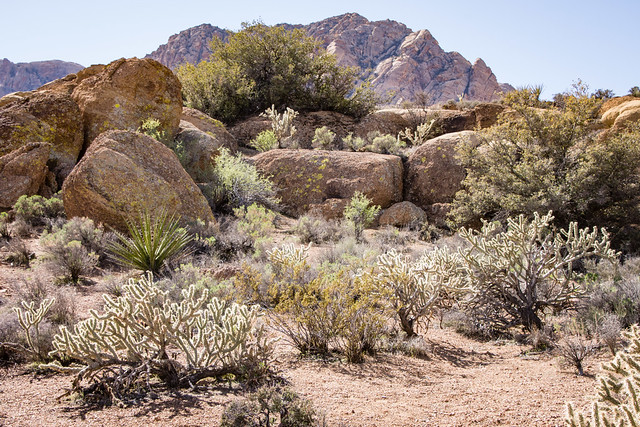
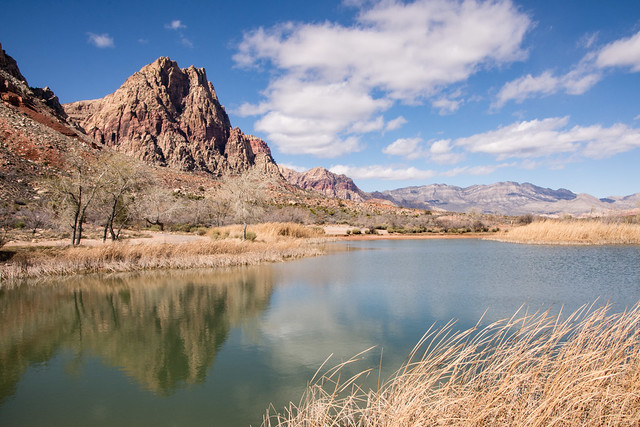
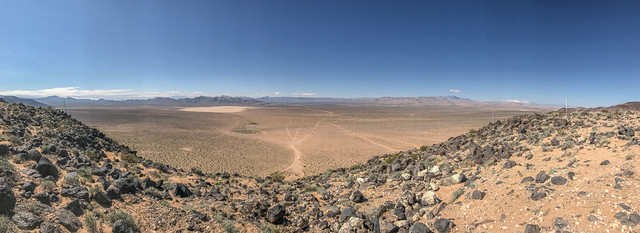
Spring Mountain Ranch State Park is near Red Rocks (where we climb) but we'd never stopped there before this trip. It's small but it has some interesting history (past owners include Howard Hughes). We also enjoyed the short walk through the park.
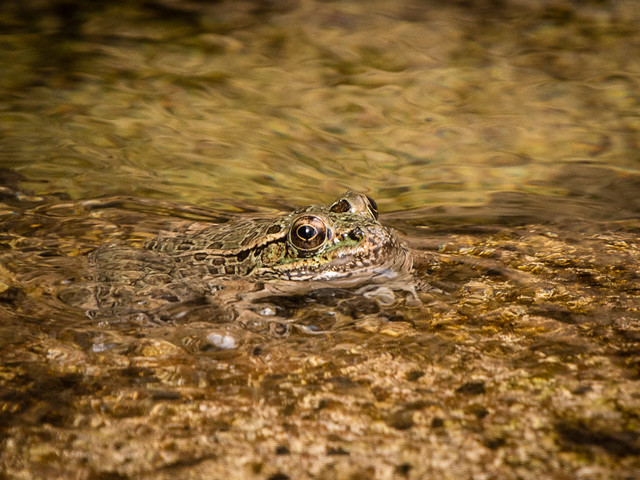
One of the things that made the ranch sought after was that it has water from a number of springs. The lake is artificial but is still a treat in the desert.
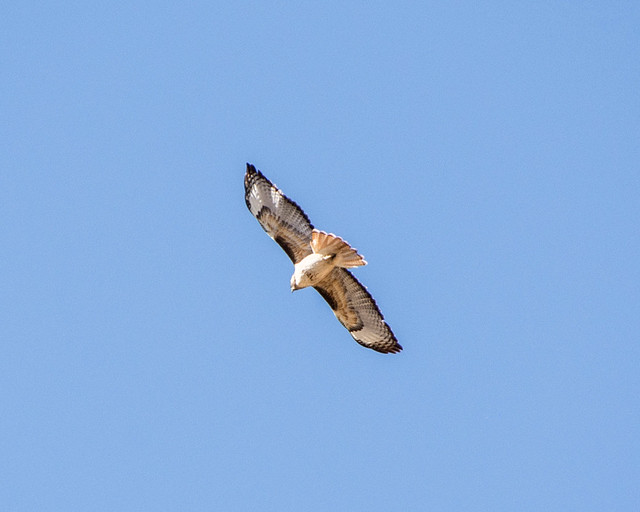
A hawk circled overhead, too high for good photos but I tried with the lens I had.
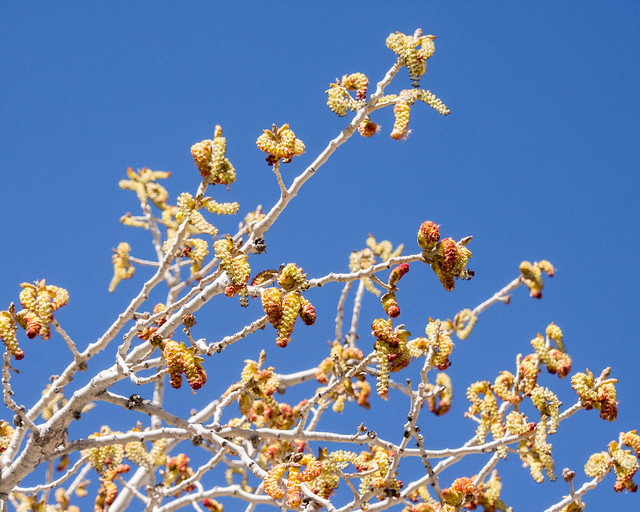
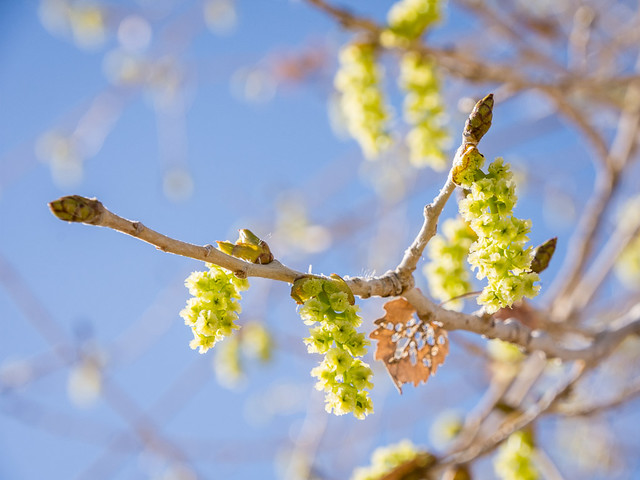
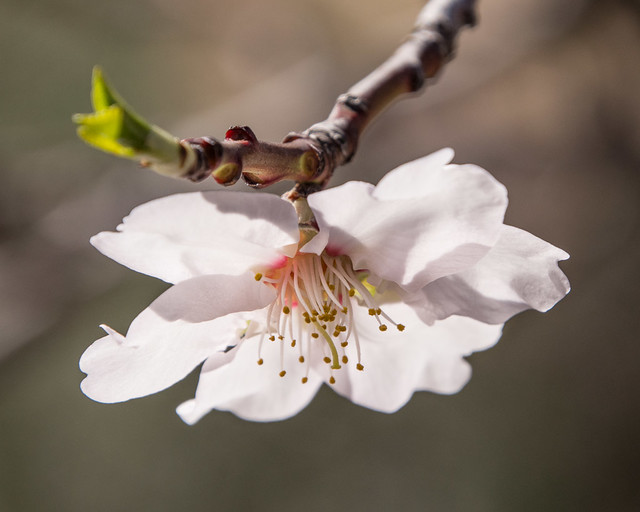
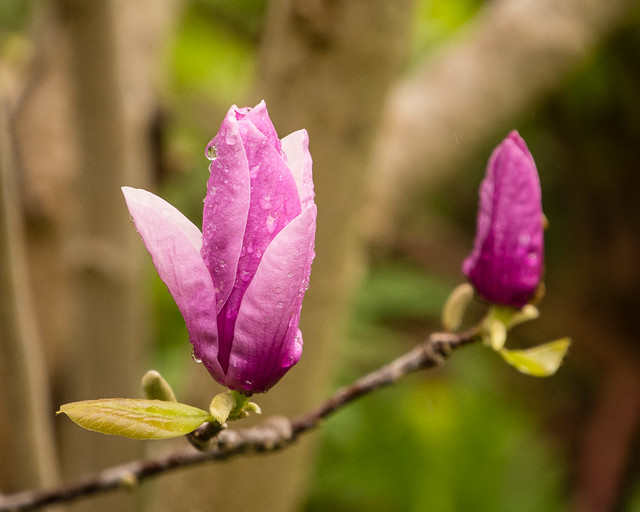
Some of the trees were starting to flower. (Ones that flower before they get leaves.) I love spring time!
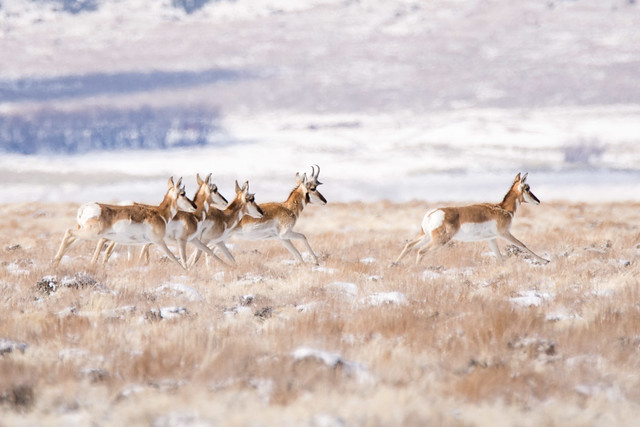
Pronghorn are one of my favorite animals. What's not to like about a cute animal that's also the fastest land animal in the western hemisphere and is related to giraffes. They have an extensive range from Baja Mexico to Saskatchewan. They are one of the rare conservation successes, at one time down to approximately 12,000 but now back up to over 500,000, although the Baja and Sonoran subspecies are almost extinct Unlike deer, pronghorn have trouble jumping over fences. Instead they go under/through fences. It helps if the bottom wire is barbless or removed.
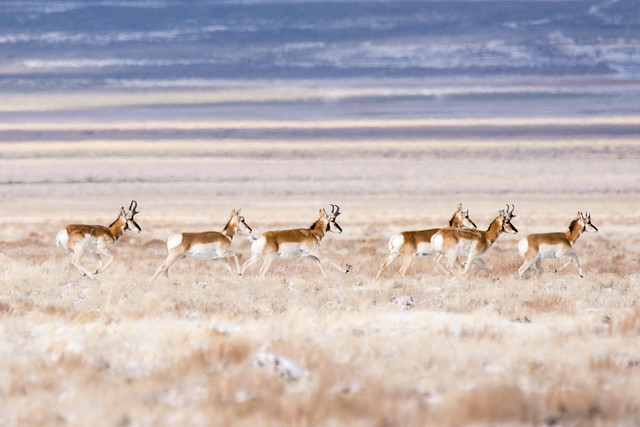
Driving north on Highway 93 from Ely (bypassing the endless metropolis of Salt Lake City) we passed a large group of pronghorn lying in a field quite close to the road. Shelley was surprised I didn't stop, but I didn't have my camera ready and was already past by the time I recognized them. But I started having second thoughts so when I found a turn off I pulled over and got my camera and long lens out. Coincidentally, there were a few pronghorn across from where we stopped so I photographed them first. But there were only a few and they were quite far from the road. Still, one of them (a male) stood up and watched me closely.
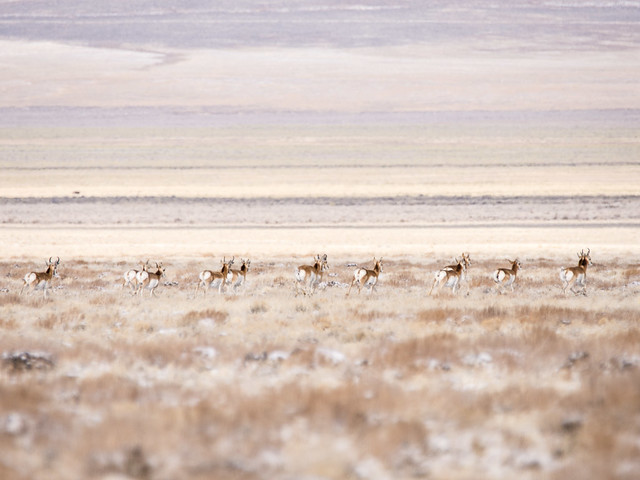
I turned the car around and drove back to the large group. Of course, as soon as I stopped they started to get up and move away. Like hawks, they will sit peacefully if you drive by at 100 km/hr, but if you stop they get skittish. At least they had the courtesy to run somewhat parallel to the road. Usually they'd run directly away from you and all you get are butt shots.
They were a long way from the road and moving, and I was handholding a 900mm equivalent lens, so the photos aren't as sharp as I'd like. But it's still nice to get some shots of them.
This is one of the reasons I prefer not to travel on the interstates. You might see some pronghorn from the interstate, but stopping and turning around would be next to impossible. I enjoy Highway 93 from Las Vegas to Twin Falls, with it's wide valleys and low mountains. Of course, in bad winter conditions you are probably better on the interstates. We ran into a snow storm just before Twin Falls and followed a snow plow past several people in the ditch. Thankfully it was only a short part of our drive.
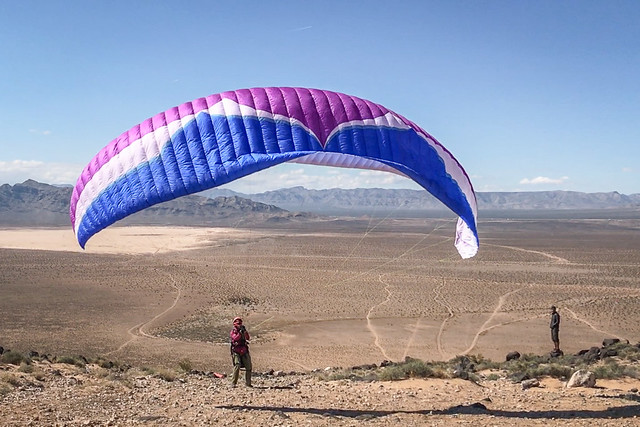
After the rainy weather in Santa Barbara our best bet for good weather looked like Las Vegas. Usually we come to Las Vegas to climb at Red Rocks. This was our first trip since we learned to paraglide and we were keen to check out the local sites. Jean Ridge looked like the obvious choice - close to town and doable on our own without a second vehicle to shuttle. Driving to the top required a four wheel drive vehicle, but we could get to the bottom in a regular car and then hike up. We tried to contact the local pilots but didn't get any response.
The first day we were the only ones there. We hiked up to the launch about two thirds of the way up the hill where the wind was about 12 mph, no problem to launch. It was forecast to get stronger later so we didn't wait around. Shelley launched first without problems. She went up right away but moved out front and seemed to be doing ok. I launched shortly after. I was more concerned about staying up but the problem turned out to be the opposite - I was soon well over launch and unable to penetrate. Even on full speed bar I slowly drifted back behind launch. On the positive side the air was smooth with no turbulence. I debated whether to turn and run downwind but I wasn't sure what was back there. I landed (if you can call it that) going slowly backwards. If I'd been thinking I would have killed the wing with the rears as soon as I landed. But I wasn't thinking that clearly. I was too busy cursing myself for ending up in this situation. Luckily there wasn't much rotor (turbulence) since the slope was rounded and not too steep and there was a big plateau on top. It was hard to resist the instinct to flare (pull the brakes) but that's not what you want to do when you're landing backwards. I didn't even attempt to look behind me and steer. Luckily there was only scattered bushes and sand. Since I hadn't killed the wing and there was (obviously) strong wind, I got dragged until the lines caught in the bushes. Thankfully there was no cactus here! Every time I'd untangle some lines the wind would grab the wing and wrap it around a new bush. Eventually I got it free and gathered up. I was about half a kilometer behind launch and then had to walk down the hill. Holding my bunched up wing I couldn't see my feet and the stumbles on the walk down were more painful than the landing!
In hindsight, I obviously should have gone to the top of the hill and checked the wind up there. I knew it would be stronger up top, but didn't think it would be that much stronger. If we could have contacted the locals and got a site briefing that probably would have helped too.
The next time we drove out, the wind was the same at the bottom (about 12 mph) so we hiked up to the top without our gliders. Sure enough it was too strong at the top (over 20 mph). No flying that day.
Our third attempt was on Saturday and there were actually other people flying. Winds were light and they weren't staying up long, but at least we could fly. There wasn't enough wind to ridge soar but there were some small thermals to stretch the flights out.
As we were leaving some other pilots showed up and offered us a ride to the top for another flight. We decided not to go since conditions were getting a little squirrelly. I felt a little guilty about passing up a flight, but it turned out they weren't able to fly due to the winds, so I guess we made the right call.
The next day conditions looked similar (i.e. light and unpredictable). Although it was still the weekend there was no one else at the bottom of the hill when we arrived. But a few minutes later, a truck pulled up. They opened the window and asked "You here to shoot?". We said, "No, we're here to fly". It turns out this is a favorite site for shooting. They can get up to a mile away from the hill. We countered by saying it was a favorite site for paragliding. Eventually they conceded that we'd got there first. Every day we flew here we could hear constant gun fire in the area. A bit disconcerting!
We also got visited by the dirt bikes and ATV's. One time I was coming in to land and was lined up to land on the road right beside the car. Three dirt bikes roared up and stopped to watch me land. The only problem was that they stopped right where I was about to land. I assumed they would clue in and move, but no such luck. I had to shift to the side and land in the bushes instead. They called out "nice job!" and roared away.
Another dirt biker showed up as we were packing up. He asked what we were doing and we explained we were flying off the mountain. But he was more impressed with us getting our Prius up here. (The road is marginal for a car with the clearance of a skateboard!)
Overall I've been pretty happy with my launches this trip. But I had a sketchy launch on my first flight that day. The wind was shifting directions and strength and my wing didn't come up straight. I lowered it almost to the ground, and brought it back up, straight this time. I turned and ran, but the wing again got off to the side. I followed it and steered. You can see in my video that I turned to look at the low wing tip, decided it wasn't too bad and kept going. I got off fine, but the corrections cost me some speed and I barely cleared the boulders below launch. It's a fine line between what you should try to correct and what you should abort and start over.
Jean Ridge is normally a ridge soaring site but unfortunately we didn't get soarable conditions. The wind was either too strong to paraglide or too weak to soar. We did get enough small thermals to stretch out a few flights to about 15 minutes, not bad for a 400 foot hill. One flight I managed to catch a thermal to about 300 feet above launch, but that was the best I did.
Luckily the one time this trip that I actually videoed my flight was the longest flight here. This is a few highlights. For more viewpoints and much more polish see Shelley's video.
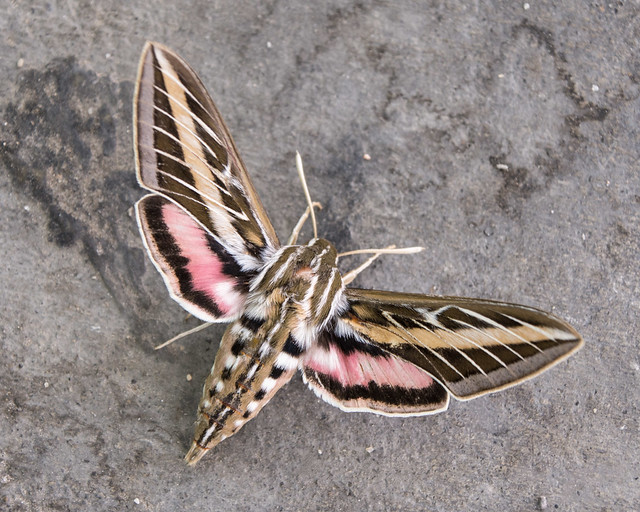
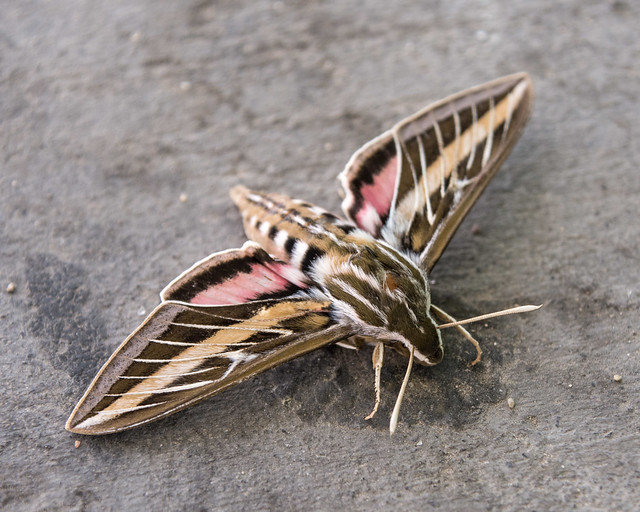
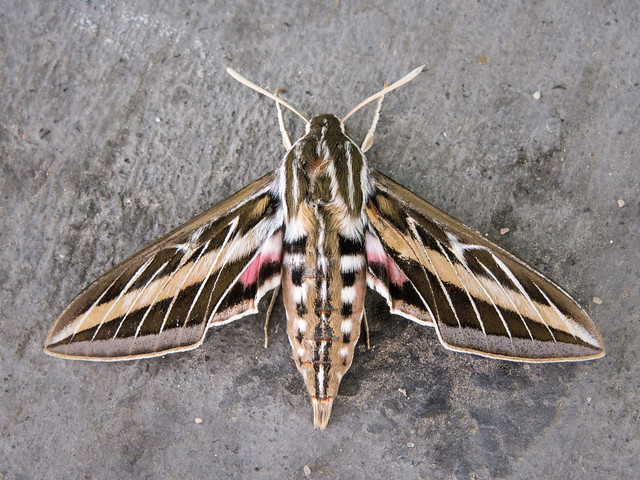
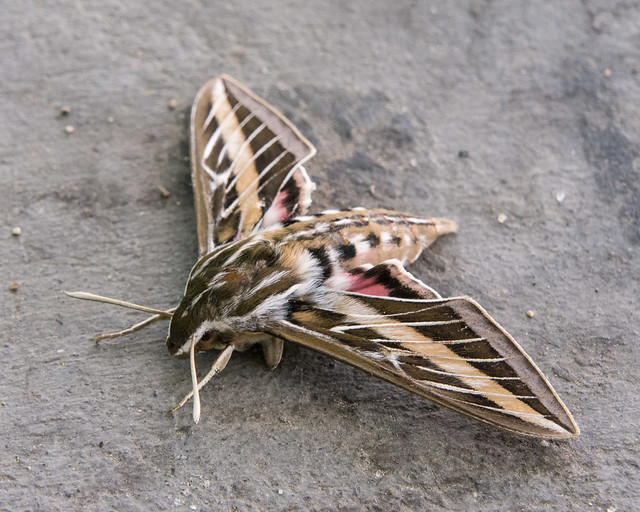
Filling up with gas in Alamo, Nevada I happened to look down and saw a moth half hiding under the gas pump. Of course, I grabbed my camera :-) It took a little nudging to get the moth out from under the pump. It was still alive but not very active. Looking it up later it appears to be a White-lined Sphinx Moth, also known as a Hummingbird Moth. (But not the same as the Hummingbird Hawk-Moth I saw in Europe.) They are listed as abundant but I don't recall seeing one before, or at least not well enough to identify. They have a large range extending from Central America to southern Canada.
I suspect this one was attracted to the lights of the gas station at night.
The pink part only shows when the wings are open. For some reason this moth was opening its wings, perhaps wanting to fly away, although it didn't seem healthy enough for that.
Nice to encounter a piece of nature even in as mundane a place as a gas station.
One of our favorite places in Las Vegas is Springs Preserve. Unlike most people, we stay on the edge of town near Red Rocks (where we climb) and don't visit the strip or go shopping. If you're careful where you go and squint a little, Vegas can almost appear to be a "normal" city (as far as there is such a thing).
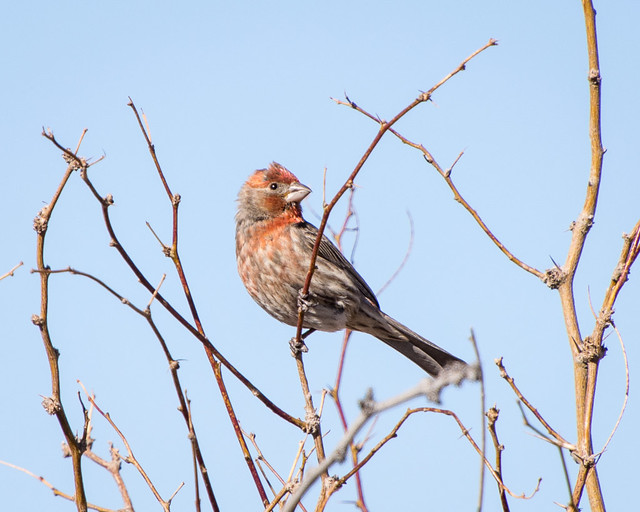
It seems a little artificial to go to Springs Preserve instead of just visiting the actual desert but the advantage is that there are a range of habitats and plants concentrated in a small area. And usually birds attracted by the water and flowers, although often just common ones like this House Finch.
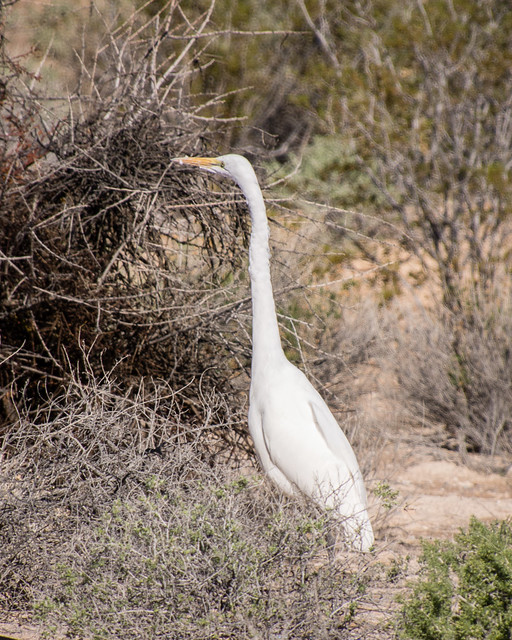
I was surprised to see this Great Egret out in the desert, usually they are by the water. Maybe he was hunting lizards.
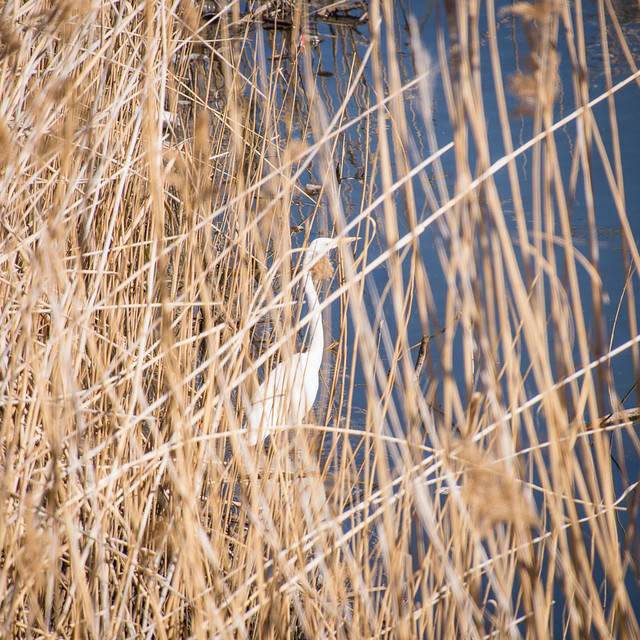
Later we saw (the same?) one in a more expected spot by the water.
I didn't get any photos of them, but we saw a couple of cormorants fly in and land on the water. Later we saw them take off. They are not the most elegant fliers (better underwater) and they always struggle a bit to take off. But this time, one of them crashed into a bush just past the water! It reappeared and waddled down the beach and back into the water. If it had been me, I would have been hoping no one had seen it happen!
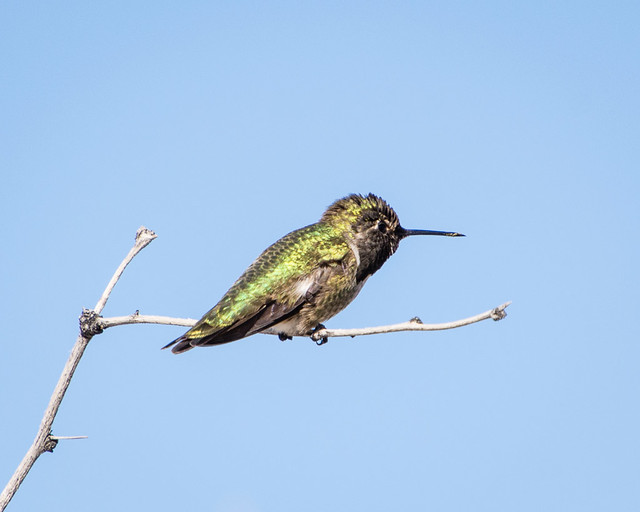
As usual, there were a few hummingbirds around, although not many flowers for them. I couldn't get very close so didn't get great photos.
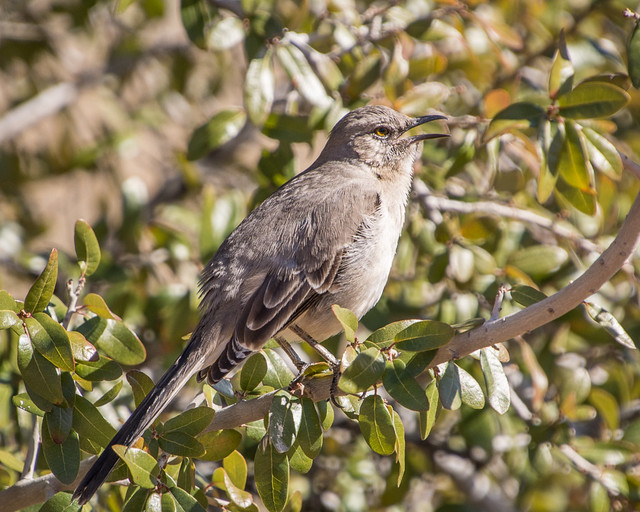
The most common birds on this visit were Northern Mockingbirds. This one was singing up a storm and let us approach quite close.
Of course, I enjoy the plants as well as the birds. It's a treat to see spring so early in the year (relative to Saskatchewan). Some of the trees were flowering:
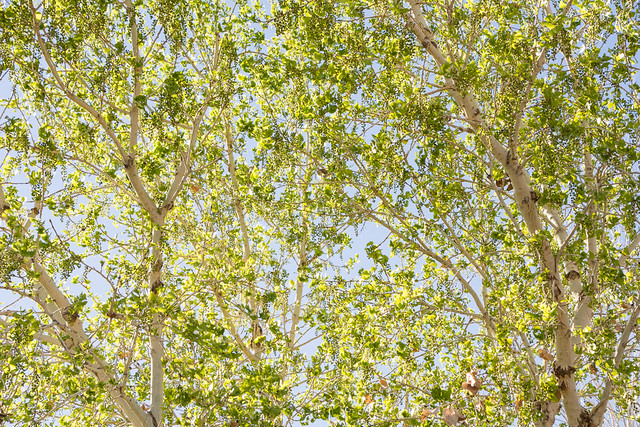
And some of the leaves were coming out. I always love the color of new leaves on the trees:
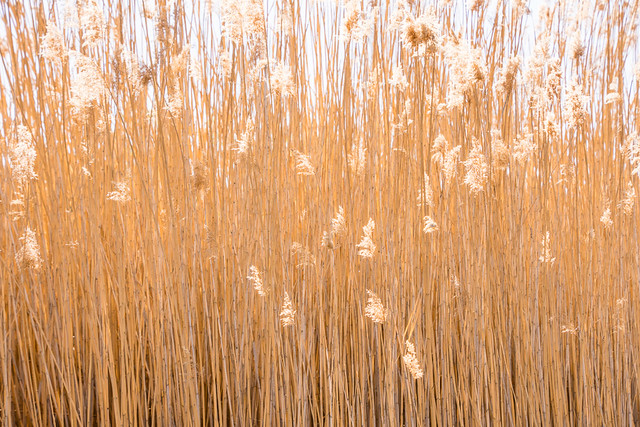
And tall grasses backlit by the sun:
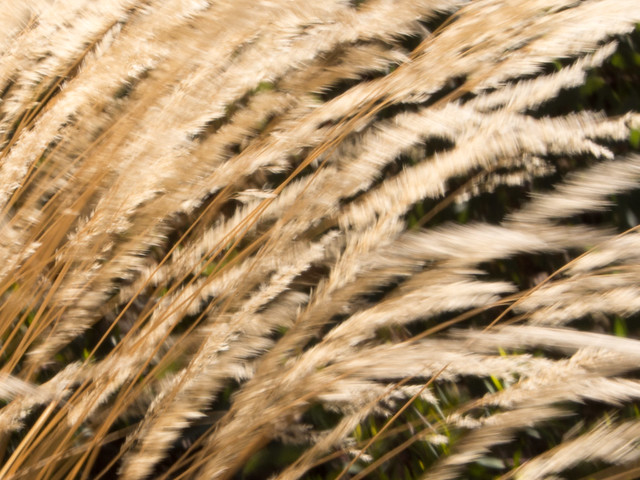
I got frustrated because these ones kept blowing in the wind when I was trying to photograph them. So I switched to a longer exposure and embraced the blur :-)
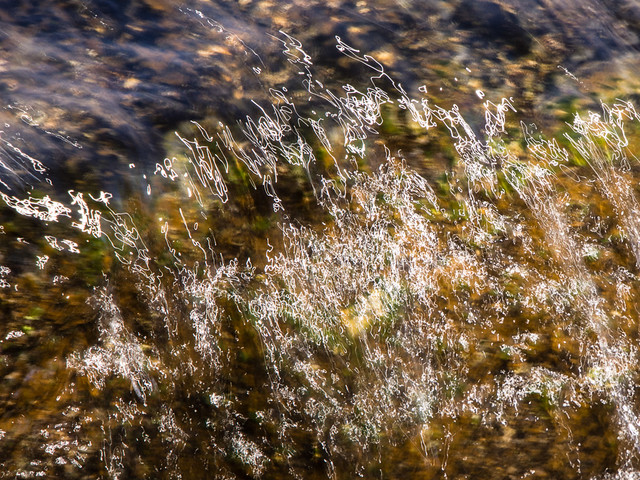
One of the reasons for the plants and animals here is the water. I'm always fascinated how the reflection of the sun traces lines as the water moves (with a long exposure, in this case 1/30 of a second).
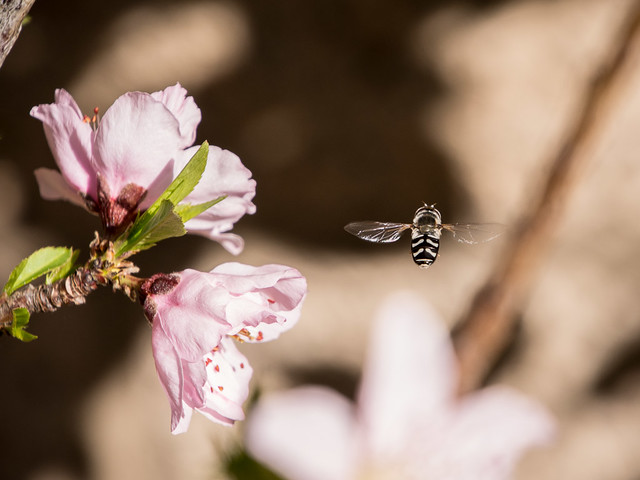
Normally I wouldn't even attempt to photograph hovering insects but this one was surprisingly cooperative. Not sure what kind it is.
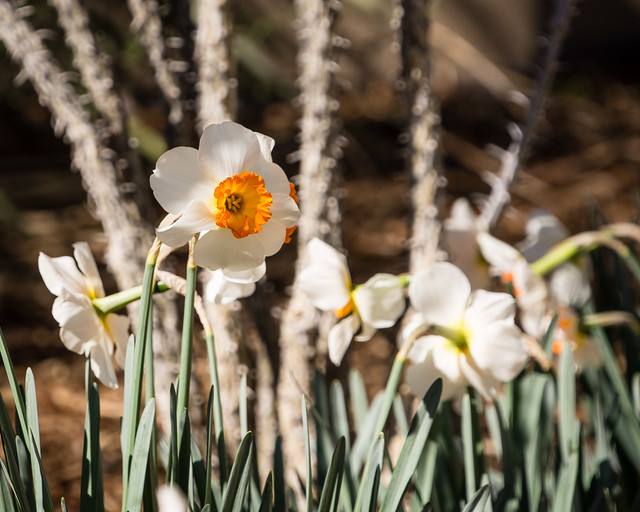
Funny to see domestic flowers beside the ocotillo.
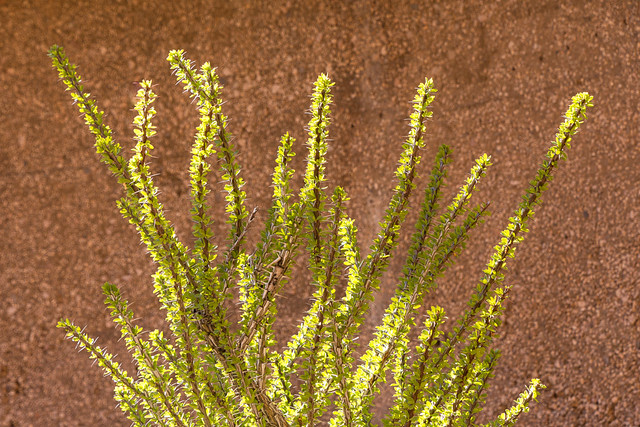
Some of the ocotillos had lots of leaves - must be getting water. (In the desert they are bare sticks most of the year.)
The Santa Barbara Zoo is one of my favorite small zoos. I'm always happy to spend a few hours wandering there. Apart from the animals, the grounds are full of trees and plants.
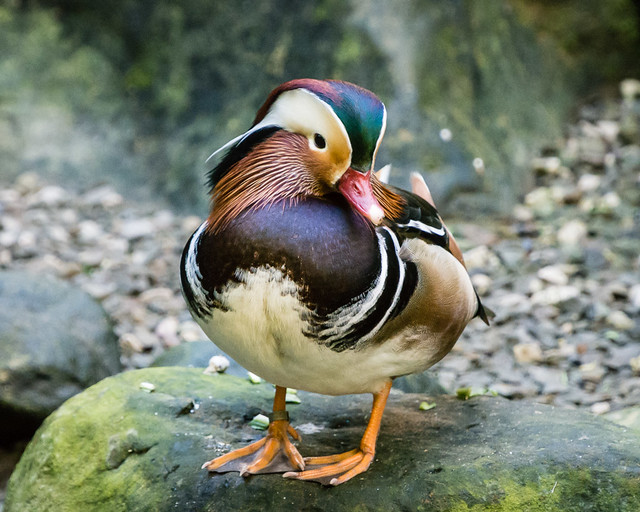
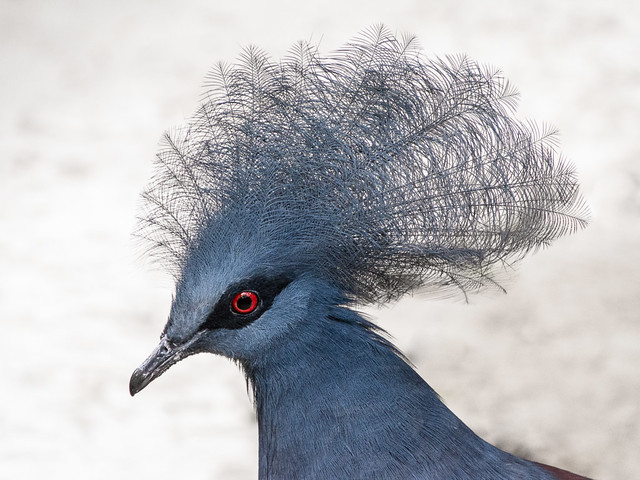
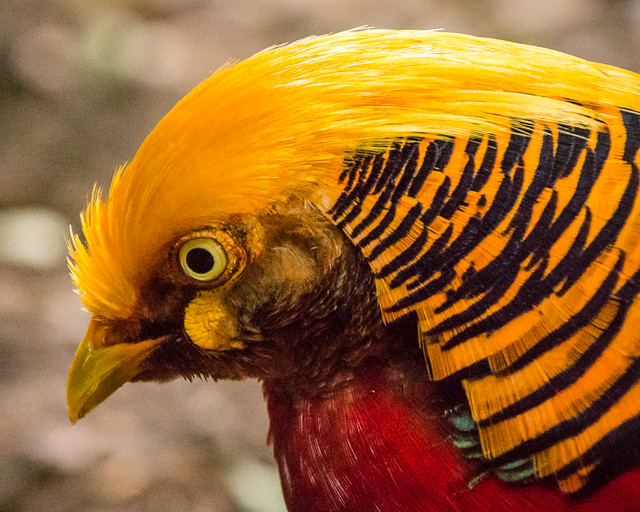
I always appreciate opportunities to photograph the animals without bars or dirty windows in the way. Walk in aviaries are good. Sometimes the birds are too good at hiding, but not these flashy Mandarin ducks.
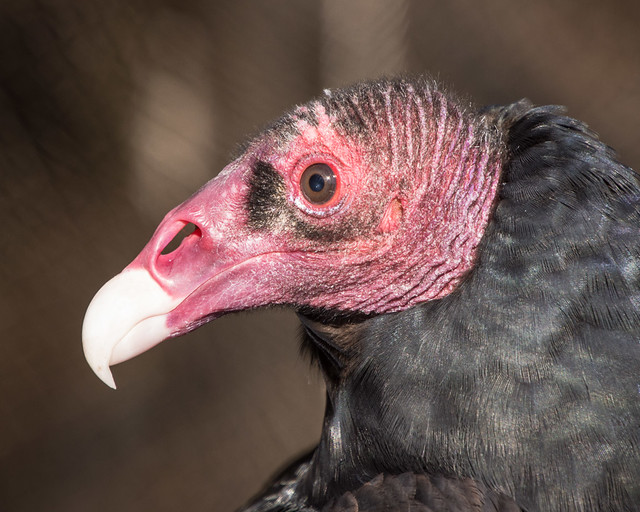
Most people probably wouldn't find turkey vultures attractive, but it's interesting to see them close up, rather than just soaring in the distance. This one was close to the fence where I could get some good photos.
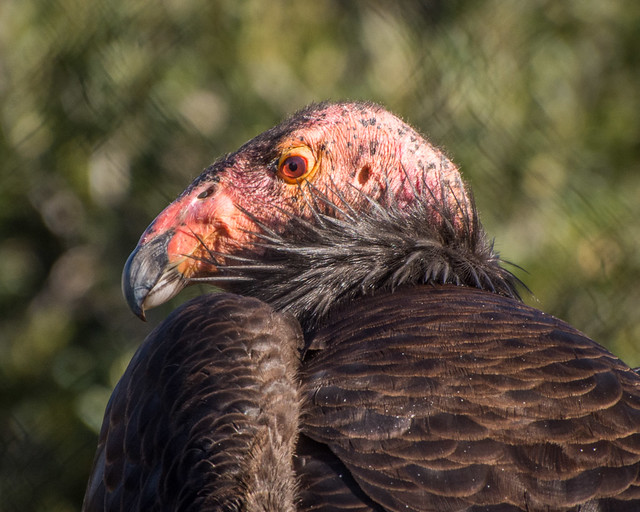
The California condors are somewhat similar to the Turkey vultures, but much bigger.
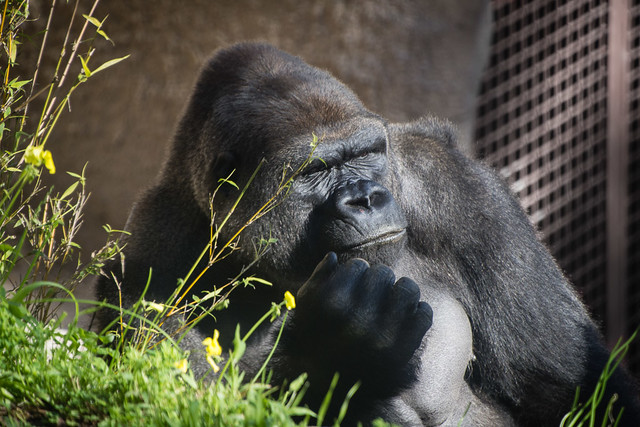
I like to catch the animals showing "personality". This gorilla is looking thoughtful.
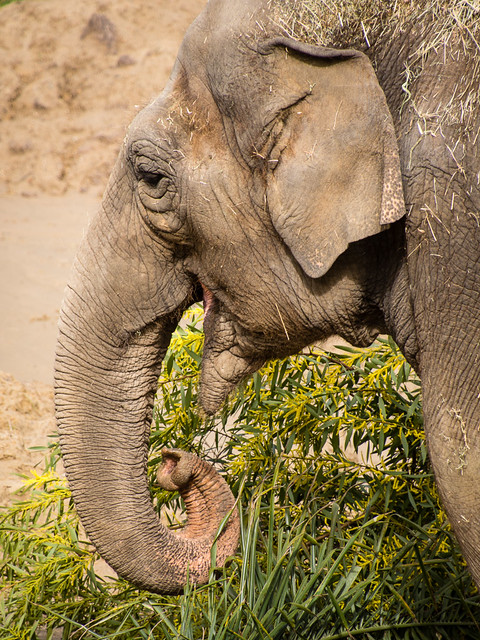
One of the elephants was happily eating, despite not having any teeth left to chew with.
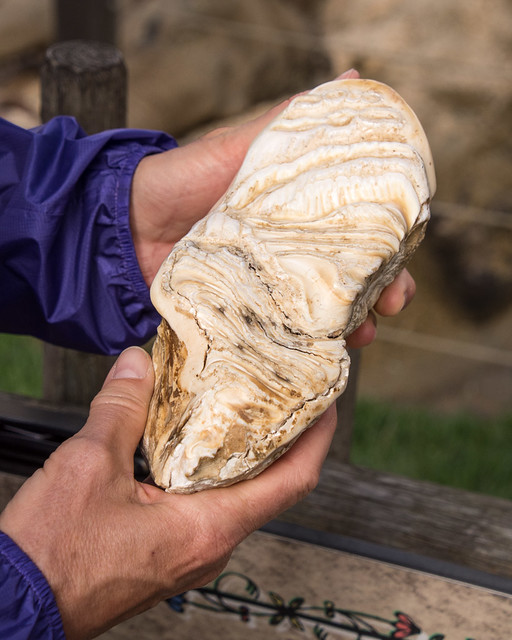
Here's one of the teeth she lost:
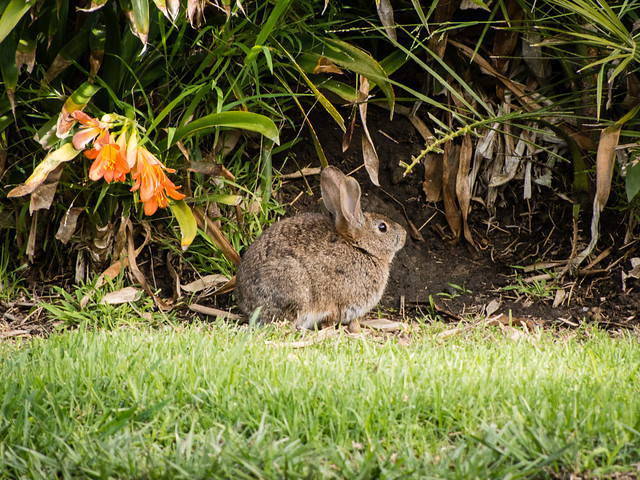
Most zoos have some unofficial residents, like this cottontail rabbit:
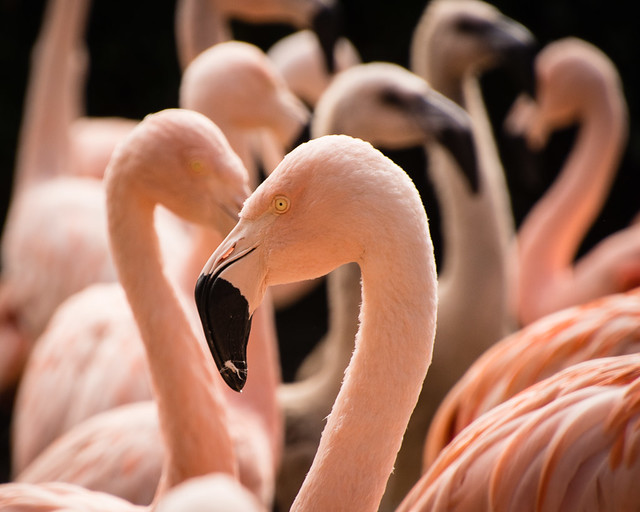
The keeper was cleaning their enclosures so the flamingoes had moved closer to us. There were several juveniles (the gray ones in the background).
We loved the Santa Barbara Botanic Garden. I'm surprised we hadn't made it here on previous visits. Some of the gardens were closed due to the torrential rain but there was still plenty to see.
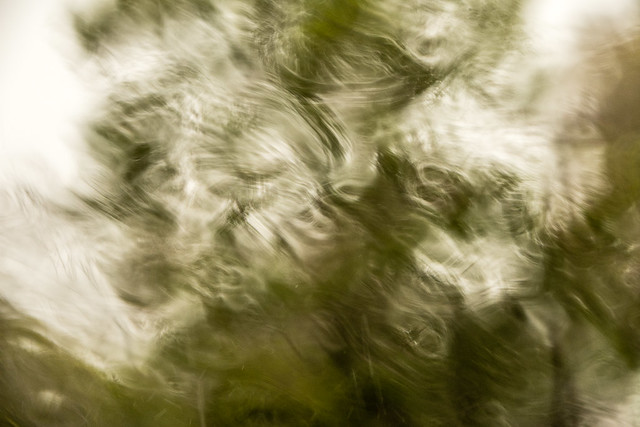
Even the view through a rainy car window can be interesting :-)
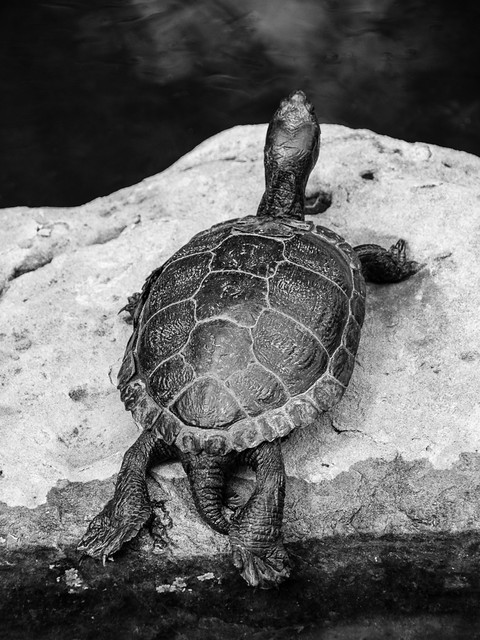
A small pond was inhabited by several turtles:
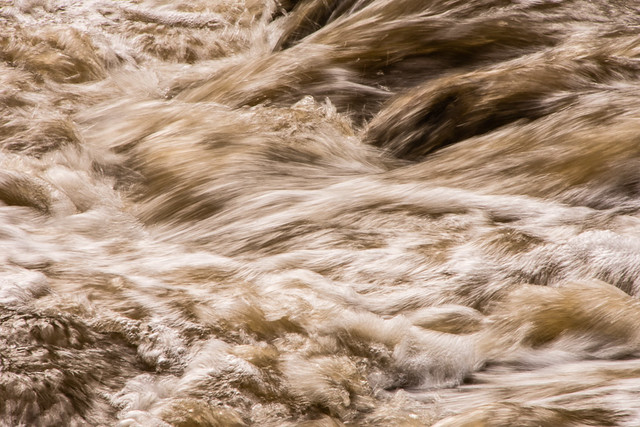
The creek was still strong and muddy from the recent rain:
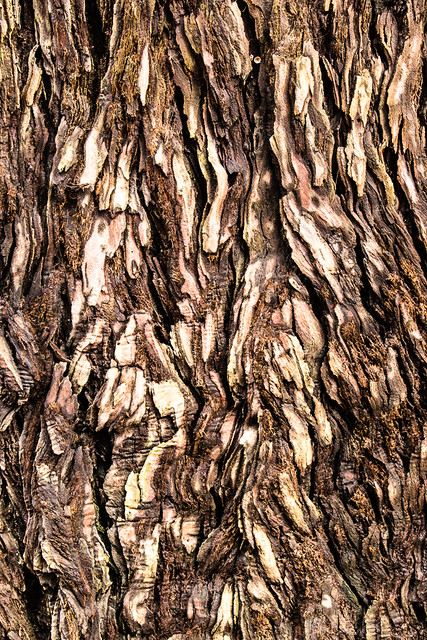
The garden even has a small grove of redwood trees. The wet bark made interesting patterns:
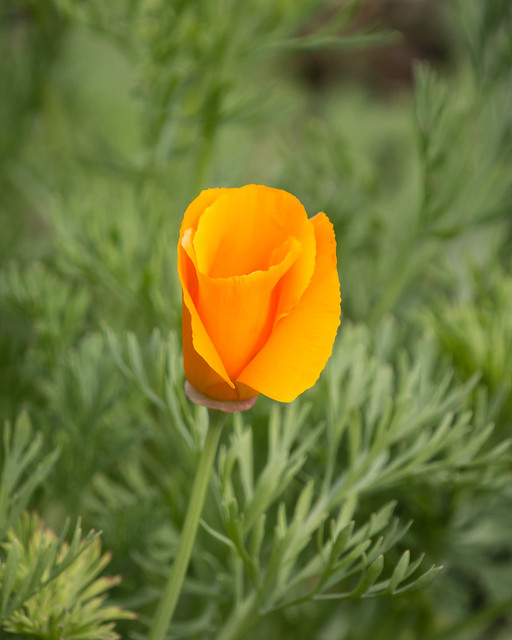
We saw a few California poppies on the local hillsides but I suspect it's still early for them.
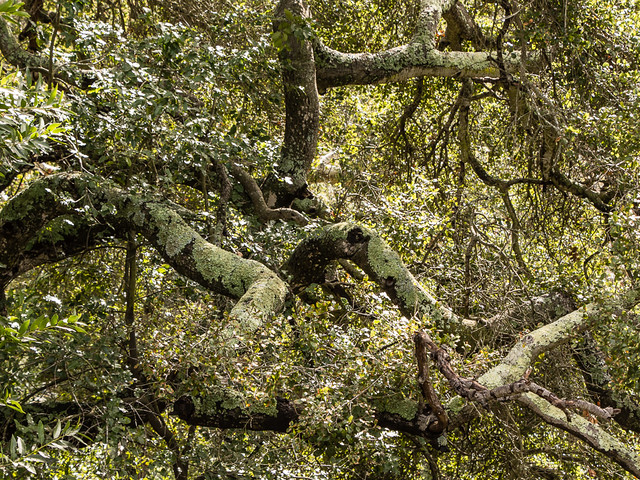
I enjoyed just looking at the trees in the garden.
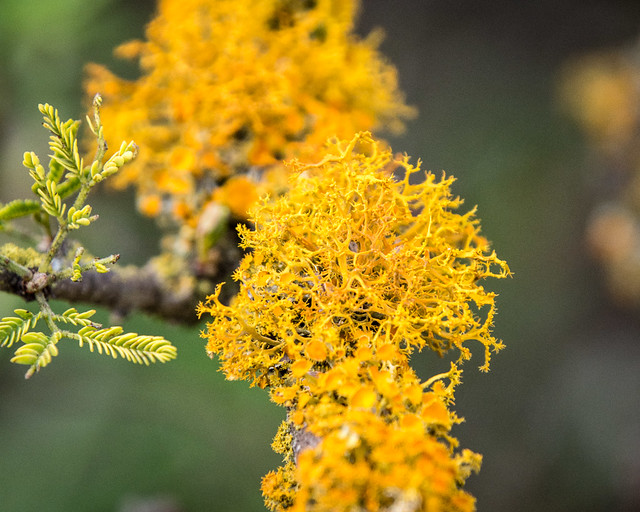
Some of the trees had interesting lichens on them.
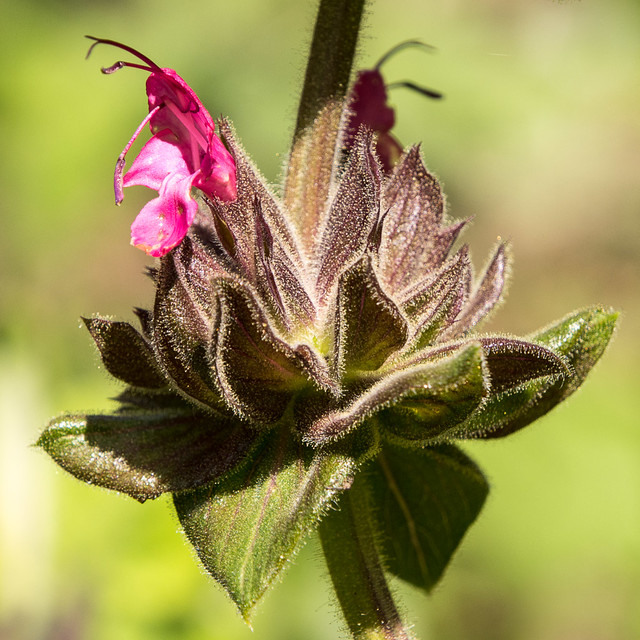
And there were some interesting flowers:
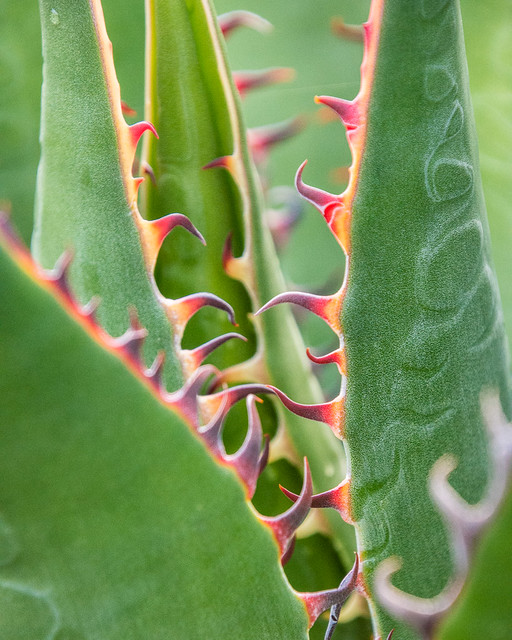
Even the agaves had some color:
If you're in the area and you like gardens, it's definitely worth a visit.
The Arizona-Sonora Desert Museum is one of our favorite spots in Tucson. Although it does have some indoor exhibits, most of it is spread out over a large outdoor natural area. It is popular but because there are miles of trails people get spread out and it doesn't seem crowded. (They even have a small aquarium, which seems incongruous at a "desert" museum!)
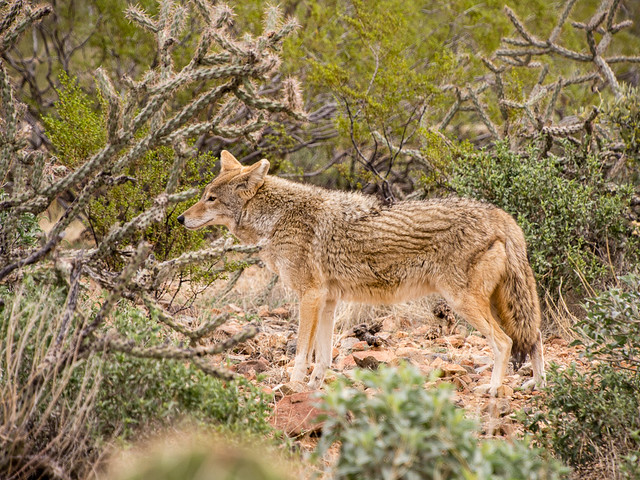
Many of the animals are in large natural looking areas with no obvious bars or fences, like the coyotes.
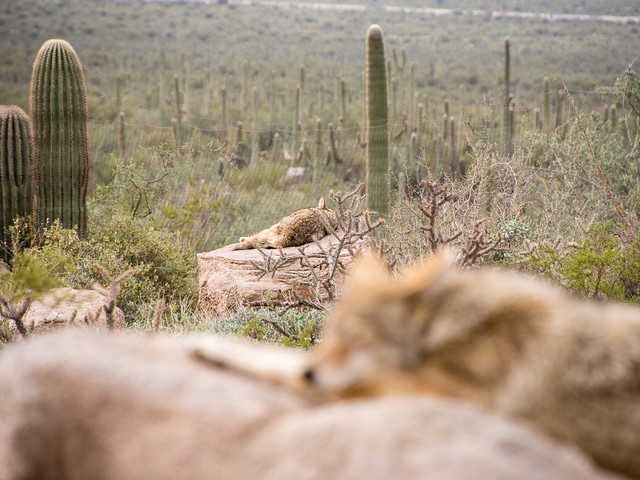
A bit later they were sleeping in the sun. (The fence is just visible in the background.)
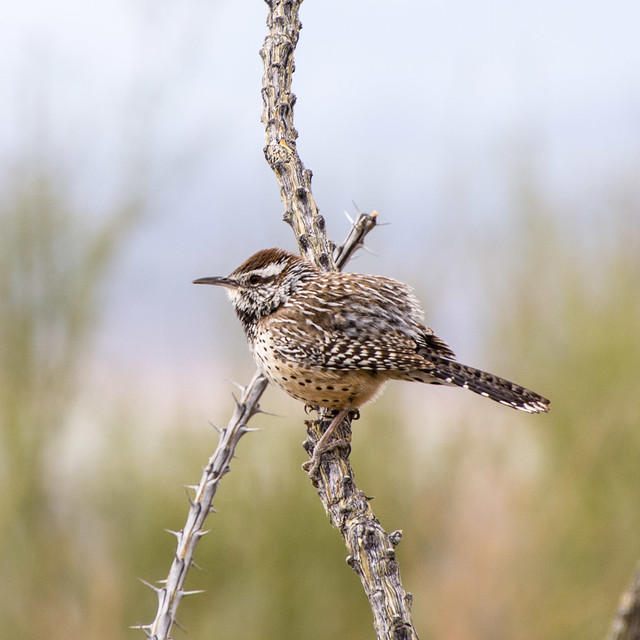
It wasn't the best time for bird watching, but I always enjoy the common cactus wrens.
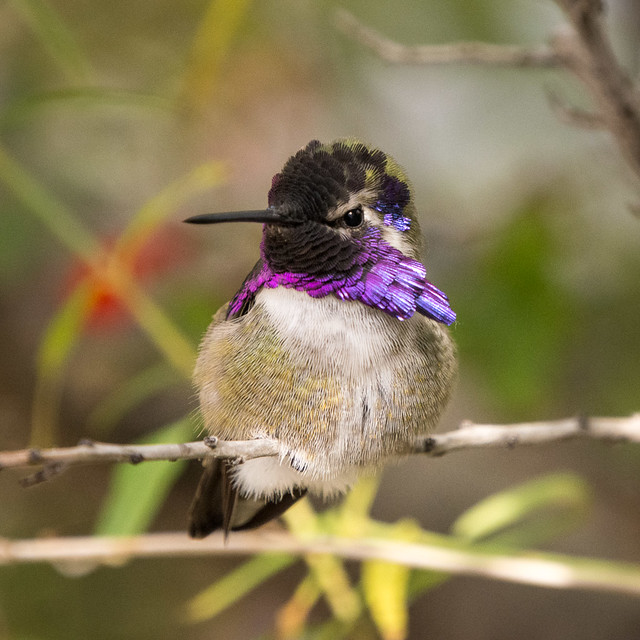
The hummingbirds in the aviary were a little easier to photograph.
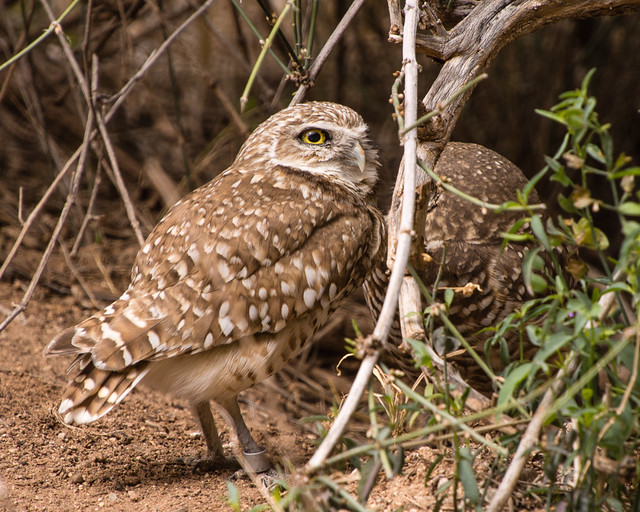
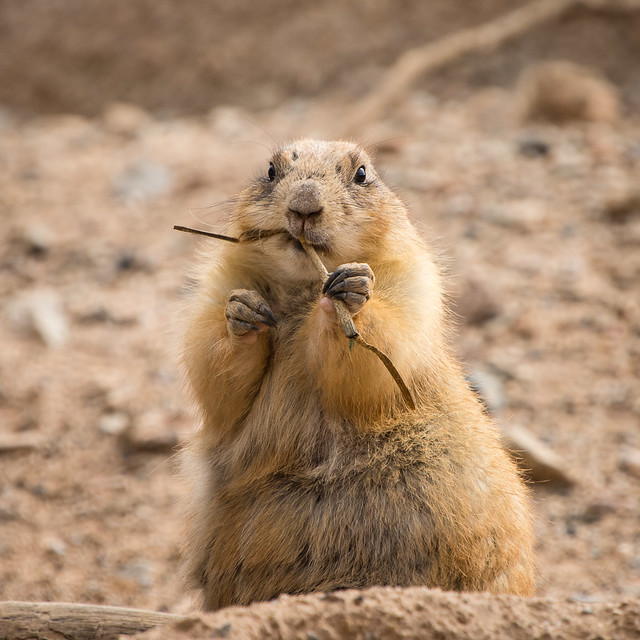
People here are always surprised that we have desert-like areas in Canada with some of the same wildlife, like Burrowing Owls and Prairie Dogs.
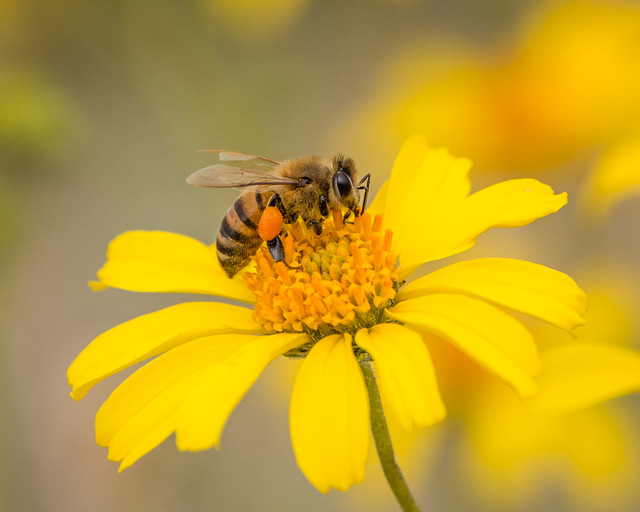
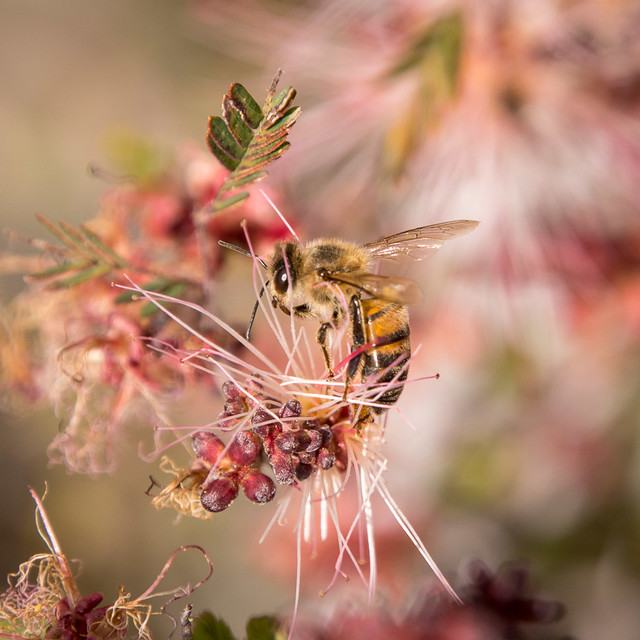
There were enough flowers out for the bees to be busy.
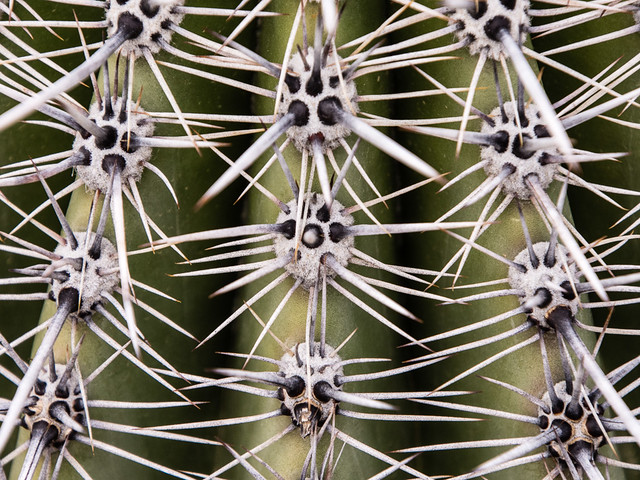
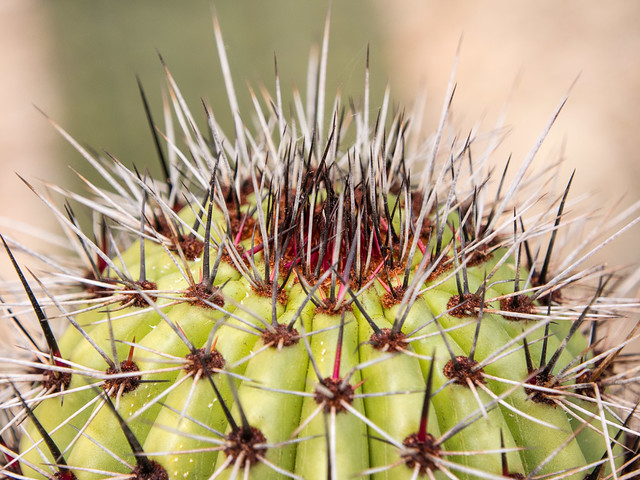
Of course, they have a lot more kinds of cactus here than we do in Canada.
And unlike most zoos, which only have crappy fast food, there is a nice restaurant where you can take a break from walking the trails.