Tuesday, October 01, 2019

Five Springs Again

In the first part of September I made another road trip through Montana and just into Wyoming to Five Springs in the Big Horn mountains. It's an obscure spot, but it's become one of my favorite spots for paragliding and hiking (although I wish it was a little closer!). This is another long one since I'm doing the whole trip in one post.

When I arrived in Havre I took a break in a park. I took a few shots of the fountain, mostly practicing with the new camera.

fountain

There were hollyhocks along the fence of a house backing onto the park.
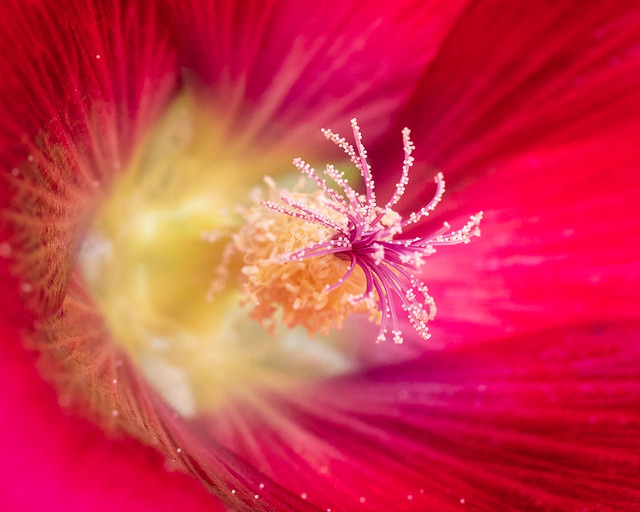
Hollyhock flower

The color attracted me, but I found the insects were also attracted.
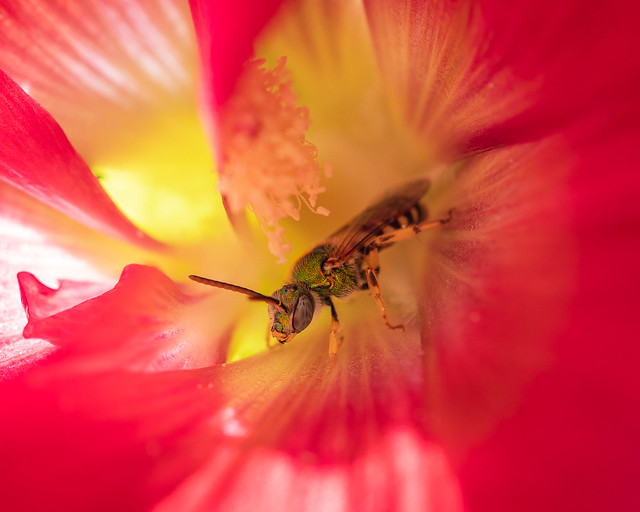
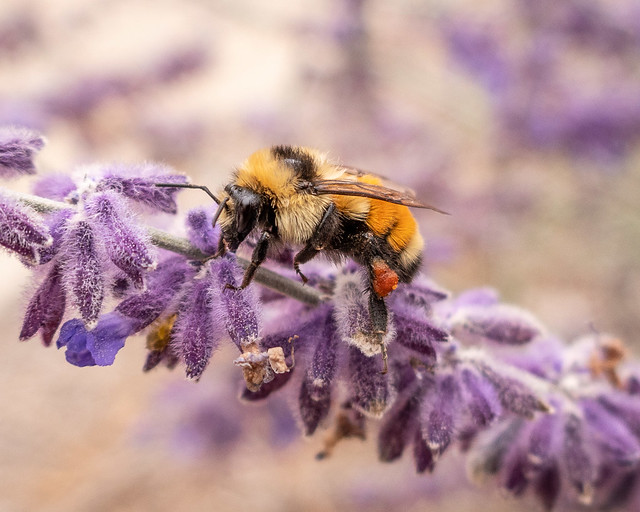
Striped sweat bee in a hollyhock flower

The owner of the house came out to see what I was doing and was quite suspicious and almost hostile until I explained I was just taking photographs of the flowers.

As usual I camped in the Bear Paw mountains (more hills) near Havre, and got in a couple of brief warmup paragliding flights off Otis peak. This Woodland Skipper butterfly seemed to like the color of my paraglider.

Woodland skipper

I saw quite a few pronghorn on the drive. (I also saw lots of hawks, but didn't manage any decent photos of them.)
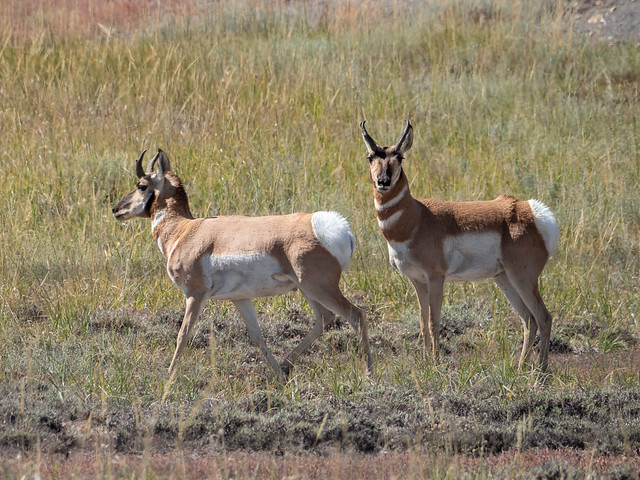
Pronghorn

Of course, I took lots of photographs. For some reason a lot of them were insects this trip. Partly that was because I had my new camera and macro lens.

When I arrived at Five Springs I stopped at the landing zone to put up my wind sock. I found this Mormon cricket beside the road. It was rapidly running away and I didn't have my camera out. I tried to herd it back towards the van, but it wouldn't cooperate. I was pretty sure if I left it to get my camera I'd never find it again. I ended up picking it up and holding it one hand while I got my camera and switched to the macro lens one handed. The long "tail" is its ovipositor (for laying eggs) so it's a female. We have them in Saskatchewan but I'd never seen one till last year.

Mormon cricket

A few days later I was sitting in the shade of the one tree near the LZ and this male came wandering by. I only had my iPhone but it managed a decent shot. Their color can vary quite a lot from green to black. I've only seen individuals, but at certain times they can swarm like locusts.

Mormon Cricket (male?)

My first two days in Five Springs I had a couple of good one hour paragliding flights. I thought those were the warmup for bigger flights, but it turned out they were my best flights of the trip. I had more flights but conditions weren't good enough for me to stay up. But I'm still happy to be here even if the flights are short.

I took two days off from flying to hike from the Five Springs campground up and over Medicine Mountain (10,000 ft) and down to the Wyoming High Country Lodge where I've stayed before. I carried my paraglider hoping to fly off Medicine Mountain either on the way there or the way back. Unfortunately, that didn't work out - the wind was the wrong direction on the way there, and too strong on the way back. It was still a great hike, and staying overnight at the lodge meant I didn't have to carry any camping gear or much food. I basically just took my toothbrush and a spare t-shirt. And my paragliding gear is pretty light.

Unlike last time when it poured with rain at the lodge, this time the weather was great. Normally they would have had frost by now at 9000 ft, but this year they were having a late fall and there were still flowers in the meadow, and lots of different butterflies. I had a good time trying to stalk them from flower to flower.

Mariposa Copper butterfly

Mormon Fritillary

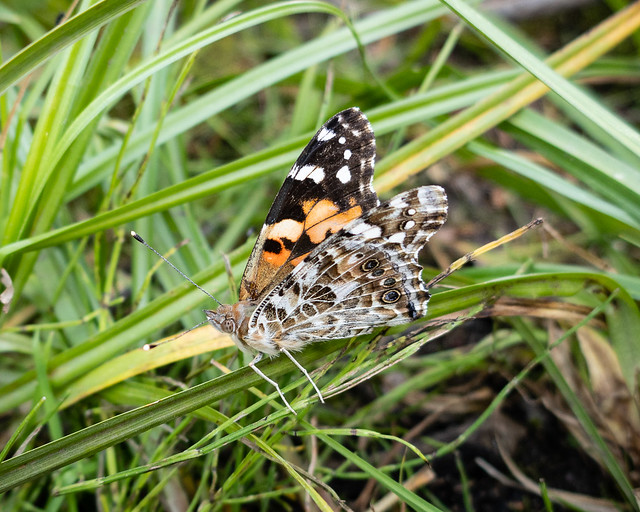
Painted Lady

Checkered White (?)

Pearl Crescent

Small Wood-Nymph (?)

A small stream runs through the meadow.

reflections

People were talking about fishing, but the only trout I saw were less than 6 inches long. Can you spot it?

spot the trout

There were a few butterflies around the campground as well. There was only one kind of bush flowering so they were congregating. I thought these were Aphrodite Fritillaries, but on iNaturalist they were identified as Coronis Fritillaries. I looked them both up and I have a hard time telling them apart.

Fritillary butterfly

Juba skipper butterfly (?)

Orange sulphur butterfly (?)

These wasps took a break from feeding on the flowers to mate:

Cutworm wasps mating

I had another wasp visit me at the campsite:

Western paper wasp

And this spider was overlooking my picnic table:

Orbweaver

I found this one inside the van. Luckily there's no wood in the van since it's a wood boring beetle.

White-spotted Sawyer beetle

I think this one is a burying (or sexton) beetle, another interesting critter. It uses its large antenna to locate dead mice or birds. When multiple beetles find the same carcass they fight over it (males against males and females against females). The winning couple lays its eggs on the carcass and buries it, after removing the fur or feathers. They bury it so it isn't found by other scavengers.

Burying beetle

When I got back from my hike I threw my sweaty socks on the picnic table and they attracted this colorful fly:

Adejeania vexatrix

Adejeania vexatrix

The usual chipmunks and squirrels were also around. The squirrels were busily snipping pine cones off the trees and dropping them all over my campsite. The pinecones had a lot of sap oozing out of them, which the squirrels got all over their faces when they were eating them. And then the dirt stuck to the sap, giving them black faces.

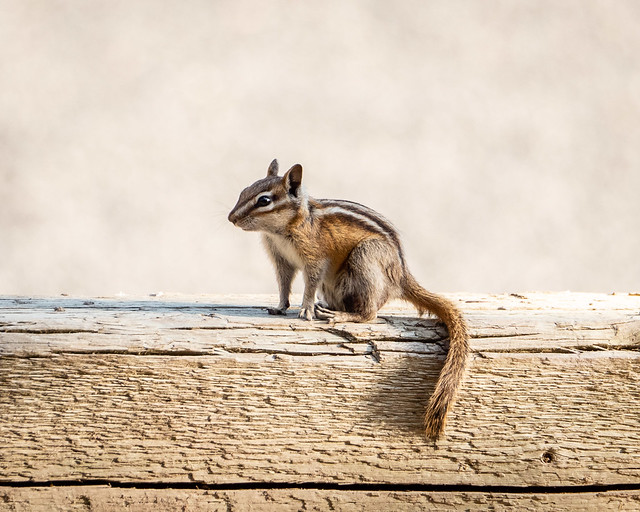
squirrel

chipmunk

I didn't see any marmots around the campground like other times, but I did come across this one on my hike:

Yellow-bellied marmot

There were lots of grasshoppers around. The most interesting were these Carolina grasshoppers. The males would fly up into the air and hover making loud clicking sounds to attract females. They were hard to photograph because they were so well camouflaged for the dry dusty ground. You'd see them land, but if you took your eyes off them for a second, they'd be almost impossible to locate again. Although there was a lot of clicking going on, sadly I didn't actually see any of them actually attract a female.

Carolina grasshopper

A more colorful variety of grasshopper:

Differential grasshopper

The campground is in a great spot to watch the sunsets.

sunset at Five Springs

sunset

See all 116 photos in this album

Thursday, September 26, 2019

36k

Now, here, you see, it takes all the running you can do,
to keep in the same place.
- the Red Queen in Through the Looking Glass by Lewis Carro
ll 
I ran 36 km on my long run on Sunday, twice around the 18 km loop from the 42nd street bridge to the Diefenbaker bridge. For variety I ran the second loop in reverse.

Unfortunately, the water fountains get shut off at the beginning of September so I had to carry water. I tried a waist belt with two small (300ml) bottles. It bounced a bit more than I'd like when they were full, but otherwise it worked ok. I stashed a refill bottle in the bushes near the start for my second loop.

It started out a little cool (10c), but I was able to stash my extra shirt when I refilled with water. By the time I was done it was about 25c which is a little warmer than ideal. But it was a beautiful sunny day so I can't complain.

That's probably the farthest I've ever run. I might have gone that far in my younger days but I don't think so. It's not much by modern ultra-running standards, not even a marathon (42 km). But I was happy with it.

Most of the run went very smoothly and enjoyably. I was running 9 minutes and walking 1 minute at a decent pace (for me). My heart rate was consistent up to about 2.5 hours, after which it slowly but steadily rose, even though my pace didn't change. I was pretty beat by the time I finished, but I kept my pace steady for the whole 36 km. I went back and checked my last 30 km run and it looked very similar - steady till 2.5 hours and then gradually losing performance.

It's a change to hit a fitness limit. For the first time in years my knees and feet were not the limiting factor. Although they are the reason I've had to limit my volume of running, and therefore my endurance.

This week has been recovery mode. My foot was a little sore for a couple of days, but nothing like as bad as it used to be. I did an easy 5 km on Tues. and a moderate 7 km today. I'm still feeling a little tired, but performance wise I seem to be mostly back to normal. If all goes well I'll do medium volume next week, and then maybe another long one the following week. Of course, the snow is coming and I tend to lose motivation when the weather turns ugly.

Tuesday, September 10, 2019

Around the Pond

There is a distinct feeling of autumn in the weather these days, and the leaves are changing color and starting to fall. So these photos from a few weeks ago might be the last of summer.

peaceful morning at the pond at Innovation Place

I haven't seen any of the larger (female) fishing spiders - they seem to become scarce after egg laying. But I did spot this little one. I'm not sure if it's a smaller male or just a juvenile.

small fishing spider

Fishing spider

I assume this is the same funnel weaver spider I've taken other photos of. At least it's the same web. The web is getting a bit worn, I wonder how long they use it before making a new one? I could see it had something green but I couldn't tell what it was. Zooming in on the photo it looks like the remains of a little green caterpillar. Breakfast!

Funnel weaver spider eating caterpillar

Harvestmen (aka Daddy longlegs) aren't really spiders, although they are related.

Harvestman (aka Daddy longlegs)

In addition to the mating dragonflies (see my previous post) there were quite a few damselflies around.

damselfly

And to wrap up the spiders and insects, the cool mornings mean "sleeping" bees. Bees need to be warm before they can fly. Either they have to wait for the sun, or they can "shiver" to generate enough warmth to fly. I think this one was planning to wait for the sun but when I started to harass it, it started shivering and eventually managed to fly away.

sleeping beauty

Although a lot of the flowers are past their prime, like this one, there are still a few late bloomers around.

decaying lilies

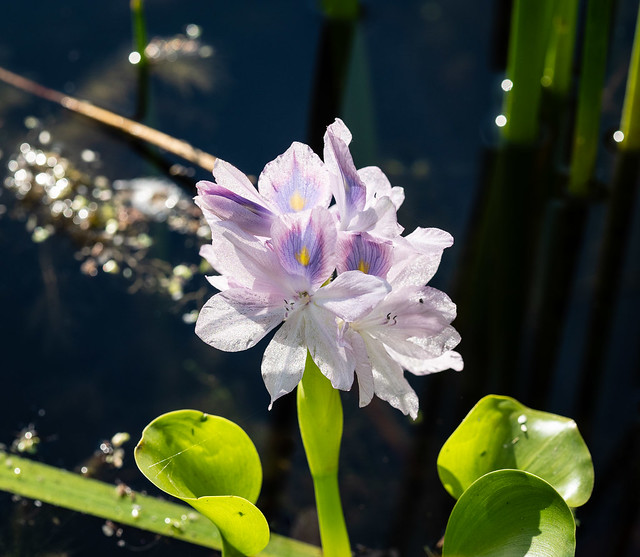
Soon after taking this shot of a water hyacinth flower they removed them all from the pond because the nights are getting too cool. See you next year!

water hyacinth

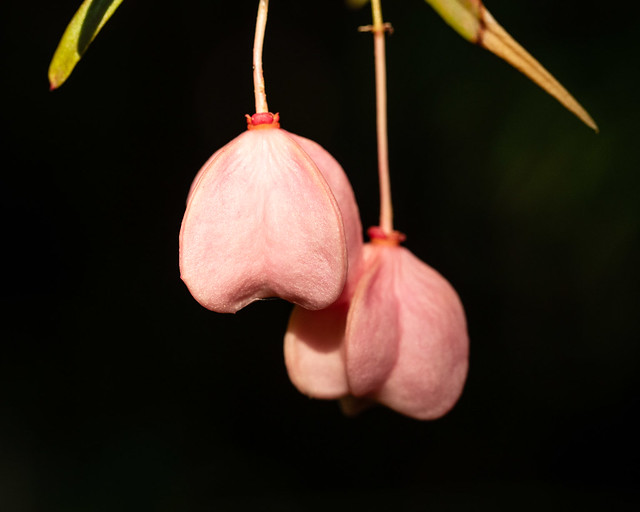
I'm not sure what these flowers are, but I like how they open up and the gooey looking seeds (?) descend.

flowers

flowers

flower seeds

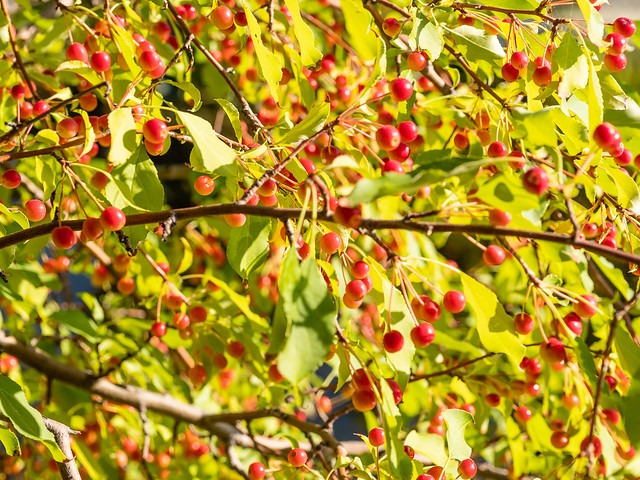
The apples and berries are also out in force.

berries

Some of these shots were taken with the new camera and some with the little ZS100.

See all 33 photos

Sunday, September 08, 2019

Life and Death

My alternate title was Unprotected Sex but that seemed a little too much like link bait.

With cooler weather there hadn’t been as many insects around the pond. But this day was warmer and the dragonflies were out in force. Dozens of one kind (some kind of meadowhawk?) were mating over and on the grass beside the water. Perhaps the eggs or the aquatic larvae would be the ones to overwinter.

mating dragonflies

mating dragonflies

I think the red ones are the males. They grab onto the female's head with claspers on the end of their abdomen. Then the female bends her abdomen forward and receives sperm from the male.

mating dragonflies

I noticed what looked like three dragonflies struggling in the grass but I didn’t pay much attention. I took this next photo but I couldn't really tell what was going on. I just thought it was mating battles.

Bald-faced hornets killing dragonfiles

It's not a great photo, but you can see there are actually two wasps and two mating dragonflies.

The activity lasted longer than the fast pace of the rest so I looked closer and realized it was a Bald-faced hornet killing a dragonfly, presumably taking advantage of the vulnerable mating dragonflies. (Bald-faced hornets aren't really hornets - they're related to yellowjacket wasps)

By the time I realized what was going on the dragonfly was dead. (And there was only one hornet and one dragonfly left.)

Bald-faced hornet

The hornet was trying to carry it away but it was too heavy and awkward. It solved the problem in short order, biting off the dragonfly’s oversized head. That did the trick and it flew away with the remainder.

Bald-faced hornet

And it wasn’t the only hornet taking advantage of the orgy. I saw another one fly off with its prey.

I’m not sure what the were doing with them. Just carrying them somewhere out of the way to eat them?  Or taking them to feed their larvae?

Wednesday, August 28, 2019

Indoor Wildlife

I found this tiny moth on the interior window of my office at work. At most it was half an inch across. I only had my little camera so I couldn't get as close as I would have liked. Too bad I didn't have my new camera and macro lens. Amazing wings that looked like they were made of feathers.

tiny moth

tiny moth

Sunday, August 25, 2019

Long Run

This week was a longer/harder one for running, and as usual today (Sunday) was my long run of the week. I wasn't sure how far I was going to go - at least the 18km loop around the bridges, but maybe 21 or 25 depending on how I felt. Two weeks ago I'd done 25 and been fairly wiped out by the end, so logically I wouldn't go any farther till I could do that more comfortably.

I wasn't feeling that lively when I got up. I would have waited to wake up more, but I had to be back for lunch so I started at 8am. My legs felt a little heavy, as if I hadn't quite recovered from my harder Tues and Thurs runs. But my pace and heart rate were decent. (I wear a chest strap to get an accurate heart rate.)

Usually when I get past 15 or 20 km my heart rate starts to rise even if I keep my pace constant. But despite feeling a bit tired, my heart rate stayed level, so I figured I should go longer, maybe 25 km. At 20 km my heart rate was still recovering to below 100 after a minute of walking (I was doing 9 min run, 1 min walk) so I started to think about 30 km, which hadn't even crossed my mind until then. That meant another hour of running, but I was in the groove and that didn't sound so bad.

After about 25 km my heart rate started to creep up despite dropping my pace a little. But I knew I could sustain a higher heart rate for the last 5 km. I was ahead of my target pace so slowing down slightly was ok. And I was feeling good enough to kick a little on the last couple of kilometers.

I could feel my left foot start to get a bit sore but it didn't seem too bad. It felt worse two weeks ago and still recovered quickly. My right foot had a hot spot but it seemed like I could finish before it developed into a blister. Otherwise I felt good.

The last few kilometers I quit worrying about keeping my heart rate under control and sped up to a pace I figured I could sustain till the end. I finished the 30 km a couple of minutes under my goal, which I was pretty happy about. I'd almost given up on longer than about 20 km due to the foot problems, but it seems to have improved or toughened up a bit. Maybe 35 km is doable? And if 35 km, then maybe 42? We'll see. Hopefully I'll be smart enough not to push too far too fast and end up with a setback. In any case, I'll go short/easy this coming week and let my body recover.

Saturday, August 24, 2019

Prints of the Week

For me, the real test of my photographs is whether I can make a big print that I'm happy with. I know the rest of the world is content to look at tiny images on their phone, but that's not for me. It strikes me as odd that everyone has to have a six foot tv, but they're happy to look at photographs on a two inch phone. A reflection of how being inundated with photographs has devalued them.

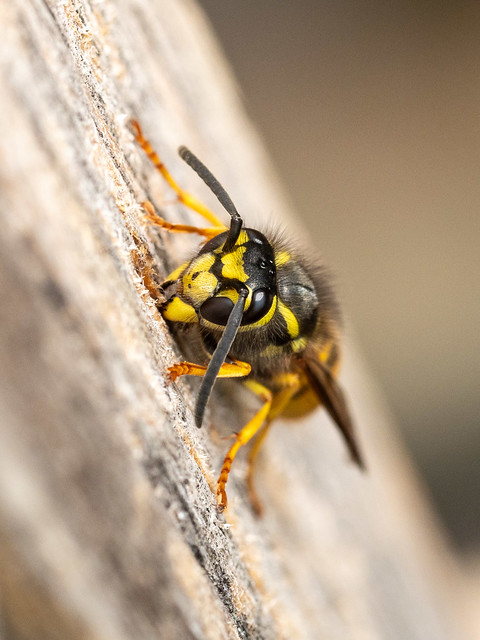
The first print was a yellowjacket wasp that landed on the chair where I was sitting having lunch by the pond at Innovation Place. When they are collecting wood pulp for their nests they stay in one place long enough to photograph. And I happened to have my new camera handy even with the macro lens already on. The wasp was moving a bit too much for focus stacking, but the camera did quite well at focusing where I wanted. I love being able to get a sharp enough image of something this small to print 17" x 22".

Yellowjacket wasp collecting wood fiber

The pond area of Innovation Place seems to get busier and busier, presumably as more people find out about it. It is lovely, but it's not very big, so it doesn't take too many people to get a little busy for my liking. Thankfully when I arrive in the morning for work, it's still quiet and I can wander and take photographs without the nuisance of other people.

My second print was just the pond itself and the reflections. Why don't we have more green places like this? To think we could have moved our offices to the industrial area.

peaceful morning at the pond at Innovation Place

Sunday, August 18, 2019

New Camera

hover fly on lily

I recently bought a camera I'd been looking at for a while - an Olympus OM-D E-M1 Mark II. It was actually released several years ago, but the new version they released, the E-M1X, is quite a bit bigger and quite a bit more expensive so I wasn't interested.

I've been happy with my Nikon 7200. They also released a new version, the 7500, but it didn't really have any big new features.

The main attraction with the Olympus is that it's a "micro four-thirds" sensor. The 7200 has an APS-C sensor with a 1.5 crop factor. Micro four-thirds has a crop factor of 2, i.e. a smaller sensor. Technically bigger sensors are better. But the bigger the sensor, the bigger the camera and the lenses, especially long telephoto lenses. The sensor is 20 mega pixels versus 24 for the 7200, but that's still plenty for me, and probably better for a smaller sensor to have less pixels.

I'm usually either traveling or hiking (or both) so size and weight are important. I'm hoping with the Olympus that I'll be more likely to carry it (and lenses).

Here's a comparison with my macro lenses. The Olympus macro lens is actually brighter (f2.8 vs f3.5) which usually makes it bigger, but it's tiny. (And I'm really happy with the results from it.)

Nikon 7200 vs Olympus OM-D EM-1ii

It's a "mirrorless" camera, as opposed to a DSLR like the 7200. So it has an electronic rather than optical viewfinder. There are pros and cons to both. Optical viewfinders are nice, they're bright and instant. Electronic viewfinders have less resolution and can lag slightly. But electronic viewfinders can do a lot more - they can display other information, they can highlight what's in focus or what's too dark or too light, and they can show you what the final image will look like. And in low light, they can be brighter than an optical viewfinder.

Despite it's small size, the EM1 has a large number of physical dials and buttons (as well as a touch screen). And you can customize almost all of them from the huge menu system. Depending on your preferences, this might be a good feature or a bad one. Personally I like having lots of physical controls and being able to configure them for the things I use. (and I'm not intimidated by the complex menus)

The screen is also articulated. I don't need that a lot, but when I do (e.g. shooting an insect in an awkward position) it's very handy. It also means you can fold it screen face in so it's protected, which is nice when the camera may get bumped around.

Olympus OM-D EM-1ii

Another big selling feature is the image stabilization built into the camera body. My old Pentax DSLR's had that and I loved it. Whereas most Nikon and Canon DSLR's depend on the lenses to provide image stabilization. The Olympus is known for having the best image stabilization (they claim 5.5 stops difference). I seldom use a tripod and hand hold almost all of my shots, so good stabilization is crucial to getting sharp results.

In the past, autofocus on mirrorless cameras didn't work as well as DSLR's. But it has improved a lot, and I've been impressed with how fast and well it works on the EM1.

It doesn't have a built in flash, but it does come with a tiny external flash that is powered by the camera.

One of the features I was look forward to was "focus bracketing", where the camera captures a series of images with slightly different focus. Afterwards, on the computer, you can either choose the one with the best focus, or you can combine multiple shots into one (focus stacking). This is especially valuable for macro photography where the depth of focus is extremely shallow. I've done a bit of this in the past where I've happened to get shots with different focus that I could combine. But unless you use a tripod and focusing rail it's very hard to do focus bracketing manually. With the new camera it shoots the series of shots rapidly, which is important because you don't want the subject (e.g. an insect) to move during the sequence. (If you look closely at the first image you can see that the fly moved its leg between shots. You could fix the focus stacking, but I haven't got that fancy yet.)

funnel weaver spider

It likely won't excite anyone but me, but I love the detail in this focus stacked moth.

Briseis Underwing Moth ?

My one complaint about the focus bracketing is that it isn't bracketing. Normally "bracketing" means taking shots either side of what you think is right. The focus bracketing doesn't do that, it just goes back (further away) from where it starts. That means you have to start by focusing on the closest point of the subject. But with an insect or even a flower, it's not always easy to pick out the closest point. It would be nice if you could configure it to take some shots with a closer focus as well as farther. Maybe they'll add that in a firmware update (they have a history of adding features via software update).

[Update: six months later I discovered it does have this feature, in a round about way. If you turn on Focus Stacking so that it combines the shots in camera, then it does bracket either side of your focus point. I normally prefer to do the stacking on my computer with Photoshop so I hadn't paid attention to this feature. But it saves the original shots as well as the stacked version, so I can still stack in Photoshop if I want. It still seems odd that this feature isn't a little more direct, but at least it's there.]

If you look closely at this focus stacked image, you'll see that parts of the petals are slightly out of focus. That's because I missed the closest point.

Borage (aka starflower)

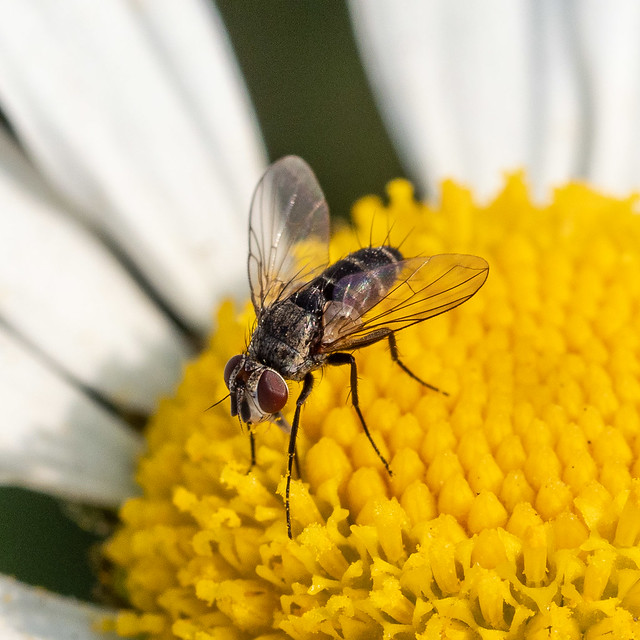
Even without focus stacking the camera and macro lens do a great job. This fly was tiny - about 1/4".

fly on daisy

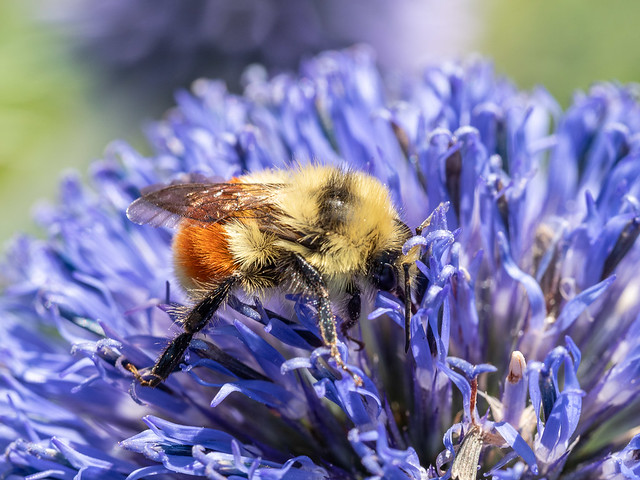
bee on globe thistle

A few more random shots as I test the new camera and lenses.

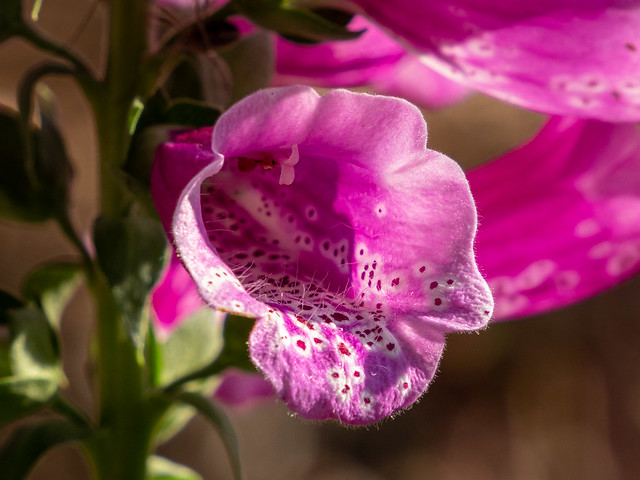
flowers

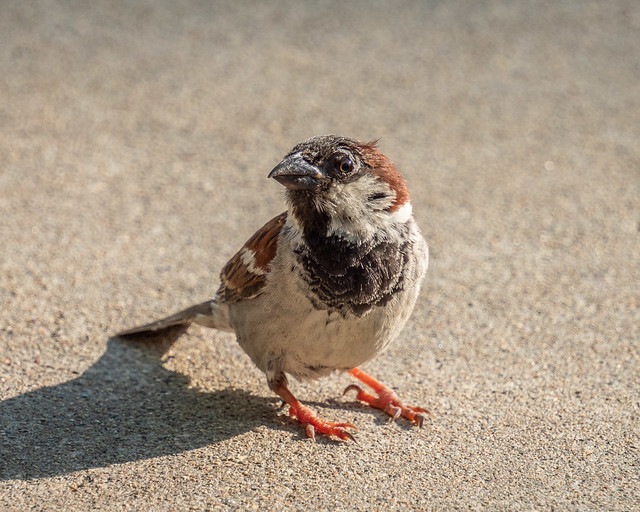
sparrow

dandelion seeds

flower

Prairie onion

The selection of lenses for micro four-thirds is decent, but not as good as for Nikon or Canon. My "normal" lens on my Nikon is 27 to 600mm equivalent. That's a huge range, from moderately wide to quite long. The closest equivalent for the Olympus is 24 to 400 equivalent. That a good range, but definitely not as long. My "big" lens for the Nikon is 225 to 900 equivalent. The "big" lens for the Olympus is 600mm equivalent, with a teleconverter taking it to 900 mm, but no zoom. For now, I settled for a smaller, lighter (and cheaper) 150 to 600 mm equivalent. I haven't used it much yet, but here are a couple of sample shots.

Downy woodpecker

moon

So far I'm really happy with the new camera. I've got some shots I'm really happy with that I don't think I could have got with my Nikon.

See all 55 photos in this album