Monday, February 05, 2024

Sedona

landscape

The landscape around Sedona is impressive, and there are some nice trails, but I wasn't too excited about it this time around. It's very touristy. I think my favorite spot was the Sedona Wetlands Preserve which is part of the Wastewater Treatment Facility. The birds didn't seem to care where the water came from.

Canyon Towhee

Black Phoebe

Ring-necked duck

bulrushes

reflections

White-checkered Skipper ?

dark-eyed junco

I loved the long bushy tail on this Arizona Gray Squirrel.

Arizona Gray squirrel

I think my best find was this striped oak-apple wasp gall. These wasps lay their eggs in oak leaves and cause these galls to form where the wasp larva develops. Most galls I see are drab green or brown, but this one is quite striking with the red stripes.

striped oak-apple gall wasp

sunset

We usually try to avoid driving in the dark, especially in the mountains, but we miscalcuted this time. We probably should have taken a chance on the one campground sign we passed, but we didn't know anything about it or even whether it was open. I had in mind a campground near Prescott that we'd stayed at in the past but when we got there it was full. A second campsite was closed. By this point we were tired and impatient so we picked a hotel. We lucked out with Forest Villa Hotel, which was not too expensive, and had a nice lobby where we could unwind over a glass of wine. And the Highlands Center for Natural History was nearby for us to go for a walk in the morning.

See all 15 photos in this batch

Saturday, February 03, 2024

Boyce Thompson Arboretum

Another favorite spot. Boyce Thompson Arboretum is the oldest (100 years) and largest (392 acres) botanical garden in Arizona, an hour's drive east of Phoenix. It's in the Sonoran desert, but it's along Queen creek so it gets a variety of birds and other wildlife. Some were familiar, like this white crowned sparrow, others we don't get farther north. It's a somewhat random assortment of photos, just whatever I spotted that I could get a decent shot of.

White-crowned sparrow

This spotted orbweaver is similar to the cross orbweavers we get at home.

Western Spotted Orbweaver

These Variegated Meadowhawks were the most common dragonflies we saw on this trip.

Variegated Meadowhawk

Of course, there were lots of different kinds of cactus.

hairy cactus

It wasn't the right time of year for most of the cactus to be flowering but there were a few.

cactus flower

cactus flower

These relatively rare cristate or fasciated variations make interesting patterns.

cristate or fasciated cactus

In the desert, it's not just the cactus that protect themselves with thorns.

thorns

There were enough other flowers to keep the hummingbirds busy. I didn't have a lot of luck photographing them though - they are just too darn fast!

Costa's Hummingbird ?

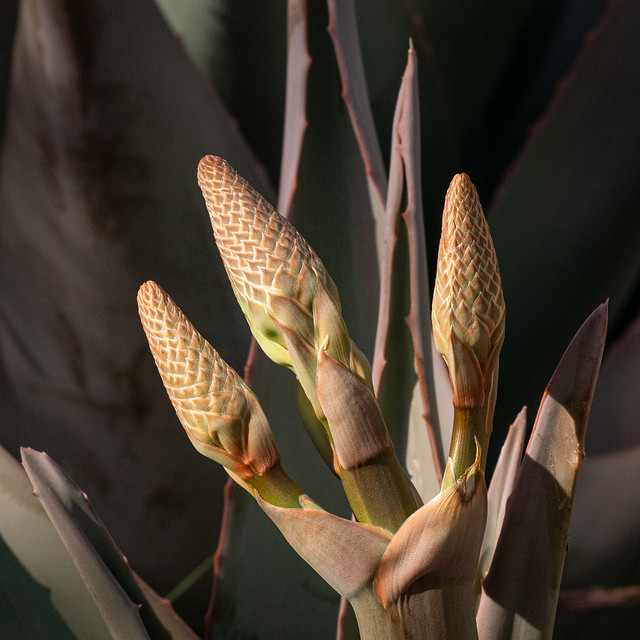
There were also lots of agaves and yuccas. I didn't spot any flowers, but there were flower buds on some of the agaves.

Agave flower buds

Agave

Agave

We followed this Northern Cardinal around for quite a while but it wouldn't come out in the open. This was the best shot I could get.

Northern Cardinal

This wasp was a little more cooperative. I think it's a Tarantula Hawk Wasp, but no one has identified it yet on iNaturalist. Spider wasps sting their prey to paralyze it and then drag it to a burrow where they lay an egg on it, which will hatch and feed on the spider, keeping it alive as long as possible. The brightly colored wings are a warning that they have a powerful sting (one of the most painful insect stings).

Tarantula-hawk wasp ?

This flower is known as Mexican Hat, but I know it better as Prairie Coneflower.

Prairie Coneflower ?

As well as native plants, there are lots of plants from other places, like this Floss Silk Tree from South America. It belongs to the same family as baobobs and other kapok trees. Notice the honey bee approaching.
Floss silk tree flower & bee

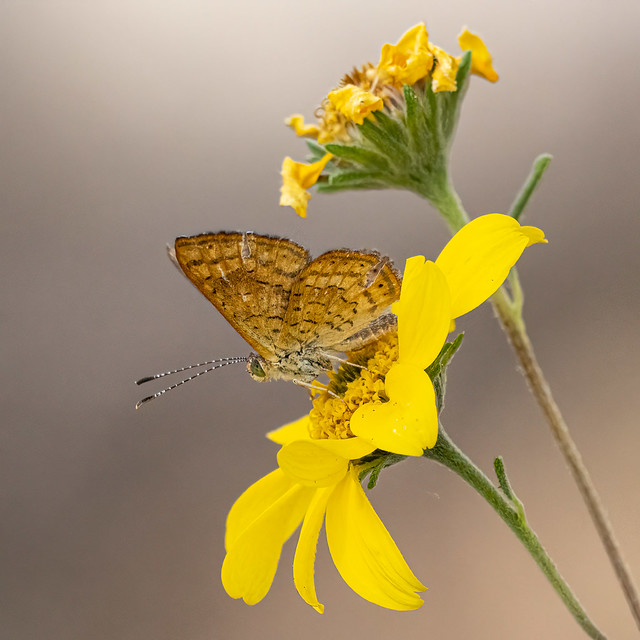
There weren't a lot of butterflies around but this Fatal Metalmark was a new one to me. I didn't notice any metallic spots on its wings, but it was bit worn and ragged, probably overwintering?

Fatal Metalmark

Painted Ladies are more common. I think I like the undersides of their wings better than the top.

Painted Lady butterfly

I'm not sure what this flower was.

flower

See also Shelley's blog post

See all 48 photos in this batch

Monday, January 22, 2024

Antlers

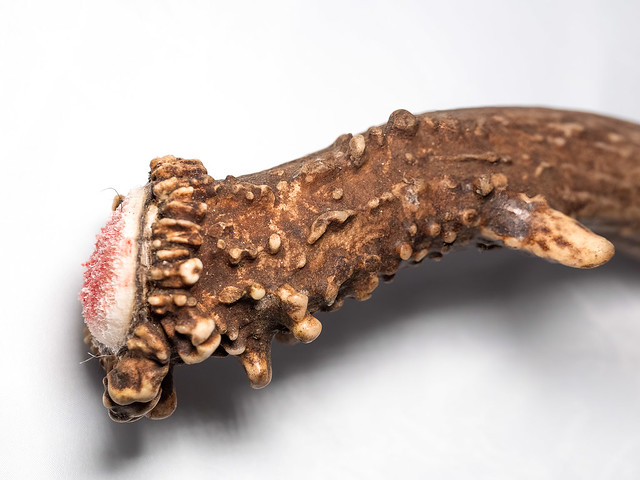
I found this antler on the lawn by our place. It's not too surprising, there are lots of deer around (black tailed, a kind of mule deer) and this is the time of year they shed their antlers.

antler

Antlers (e.g. deer, elk, moose) are bone that grows out of the skull. Usually only males have them, although both male and female caribou have antlers. Horns on the other hand (e.g. sheep, goats, bison) are covered in keratin, the same material as our fingernails, and usually aren't shed. When antlers are growing, they are covered in skin, known as velvet, that provides oxygen and nutrients to the growing bone. Once the antler is grown it loses the skin and the bone dies.

Shedding the antlers is triggered by the length of the day and testosterone level. Special cells called osteoclasts dissolve the bone at the base allowing it to detach. Judging by the pink base (presumably remnants of blood supply) I think this was quite recently shed.

antler

antler

Sunday, January 21, 2024

Macauley Point

A few photos from a walk at Macauley Point just after our cold spell. I didn't have my big telephoto lens, so of course I wished I had it :-)

Bald Eagle

Bald Eagle

In the first photo you can see a rounded hump in the water beyond the bald eagle. I think that was a sea lion. It must have been lying on a submerged rock. Every so often it would stick its head or fin out of the water, but never enough to get a good look. We don't usually see sea lions in Victoria. (Mostly just harbor seals.)

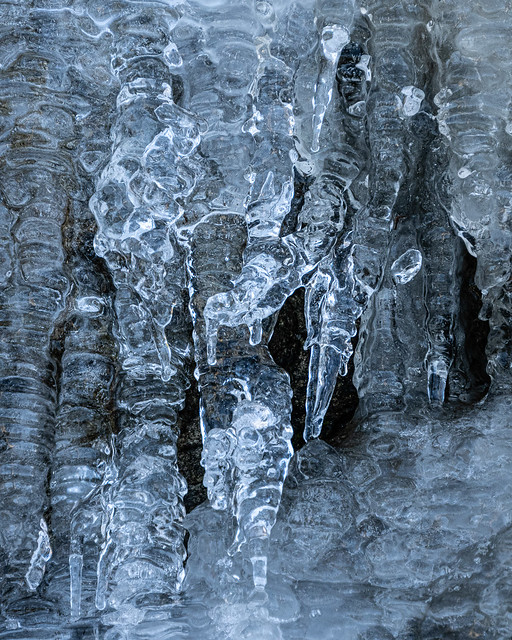
The other thing we don't see very often here is ice.

ice

icicles

No shortage of sparrows or water and reflections, of course.

song sparrow ?

reflections

See all 11 photos in this batch

Wednesday, January 17, 2024

Patience

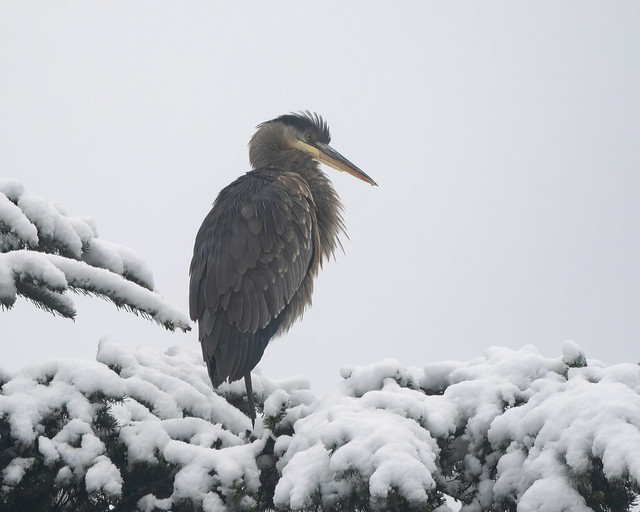
It snowed all day today. This great blue heron showed up in the morning and was still there when it got dark. As far as I noticed, it never left. Usually they don't stay long so at first I didn't bother getting out the camera. But it seemed to settle in so I got out the telephoto lens and the teleconverter for roughly 1100 mm (almost 10x a new iPhone's 120mm "telephoto"). I didn't want to go out in the snow, so I shot through the dirty window. I did get out the monopod since even with good image stabilization it's too hard to hold that long a lens steady. The tree it was in is across the street and past the next house so I wasn't expecting too much, but with a little processing it came out ok.

patience

Later, after dark, I saw a heron by the water. Can they see to catch fish at night? If it's the same one, why did it wait till dark to go fishing?

Tuesday, January 16, 2024

Road Trip Day 14, 15 - Chiricahua Mountains

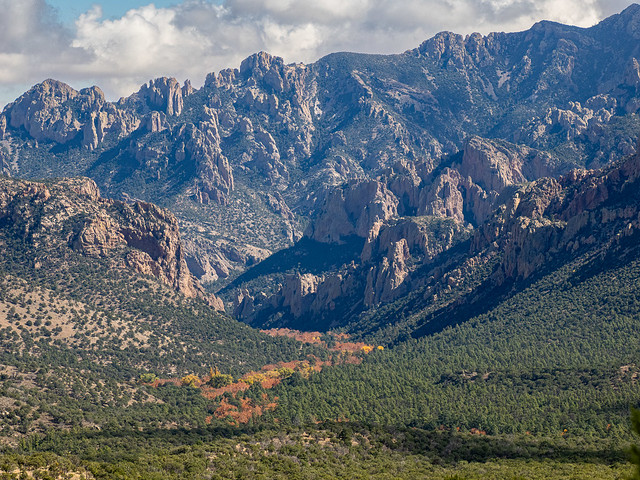
landscape

The Chiricahua Mountains are in the south east corner of Arizona. They are sometimes referred to as one of the "sky islands", rising 6000 feet above the desert around them. This gives them a variety of climates - five of the nine different life zones are found here. The area attracts bird watchers to see the 375 species of birds. Perhaps the last jaguar in the United States is found here.

There is a surrounding national forest, a wilderness area, and a smaller national monument. I think the monument on the west side is probably the more popular part but I met some people who had a home in Portal on the east side, so that's where we've visited before and did again on this trip. This was the only place we spent two nights in the same place on this trip. It was relatively quiet and we enjoyed some nice hikes.

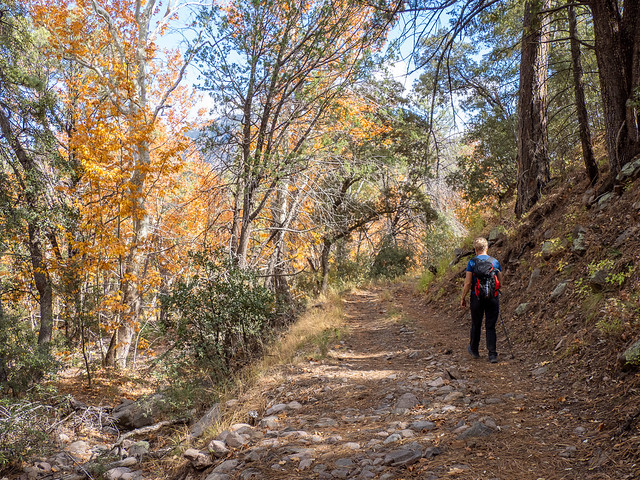
Shelley on trail

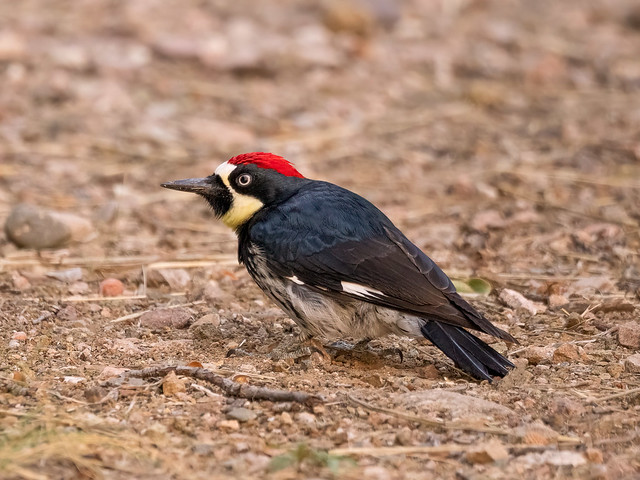
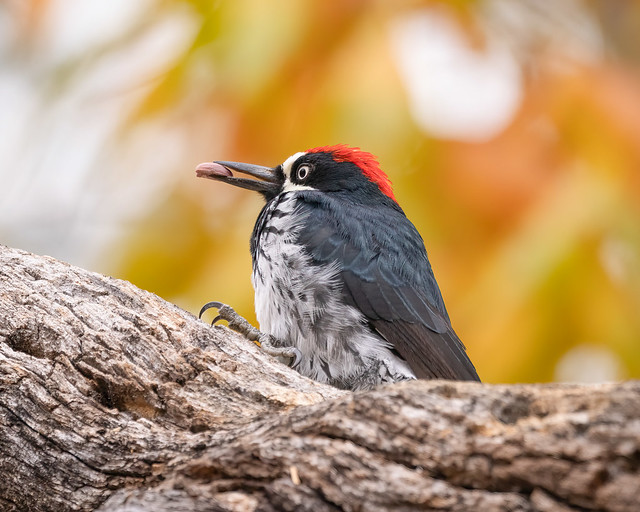
I think we saw more birdwatchers than kinds of birds. As much as I like photographing birds, I'm not a serious birder. Mostly we saw Mexican Jays and Acorn Woodpeckers.

Mexican Jay with acorn

Mexican Jay

Acorn Woodpecker

Acorn Woodpecker

Acorn Woodpeckers store their acorns in holes they drill (and reuse) in "granary" trees. As the acorns dry out and shrink they move them to smaller holes, requiring considerable maintenance. They also have to defend them from other birds. They are cooperative breeders living in groups of up to 15 birds.

Acorn Woodpecker

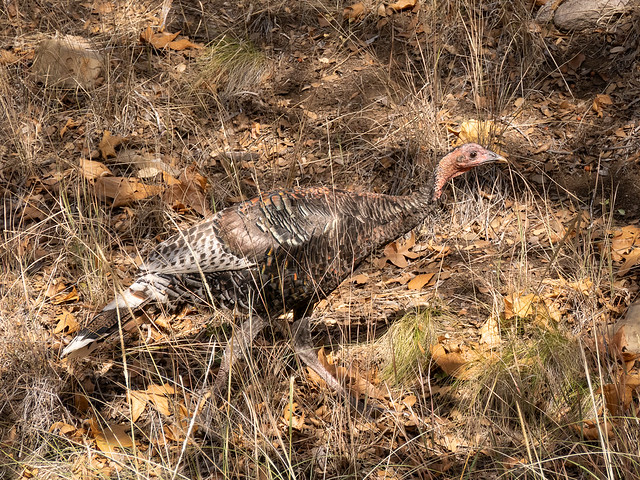
It was fun to watch this group of wild turkeys scratching through the dead leaves. I'm not sure what they were finding to eat - insects? seeds?

wild turkey

There were also some interesting plants. I think these are Mountain Yucca fruit: (roughly pear sized)

Mountain Yucca fruit ?

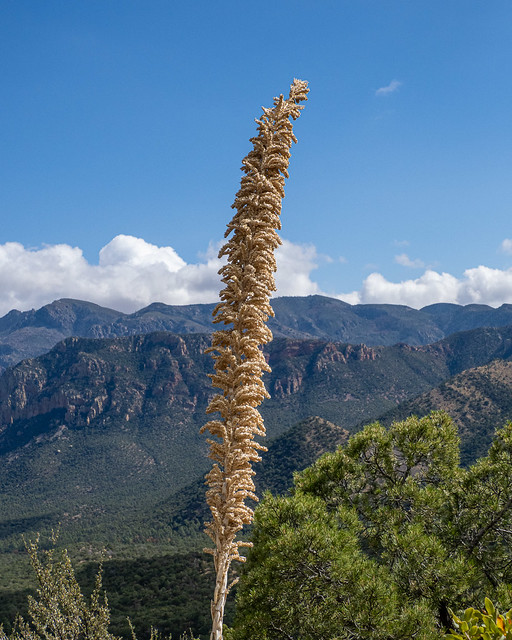
There were some tall agave seed stalks. They are sometimes called "century" plants because they only flower once, at the end of a long life (although not necessarily a century) and then they die. If you shook the stacks the seeds would come raining down.

Shelley & agave seed stalk

yucca seeds

agave

There was a lot of bear poop on one of the trails we were on. Luckily we didn't see any bears. They seemed to be eating a lot of seeds (juniper berries?) which they weren't digesting too well.

bear poop

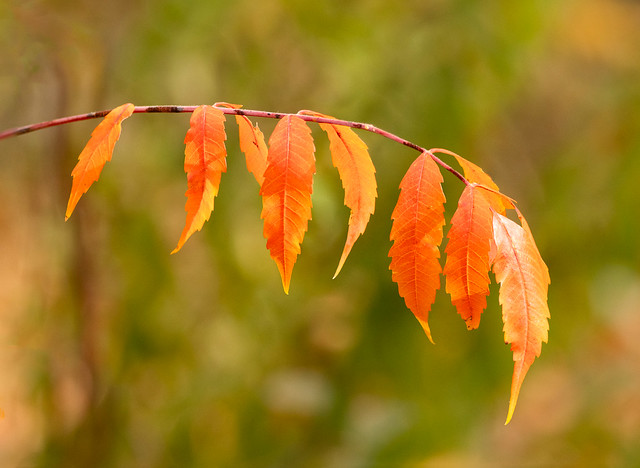
Most of the trees were conifers, but there were enough other trees, especially down by the creeks, to give some nice fall colors.

fall colors

fall colors

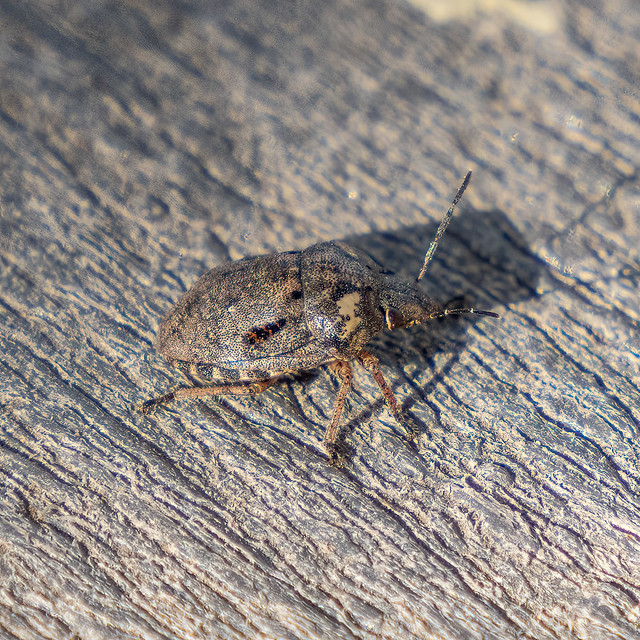
Although it was getting cool at night up in the mountains, there were still a few insects around. Unfortunately no one on iNaturalist has identified this interesting beetle:

beetle

Water striders are tricky to photograph as they tend to zip around constantly. This one happened to pause long enough to catch. (with my long telephoto lens)

water strider

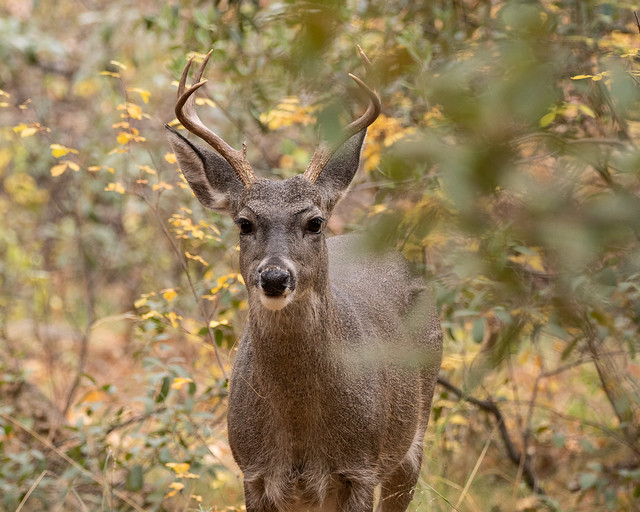
There were lots of deer around, not too concerned about humans. (no hunting here)

White-tailed deer

Also see Shelley's post

See all 37 photos in this batch.

Saturday, January 13, 2024

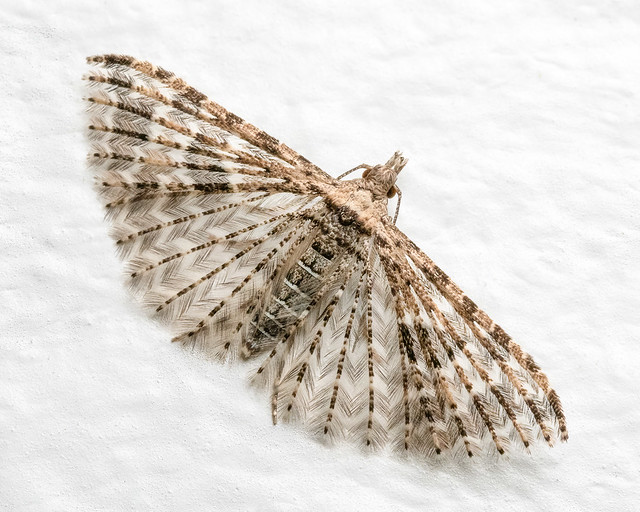
Many-plumed moth

This moth appeared on the wall beside my desk. It was tiny, a little over 1/4 inch across. I ignored it at first, but then I decided I should at least have a look with a magnifying glass. Some of these tiny moths can be quite pretty when you see them up close. It turned out to be a plumed moth, which is unusual, so I got out the camera and macro lens. iNaturalist identified it as a Montana six-plume moth. At least it wasn't yet another invasive species for a change.

Montana six-plume moth

Unlike most moths and butterflies, the wings aren't a "sheet", they're more like feathers. There are only a few species in North America. The caterpillars feed on snowberry bushes, which are quite common around here. The moths overwinter as adults, and the warm weather probably fooled it into emerging. When I came back from supper it had disappeared.

I photographed another plume moth a few months ago but it had its wings folded up so you couldn't see the structure.