Tuesday, July 21, 2009

A Long Day on Mount Brock

This last weekend we headed out to the Rockies. On our first day of climbing we decided to tackle the South-East Pillar of the West Rib of Mount Brock (map), as described in Selected Alpine Climbs by Sean Dougherty.

The route goes up the left hand pillar on the edge of the sun and shade.

We got up at 5am in the dark and were on the trail by 6am, headed up King Creek. It's a nice canyon, but the trail criss-crosses back and forth across the creek on makeshift log bridges so it's a little slow.

In typical guidebook speak we were to follow the north fork past five gully systems until below a prominent drainage. We counted and recounted gullies and I think in the end we went up the right one.

The gully below the climb was still full of steep snow and we were in approach shoes without ice axes. The snow was just soft enough to kick steps. It would have been a long slide if we'd slipped.

We reached the bottom of the pillar about 9 am - 3 hours and the guidebook said 3 -4 hours so we were doing ok. We probably should have started a bit further up the gully but we'd had enough of the snow.

The climbing was reasonable, loose in places but that's to be expected in the Rockies. Some sections were nice and solid. According to the route description there should have been a ledge cutting across the face after two or three pitches where we figured the normal start would join up with us. We never found anything that fit the description.

That's Shelley highlighted, heading for the sun.

We were moving way too slow, mostly because of searching for protection and belay anchors. The rock tended to be either solid, but no cracks, or loose mounds of rubble. Neither are very amenable to placing protection.

According to the guidebook after about 6 pitches we should have reached easier 3rd class climbing. After 8 pitches, it had eased a bit but it still wasn't 3rd class scrambling. We started to wonder if we were on the right pillar. There'd been some signs of other climbers lower down but nothing after the first few pitches. And what we did see were signs of people rappelling off in retreat. Was that because they realized they were on the wrong pillar?

9 pitches took us six hours. It was 3 pm. The top still seemed a long way away. And it wasn't clear how we'd get to the descent ridge, which was supposed to be "easy downclimbing", but who knows what that meant. We had to make a decision whether to go for the top and hope for an easier descent, or cut our losses and try to descend the way we'd come up. At the speed we were going, either way we'd be lucky to get off by dark.

We decided to retreat. On the way up I'd been thinking I was glad we weren't going to have to come down this way. So much for that idea.

10 rappels later we reached the ground at 9 pm. Again, way too slow. Again, mostly because of searching for anchors. And, of course, trying to find the way down, keeping a clear line to pull the rope without snagging it. It meant leaving gear behind. A few spots we were able to loop horns. We rapped off single anchors more than I'd like. Not to save money, but to save enough gear for the rest of the descent. We always backed them up for the first person, but it's still riskier than I'd like.

After 12 hours of climbing on loose crap without either of us getting nailed, Shelley got hit in the leg by a rock I knocked off trying to straighten the ropes on the very last rappel. Luckily it wasn't bad enough to stop her walking out.

Damage from falling rock.

We made it down the steep snow and headed downhill to the creek in increasing darkness. Surprisingly, and thankfully, we found an easier route down than we'd taken on the ascent. I think there were a lot of nice wildflowers but it was hard to tell in the dark. And we actually found a path down the north fork of the creek that we'd missed on the way up.

By the time we reached the car it was almost 1 am - close to 19 hours since we'd set out. We hadn't taken more than a five minute break the whole day so we were pretty bagged. Amazingly, we'd had perfect weather all day. A bit windy in the afternoon, and a few high clouds, but nothing threatening. It would have been a miserable descent in the rain.

Looking at the mountain the next day, I think we were on the right route. It was hard to tell how high we reached. It might have been quicker to continue up and over the top, but I think we made the right choice. At least descending we knew the route.

In the end it all worked out ok, other than not reaching the top. We underestimated the length of the climb, and weren't in practice to move quickly enough. And I should have done a little more research, for example this report rates it 5.8 not 5.6 and they ended up having to bivy (didn't make it in a day). At least we avoided a cold bivy.

Tuesday, July 14, 2009

iPhone Photos

A few of the photos I've taken with the iPhone. I like the macro (close-up) ones best.

If you click on the slideshow to go to the album you can see how the photos are geo-coded (their location is automatically recorded). You can even see miniature photos at their location on a map.

Garter Snake iPhone Video


I was walking to work and I saw something up ahead on the path. As I got closer it started to look like a snake but it wasn't moving. I figured it was dead, probably run over by a bicycle or a maintenance vehicle. But when I got close enough, I could see it's head up and watching me.

I had my new iPhone in my pocket, listening to a podcast, so I pulled it out. I shot a still photo but I knew it wouldn't look like much. Then I realized that I could shoot a video clip. It was lucky that it was a cool rainy morning - on a warm day the snake would have been long gone before I could video it. I'm not sure what he was doing out and about in the cold weather, maybe he was snacking on the worms that were out on the sidewalk due to the rain.

Wednesday, July 08, 2009

The Dominant Animal

"It would indeed be the ultimate tragedy if the history of the human race proved to be nothing more noble that the story of an ape playing with a box of matches on a petrol dump."
-- William David Ormsby Gore, 1960

I just finished reading The Dominant Animal by Paul and Anne Ehrlich. I have to admit I'm starting to avoid these kinds of books. I don't need any more convincing and they just make me depressed.

Nonetheless, it's a good book, worth reading.

Step One: Change Government ?!

I just watched this video of a talk by Lawrence Lessig about the problems with the US political system, especially congress. Most of it also applies to our Canadian system, in the basic ideas if not the details.

I tend to agree that if we're going to get anywhere on the big problems of environment, climate, etc., first we have to change how our government works.

But I'm afraid that's not really a very encouraging conclusion. It just adds another impossible task to the growing list.

Saturday, July 04, 2009

Dave Matthews - Digging a Ditch


Sometimes my current programming project feels like "digging a ditch" :-)
and the current state of the world certainly "weighs down on me".

Digging a Ditch
by Dave Matthews

Run to your dreaming
When you're alone
Unplug the TV, turn off your phone
Get heavy on with digging your ditch

Cause I'm digging a ditch where madness gives a bit
Digging a ditch where silence lives
Digging a ditch for when I'm old
Digging this ditch my story's told

Where all these troubles
That weigh down on me will rise
Run to your dreaming
When you're alone
Where all these questions
Spinnin' around my head
Will die, will die, will die...

Run to your dreaming
When you're alone
Unplug the TV, turn off your phone
Get heavy on with digging your ditch

Cause I'm digging a ditch where madness gives a bit
Digging a ditch where silence lives
Digging a ditch when I am through
Digging this ditch I'll dig in for you
Where all these worries
Weighing down on me will rise
Where all these habits
Pull heavy at my heart
Will die

Run to your dreaming
When you're alone
Not what you should be or what you've become
Just get heavy on with digging your ditch

Cause I'm digging a ditch where madness gives a bit
Digging a ditch where silence lives
Where all these disappointments, grow angry out of me
Will rise...
Will die...
Will die...
Will die...

Run to your dreaming
When you're alone
Unplug the TV
And turn off your phone
Get heavy on with digging your ditch

[from lyricsmode.com]

Thursday, July 02, 2009

Souleio - A New Restaurant/Deli/Shop

Shelley and I went to Souleio for lunch today.
Souleio Foods embodies the true meaning of the word “organic” - authentic, artisanal foods produced with care and attention to the natural environment, encouraging both pride of place and pride in people within our own community and other communities around the globe.
The food was great (we shared a salad and a panini) and the store section had some interesting items. They're also selling some wine which is a brand new experience here, since until very recently you could only buy at government liquor stores.

But ... I was very disappointed to first get our food in a disposable takeout container, and then get our drinks in disposable plastic cups. Just to be clear, we were sitting in the restaurant area, there was no confusion that we wanted takeout.

For a place that makes a big thing about "sustainable" and "care and attention to the natural environment" I expect better. I emailed them to urge them to consider alternatives.

Wikimedia Pictures of the Year

Commons:Picture of the Year/2008 - Wikimedia Commons

Some great photographs. Even one of Mt. Yamnuska near Calgary.

Thursday, June 25, 2009

Lunch at the Berry Barn

We went to the Berry Barn for lunch today and wandered around the gardens. We even found some frogs in a small pond beside the wedding area.

2009-06-25 Berry Barn

Trailguru

Track ID#7AAJ (Running) | Saskatoon, SK, Canada - Trailguru

I recently bought an iPhone and I've been looking at the various running applications. This track is from one called Trailguru for a run I did this morning.

The GPS had some trouble in the lower unpaved trail through the trees, but it seemed to handle it ok, catching up when it did get a signal, although I think that's what threw off the max speed. (I didn't really run over 20 km/hr!)

The gap in the track is when I left the app to pick a new podcast to listen to. When I resumed, it wouldn't track until I turned off "Airplane" mode (cell and wifi disabled) which I'd done to conserve power. But it had worked up till then in Airplane mode. Strange.

The other ones I've been looking at are MapMyRun and RunKeeper. I haven't decided which one I like best.

If I'm going to use the iPhone on runs I'm going to have to buy an armband carrier. Holding it in your hand, like I did today, is not the most convenient. But I'm not convinced I really want to. One of the things I like about running is that it's low tech.

Monday, June 22, 2009

Old Dogs Still Have a Few Tricks

Shelley and I were in the Urban Adventure Race in Saskatoon this weekend. We entered for fun and to support the event. Neither of us had really been training much and we weren't particularly competitive or expecting to do that well.

Surprisingly, we ended up winning!

There were 21 teams with 2 or 3 people per team. Half the race (2 hours) was on bike, the other half was on foot. We were the oldest racers and I'm sure we weren't the fastest - there were triathlon people, and bike racers and marathon runners. That's the nice thing about adventure racing in general, and even more so, score competitions* like this one - it's not enough to be fast, you also have to make the right strategic and tactical decisions. I think our experience with score competitions like the Navigation Marathon helped. And we also know the city and river bank trails pretty well. And I've spent a lot of hours reading maps, especially from planning the Prairie Pitch races. (The maps were from Google Earth which added a good twist. Most of the streets weren't labeled, but you could identify other features which wouldn't have been on a street map.)

The start was amusing. They handed out the maps a few minutes before start time and while everyone was studying them the start time came and passed. Finally Shelley asked "can we start" and they said yes so we took off, leaving everyone still standing around. So we had everyone chasing us for the first few points. (Although, you have to be careful not to rush too much because not spending enough time planning your route can also cost you.) Of course, this didn't last very long - one of the nice things about a score competition is that people make different route choices and scatter, instead of all chasing each other around the same course. Even when you do see other teams you have no idea whether they have more or less points.

* A score competition is where you have a fixed amount of time to collect as many marked locations as possible. Some locations may be worth more points e.g. if they are further away or harder to find. If you exceed the time limit then you get points deducted from your score.

Hoedown from Rodeo

Hoedown from Rodeo from Eleanor Stewart on Vimeo.


Very cool. Worth switching to full screen (the four arrow icon next to "Vimeo")

Sunday, June 21, 2009

2009-06 Kayak Trip

Last week I spent three days kayaking down the North Saskatchewan river from North Battleford to Saskatoon, about 100 km.


Although it runs through developed farmland, the river and banks are still mostly wild. I didn't see any other people during the trip, other than the one bridge I passed under about halfway. I did see lots of wildlife - moose, deer, coyotes, beavers, muskrats, and of course, geese, pelicans, and other birds.

I had great weather, if anything a little too hot, which led to some afternoon thundershowers. But the mornings were beautiful.

2009-06 Kayak Trip
I didn't take a lot of photos. On the water I tend to keep my camera in a dry bag, but that means when I see wildlife I usually can't get the camera out in time to catch them.

The river was quite shallow and slow (~ 2 km/hr) so it took me longer than I had expected. Four days probably would have been better. I spent about 10 hours a day on the water, which might sound like a lot, but with 16 or more hours of daylight it still leaves time to relax.

Friday, June 19, 2009

Finding Coral

Day 9 - The Search | findingcoral.com

These folks are doing a great job of publicizing this project. Otherwise, you'd never hear about a bunch of scientists out doing research.

We think our world has been explored to the last detail, but it's amazing how much we don't know about the underwater world.

Jordy Gold and Urban Sustainability

TheStar.com | News & Features | 'Icebreakers' seek common ground:
He may not be the green Messiah but he sees dark days coming. And, amiable as he is, when he talks about what he thinks it'll take to ward them off, he exhibits the proselytizing zeal of a hellfire-and-damnation evangelist.

That doesn't, he insists, make him a prophet of doom.

'If you were a pessimist, you might as well just give up right now,' he says. 'All I want is for people to act like adults.'
via WorldChanging Canada

Wednesday, June 17, 2009

Bixi: the Bicycle-Taxi

WorldChanging Canada: Bixi: the Bicycle-Taxi for a Bright Green City

Cool.

Of course, our winters in Saskatchewan would be a problem.

Balloon Ride

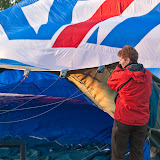
We finally got our balloon ride after three years of trying. Every time we were booked, the weather would be wrong - too windy, too calm (!), rain, clouds, etc. Then you'd have to rebook a month or two in advance so you only got a few tries per summer. I was starting to wonder if it would ever happen. But in the end we had a beautiful morning, as you can see from the pictures. It's a very peaceful experience.

2009-06-12 balloon ride

California State Parks Closing?

Schwarzenegger proposes closing 80 percent of California state parks - San Jose Mercury News

I'm not sure what to think about this.

My first reaction was that it was awful.

But if they just close the gates to vehicle traffic, maybe that's not so bad.

The concern is that there will be vandalism and other abuse, but if you can't drive in, will that really happen?

Wednesday, June 10, 2009

Sharkwater

I watched the documentary Sharkwater last night. There's some beautiful underwater photography. But it's also depressing.

We (people) have killed about 90% of the sharks so far. About the same as we've done to most large fish. The difference is that we don't eat the sharks like we did the fish, we just cut off their fins for shark fin soup and discard the rest.

Shark fins don't even have much flavor (they're just cartilage). But people, mostly the Chinese, will pay large amounts of money for it. And because there is so much money involved (literally billions of dollars) governments don't stop it. Even where it's illegal like in Galapagos, the government turns a blind eye.

Of course, it doesn't help that sharks are commonly portrayed and thought of as monsters. So people aren't as concerned about them being wiped out as they are about cuddly panda bears.

Part of the film is with Paul Watson of Sea Shepherd. He was one of the founders of Greenpeace but left to form Sea Shepherd because Greenpeace wasn't radical enough. (my oversimplification) I have a lot of admiration for people who don't just talk and inform, but actually take direct action.

Tuesday, June 09, 2009

Walkability

Get Your Walk Score - A Walkability Score For Any Address

Our current address gets a "Somewhat walkable" 52 out of 100. We avoid driving by riding our bikes.

If Rivergreen Ecovillage gets off the ground and we move there, we'd rate 90 out of 100 - "Walker's Paradise"

How does your address rate?

Sunday, June 07, 2009

Talking About Running

I just finished reading What I Talk About When I Talk About Running by Haruki Murakami, a Japanese novelist, runner, and triathlete.

I really enjoyed this book and identified with what he talked about. I'm not a serious runner, I don't enter any races. But I've run fairly regularly since I was a kid. Nor am I a serious writer, but I've done a little, and I'm certainly a serious reader, and in some ways my programming is a similar solitary creative pursuit. I'm also reaching a similar age as Murakami writes about - the point where you have to face the fact that your physical performance is past its peak.

Here are some of my favorite quotes from the book:
"Sometimes I run fast when I feel like it, but if I increase the pace I shorten the amount of time I run, the point being to let the exhilaration I feel at the end of each run carry over to the next day. This is the same sort of tack I find necessary when writing a novel. I stop every day right at the point where I feel I can write more. Do that, and the next days work goes surprisingly smoothly. I think Ernest Hemingway did something like that. To keep going, you have to keep up the rhythm. This is the important thing for long-term projects. Once you set the pace, the rest will follow. The problem is getting the flywheel to spin at a set speed - and to get to that point takes as much concentration and effort as you can manage.
This seems very true for my big programming projects.
"It might be a little silly for someone getting to be my age to put this into words, but I just want to make sure I get the facts down clearly: I'm the kind of person who likes to be by himself. To put a finer point on it, I'm the type of person who doesn't find it painful to be alone. I find spending an hour or two every day running alone, not speaking to anyone, as well as four or five hours alone at my desk, to be neither difficult nor boring. I've had this tendency ever since I was young, when, given a choice, I much preferred reading books on my own or concentrating on listening to music over being with someone else. I could always think of things to do by myself.
I've always been happy on my own as well, preferring to run on my own, and happy to read or work on projects on my own.
"I'm in my late fifties now. When I was young, I never imagined the twenty-first century would actually come and that, all joking aside, I'd turn fifty. In theory, of course, it was self-evident that someday, if nothing else happened, the twenty-first century would roll around and I'd turn fifty. When I was young, being asked to imagine myself at fifty was as difficult as being asked to imagine, concretely, the world after death. ... For me - and for everybody else, probably - this is my first experience growing old, and the emotions I'm having, too, are all first-time feelings. If it were something I'd experienced before, then I'd be able to understand it more clearly, but this is the first time, so I can't. For now all I can do is put off making any detailed judgments and accept things as they are. Just like I accept the sky, the clouds, and the river. And there's also something kind of comical about it all, something you don't want to discard completely.
"I look up at the sky, wondering if I'll catch a glimpse of kindness there, but I don't. All I see are indifferent summer clouds drifting over the Pacific. And they have nothing to say to me. Clouds are always taciturn. I probably shouldn't be looking up at them. What I should be looking at is inside of me. Can I see kindness there? No, all I see is my own nature. My own individual, stubborn, uncooperative, often self-centered nature that still doubts itself - that when troubles occur, tries to find something funny, or something nearly funny, about the situation. I've carried this character around like an old suitcase, down a long dusty path. I'm not carrying it because I like it. The contents are too heavy, and it looks crummy, fraying in spots. I've carried it with me because there was nothing else I was supposed to carry. Still, I guess I have grown attached to it. As you might expect.
"I expect that this winter I'll run another marathon somewhere in the world. And I'm sure come next summer I'll be out in another triathlon somewhere, giving it my best shot. Thus the seasons come and go, and the years pass by. I'll age one more year, and probably finish another novel. One by one, I'll face the tasks before me and complete them as best I can. Focusing on each stride forward, but at the same time taking a long-range view, scanning the scenery as far ahead as I can. I am, after all, a long-distance runner.

Friday, June 05, 2009

The Day the Earth Stood Still

Warning: Potential spoiler - I give away some of the story.

I recently watch the movie The Day the Earth Stood Still. I didn't know much about it, just that it was science fiction and starred Keanu Reeves. It's a remake of a 1951 classic.

So I was pleasantly surprised when I got to the part where you find out the aliens are here to wipe out humanity because we're destroying the earth. (I wonder if that was in the 1951 version?)

After that I was cheering for the aliens, although I'm sure you're supposed to be cheering for the poor humans struggling not to get snuffed.

By almost any definition, homo sapiens is an incredible pest. If any other animal or plant had spread as much as we have and altered the planet as much as we have, we'd certainly be trying to "control" it (a euphemism for wiping it out).

Wiping out people entirely might be a little extreme, but certainly the earth would be better off with a lot fewer of us.

Often, pandemics are listed as potential problems of the same order as environmental destruction. But even the worst pandemic (depending on your definition), the bubonic plague, only killed roughly 50% of the population. That would still leave us with billions of people. But if we destroy the environment, that could kill not only all humans, but huge amounts of other life as well.

I was disappointed with the ending of the movie. The humans (mostly Jennifer Connelly) convince the aliens (represented by Keanu Reeves) that humans shouldn't be wiped out because we are actually nice people who care about our kids, and we can change, even if our track record is abysmal. Come on, how gullible are these aliens?

Oh well, I didn't really expect the movie to end with humans getting wiped out, as pleasing as that might be to a rabid environmentalist.

Wednesday, June 03, 2009

Logging Banned in Manitoba Parks

Logging Banned in Manitoba Provincial Parks | Canadian Parks and Wilderness Society, Manitoba Chapter

This is great news, but naively I would have assumed logging wasn't allowed in provincial parks.

Regardless of whether you think parks are for recreation for people, or to protect the environment, I can't see how logging fits into the picture.

Or at least, the only way I can see how it fits is that profit driven logging companies and money driven governments were cashing in.

Of course, I don't think hunting or motorized vehicles (e.g. snowmobiles, atv's, jetski's, powerboats) should be allowed in parks either. But that does depend on whether you think parks are for recreation or protection. I think parks can server both purposes, but only if you stick to self-propelled recreation.

I guess the next question is what about the other provinces? Does Saskatchewan allow logging in our provincial parks?

Tuesday, June 02, 2009

Australia Revisited

I know it's long out of date, but I never finished posting our Australia photos, so here's a batch from Perth.
2008-09 Perth, Australia

Monday, June 01, 2009

The War on the Car

From WorldChanging Canada: City Changing: Re-mixing Built Environments:

Recently, Toronto's city council approved plans to transform Jarvis Street from a five-lane car-only street to a four-lane street with bike lanes. This came after significant resistance from council members who claimed that an alteration of the street was but one battle in an alleged "war on the car". Dissenting council members also claimed that all parties involved—the some 27,000 cars that traverse Jarvis Street on a regular basis—had not been consulted. Instead, the city had sponsored an ad in NOW Magazine querying public opinion on the idea of bike lanes. Because NOW is a local, youth-oriented publication, it was assumed that thousands of drivers were being excluded from the conversation at the expense of Toronto's cyclists, who appeared at public planning meetings in droves to exhort city planners to move forward with the bike lanes.

While the approval of the lanes is good news for both environmental improvement and cyclist safety, the length and speed of the debate indicates the kind of uphill battle in store for people who want to engage in what we might consider "urban re-mix."
I love the "war on the car" part.

DSLR Cameras

Although I'm quite happy with my Pentax K10D, I could always use higher ISO and better auto-focus. There never seems to be enough light to use a fast enough shutter speed for hand held shooting, or a small enough aperture for more focus lattitude. Thank goodness for image stabilization or I'd be even worse off.

So I can't help but covet the Nikon D3's awesome low light abilities. Of course, it also costs roughly $5000 and is a huge heavy beast, so I don't really want one.

The Nikon D700 also performs well and it's somewhat cheaper and smaller. But, like the D3, it has a full-size sensor (the actual size of 35mm film). The bigger sensor is one of the reasons for the better performance. The problem is that I like the increase in focal length that the smaller sensors give you. On a full size sensor, my zoom would be 18 to 250mm. But on my Pentax with a smaller sensor, it's equivalent to 27 to 375mm. You could use a tele-extender but then you lose another stop of light, and this zoom is already quite slow. Of course, there are other lenses, but that's a whole 'nother story!

I've looked at the Nikon D300, which has a smaller sensor, but it's performance isn't as impressive as the D700 (or the D3). The Nikon D90 which is actually a more "consumer" oriented model, actually does better for low light, also does video, and it's considerably cheaper.

One of the reasons I bought the Pentax was because it had in-camera image stabilization, which means you're not buying expensive image stabilization in multiple lenses. But so far, I've stuck to my one super-zoom lens, so the argument doesn't really hold. And the image stabilized Nikon version of this lens is actually 18 to 275mm (as opposed to 250mm).

I also like how the Pentax will output standard DNG format instead of just a proprietary format like most other cameras, although this isn't a huge factor.

To complicate things, Pentax is coming out with a new K7 model this summer. Full test results aren't out yet so it's hard to tell how it will compare. It shoots video like the D90. And it's small and light and weather/dust proof which is a plus for me. The auto-focus is supposed to be better. And it would work with my existing lens. The resolution has increased, which is good in some ways (more room to crop), but higher resolution means smaller pixels on the sensor, which usually means more noise (i.e. worse low light performance). e.g. My Pentax K10D sensor with 10mp rates higher than the more expensive K20D with 14mp. (Of course, there's a lot more to a camera than just the sensor.)

Of course, I don't really need a new camera at all. An expensive camera is no guarantee of good pictures!

PS. For some reason I haven't got interested in Canon cameras, although I've had several smaller Canon's, and I'm sure their DSLR's are good too. The Sony Alpha's also have good specs but I don't know much about them either.

Sunday, May 31, 2009

Kayaking at Pike Lake

It was a little windy on the lake so I stayed in shelter of the creek. A pair of red-winged blackbirds were scolding me, maybe their nest was nearby. At least they stayed still long enough to photograph them, unlike the muskrat which I saw several times but never let me take it's picture. Or another little bright yellow bird (yellow warbler?) that flitted about.
2009-05-31 Pike Lake

Automobiles


Not much question we live in a culture dominated by automobiles. (That's my bike squeezed in between the tables because there's no bicycle parking. Just acres of parking lots.)

I gotta find somewhere better to sit outside and have coffee! The view here really sucks.

Tuesday, May 26, 2009

Rose-breasted Grosbeak

This Rose-breasted Grosbeak was a new visitor to the bird feeder. (Or at least, to all the seed on the ground under the bird feeder.) I've seen one on several different days, maybe the same individual?


Hard to get a good photo through the dining room window, with a 400mm lens hand-held at 1/60th (cloudy day).

Sunday, May 24, 2009

Spring Road Trip

Shelley and I just got back from a week of climbing, starting around Banff and continuing to Penticton, BC where we climbed at Skaha.

As usual, we found some good places to eat... (all new to us)

In Banff we went to the Bison Restaurant and Lounge. On the way there to the restaurant, and on the way back to the lounge for fondue. As well as great food, it's situated in the Bison Courtyard which is a high performance green building containing a blend of retail, residential, and restaurant space. It's similar (although smaller) to the Rivergreen Ecovillage that is being planned for Saskatoon (and that we're seriously considering buying into).

In Penticton we started with the Hooded Merganser. I liked the name, and the pictures on the internet looked nice. We had a little trouble finding it. Knowing it was on the water, we drove up and down the beach but couldn't find it. It turned out to be inside the Resort/Casino. That turned me off a little, but luckily the restaurant was quite separate. We weren't very hungry so we sat in the lounge and had appetizers. It wasn't very busy so we had a quite meal with a great view of the lake. (Coincidentally, a duck I had photographed a few days earlier near Banff turned out to be a Hooded Merganser!)

For coffee we went to Fibonacci Roastery & Cafe. Kind of a funky place, but good coffee and deserts and comfy couches. We went back one evening for some live jazz.

We also really enjoyed Lee's Fusion and Amanti Bistro.

Finally, the evening we visited our friend Ellen in Summerland, we went to the Vanilla Pod Tapas and Wine Bar. They were very accomodating to our vegetarian needs and came up with several options for us that weren't on the menu.

Of course, we also sampled a few of the local wines (and brought a few home). We only made it to two wineries - Soaring Eagle and Zero Balance, both owned by Holman Lang Wineries. Both had some tasty wines. It was the first time we'd been to the Naramata bench - there are a ton of wineries in this small area.

We also did some climbing...

We were climbing at Skaha Bluffs, one of our favorite spots. Skaha has had access issues over the last few years but things seem to be resolved now. The new parking lot is great, although it turned out to be much too small for the busy long weekend. During the week when we were there it was fine.

Shelley's climbing in the gym all winter gave her the advantage this trip. Oh well, it gave me an excuse to get her to lead the hard stuff :-) We did our usual favorites like Plum Line, although we didn't do Double Exposure this trip. The weather was cloudy a fair bit and sprinkled a few drops, but for climbing that's probably better than too hot.

And, of course, some photographs...
2009-05 Banff & Penticton

Wednesday, May 13, 2009

Yellow-Rumped Warbler

I just saw a yellow-rumped warbler from the kitchen window. They're not rare, but I don't remember seeing one before, at least not up close. They're quite striking with their yellow patches.

I didn't get a picture and most of the ones I found on-line don't do it justice. This one is pretty good:

ON THE EDGE... A yellow rumped warbler perches on the edge of a hand rail at the Rotary marshes in Kelowna.

Tuesday, May 12, 2009

Spring Flowers

The first flower opened today in our yard. Old hat to those of you in Victoria and Vancouver (and my sister in Spain!), but a nice sign of spring here. Of course, they're forecasting snow for tomorrow - the joys of Saskatchewan weather!


I used my tripod, but they're still not as sharp as I'd like - too much wind and not enough light.

Monday, May 11, 2009

Sailing

Some great photos of the The Volvo Ocean Race.

I thought two month expeditions were long, but this race around the world takes nine months!

A favorite movie of mine is Wind - great sailing cinematography.

Thursday, May 07, 2009

Adios Amigos

A few weeks ago I made the tough decision to withdraw from running the Prairie Pitch Adventure Race this year.

Little did I know that it would lead to me withdrawing from the Saskatchewn section of the Alpine Club itself.

A lot of the newer members probably don't know my background with the club. I first joined the Alpine Club over 30 years ago. There was no Saskatchewan section then.

About 15 years ago, Ralph and Lisa Bock and Shelley and myself got together and formed a "Saskatchewan Alpine Club". At that point we weren't affiliated with the Alpine Club of Canada.

It was around the same time that Vic started Vic's Vertical Walls (now Climb 306). Not surprisingly, the members of the club were some of his first customers. I was so excited to have a climbing wall in town that I spent my evenings and weekends helping Vic and his Dad build the walls, first at their original location, and then at the current location.

For the first few years of the club, Shelley and I were the only members with any amount of experience and we led most of the trips.

I remember Dave McCormack showing up at one of our early meetings and telling us he wasn't going to climb, just hike. As you probably know he ended up doing plenty of climbing. And despite moving to British Columbia, he continues to lead some of the section's most popular trips.

Next, we decided we should be a section of the Alpine Club of Canada. We had to overcome a certain amount of bias against a small group from the flatlands, but we made our case successfully and became a section. I remember nervously making our proposal at the national meetings and waiting outside to hear the verdict.

We started a section newsletter, The Prairie Pitch, which was arguably the best section newsletter for many years. Shelley and I edited, folded, stuffed envelopes, printed mailing labels, and wrote articles ourselves when we were short.

We brought the Best of the Banff Mountain Film festival to Saskatoon. It was a big gamble at the start - if it had flopped we would have been paying for it out of our own pockets. But it was a success and continues to be one of the main fund raisers and promotional events for the section.

About 10 years ago, on an ice climbing trip with Shelley and I, Tony Nadon proposed starting an adventure race in Saskatchewan. For lack of a better name we called it the Prairie Pitch, the same as the newsletter. Tony did a great job of organizing the race for five years. When he stepped down, I took over for the next three years. Organizing the race was a lot of fun, but also a huge amount of work. (Especially if you're a perfectionist like me!)

The section has always been pretty "hands off" with the Prairie Pitch. The big reason it was done as a section event was to get insurance coverage. Tony wasn't an active member of the section and nor were his friends that helped him with the race.

I did my best to step down from the race gracefully. I really hoped someone from the section would volunteer to take over. But I wasn't very optimistic. For a while I'd been telling people I wouldn't be running the race forever and that someone should get involved so they could take over. But everyone is busy and as long as I was doing the work, it was easier not to think about it.

When I made my decision I first notified the section executive, gave them a chance to respond (they didn't), then notified all the section members (they didn't respond either), and finally let all the racers know. The racers did respond - thanking me for running the race in the past, and hoping that the race would continue.

The only people interested in organizing the race were Full Moon and J2 Adventures who put on races in Alberta. Full Moon didn't feel they could take it on this year but J2 was eager to take over - even to the point of taking over the expenses incurred to date (mainly the reservation at Cypress Hills Resort), and offering to give the section a portion of the proceeds.

Again, I notified the executive about this. Again, no real response. I didn't really find this strange because, as I said, the section has never had a lot to do with organizing the race.

I met with J2 in person and they convinced me they were the best option to have the race continue. I was happy because I'd really been afraid my stepping down would be the end of the Prairie Pitch.

This is when things went bad. Some of the section executive started having second thoughts about what I'd done. They didn't want to lose a major source of funding for the section. I can understand that, but the section had no one willing to organize the race. If no one will do the work, it doesn't matter how much you want the money! And it's not like the section "needed" the money. Most of the section revenue is just donated to various other organizations. The section itself doesn't have a lot of expenses.

They kept questioning my actions and arrangements until finally I lost my temper. Oops. I was chastised (rightly) for my "emotional outbursts".

But I felt (and still feel) angry, hurt, betrayed, sad. After everything I've done for the section, this is how they repay me. By pulling the rug out from under me. By reneging on the arrangments I made in good faith. And all, as far as I can tell, for nothing. It's not like anyone has a better suggestion.

I really wish they could have spoken up before I'd finished making all the arrangements. All they had to do was say "we'll take it from here" and I'd have been happy to let them deal with it.

I honestly thought I handled it openly, honestly, respectfully. I didn't go behind anyone's back, didn't do anything underhanded. I kept everyone in the loop. I certainly didn't stand to gain anything from it personally. Even now, I don't understand what I could have done different. (Other than not lose my temper!)

Now I look bad, the club looks bad, and J2 is in a really awkward position - they've already advertised the race and even had people register for it! And the executive didn't even have the decency or courtesy to phone the poor guy - just sent him an email saying the Prairie Pitch belongs to them and they'll decide what to do with it.

So I've quit the section. Obviously I'm on a totally different wavelength from some of the section executive. Maybe I'm overreacting, but this whole thing has left a sour taste that isn't going to go away any time soon.

Sunday, May 03, 2009

You Know It's Spring When ...

When you can sit outside and have coffee and be warm in the sun.

When the crocuses bloom. (crocus photos by Shelley)


When you can kayak down Beaver Creek on the spring runoff.


And see the muskrats. (We also saw two Great Horned Owls and the first garter snake of the year.)


And last but not least, sit outside and eat an ice cream cone after kayaking :-)

Life is good.

Sunday, April 19, 2009

Spring

Winter here is awfully cold, dark, and silent. But that just makes spring so much more of a contrast. (Of course, my father would have said that's a bit like banging your head against the wall because it feels so good when you stop!)

The grass is starting to turn green, the trees are budding. And the birds! When I walked home the other day I was listening to a podcast, as I often do. When it ended and I took out my earphones I couldn't believe all the bird songs - crows, gulls, geese, sparrows, robins. Glorious!

Sunday, March 29, 2009

Spring in Saskatoon

Spring in Saskatoon involves more melting snow and ice than flowers blooming. But it's nice to see the geese returning and you can't complain about the sunshine.

from 2009-03-29 Saskatoon

It was such a beautiful morning I had to escape from the computer and go for a walk.

Thursday, March 12, 2009

1% for the Planet

I've been a fan of 1% for the Planet since I heard Yvon Chouinard talk about it at the Banff Mountain Film Festival several years ago. I was happy when Mountain Equipment Coop joined.

It's nice to see they're doing well: National Geographic Blog - Go Green: Are Values-Oriented Companies Recession-Proof?

Yvon's book, Let My People Go Surfing is a good read if you're interested in his business and environmental ideas.

Thursday, March 05, 2009

Clark Little Surf Photos

These are some amazing photos!

Clark Little Photography


I've always loved water and its colors and reflections.

Friday, February 20, 2009

Mountain Rescuers Getting Taken to Court?

A post on the National Geographic Adventure blog says prosecutors in Argentina are investigating an attempted rescue on Aconcagua for possible negligence. And this isn't even in the USA, where you expect everything to be taken to court.

Apparently a video from the rescue has caused huge controversy because the rescuers were "just standing around".

I don't know any more details, but on the surface I'm flabbergasted. What do people expect the rescuers to be doing? If the guy can't even get up, how do you get him down? The rescuers were probably pushed to the limit just to reach the guy. People who have no experience of high altitude or even mountaineering should not be judging.

I've often talked to non-climbers who read about climbing incidents, especially on Everest, and ask my opinion. How could they have left someone to die? How could they have just walked by? They don't realize that you barely have energy to move yourself, let alone enough energy to help someone else. And if you did help someone, you're placing yourself in serious jeopardy and may just end up with two casualties. And lastly, the person in trouble chose to be there, chose to take the risks. And often what got them into trouble was ignoring advice and common sense. If I say "don't walk on the ice, it's too thin" and you ignore me and walk on the ice and fall in, am I still obligated to jump in and try and rescue you?

These were volunteer rescuers. If they end up being prosecuted or sued, then who is going to volunteer to try to rescue anyone?

Sunday, February 08, 2009

The Ultimate North American City

I recently got back from a week long trip to Arizona, mostly around Phoenix. We were visiting Shelley's Dad who has recently taken to spending three or four months of the winter down there, like so many other "snow birds". I can't blame them for wanting to escape Saskatchewan winters.

Phoenix is the 5th largest city in the USA. Its metropolitan area has over 4 million people sprawled over 37,000 square kilometers (16,000 square miles).

Phoenix seemed to be the ultimate North American city, the distillation of our suburban culture to its essence of cars, freeways, malls, and planned communities.

In case you're at all unclear, I don't think that's a good thing. I found it appalling. Even more disheartening is that I don't think most people see anything wrong with it. I think they think that's how it ought to be.

One day when we foolishly picked a climbing area across town we spent more time on the freeways than we did on the rock. And that wasn't even on the opposite side of the city, we just had to cut across a corner of the metro area.

Like the rest of North America, the automobile rules. If you're not in a vehicle you're screwed. The nearest coffee shop is probably 6 miles away. And even if you did feel like a two hour walk to go for coffee, you'd better be prepared to play Frogger with the traffic.

Despite a great climate for it, less than 1% of commuters use bicycles. I'm surprised anyone does.

I like the desert and the climbing was good, but I'm not going to be in a rush to go back to Phoenix.

Thursday, January 22, 2009

National Geographic Photo Contest Winners

Some great photos from National Geographic's Photo Contest.

The second last picture of the squid is amazing, and it's amusing how the photographer had to push her husband out of the way to get the picture.

Tuesday, January 20, 2009

Baby Chameleon

I think chameleons are cool regardless, but this baby one is amazing.

These pictures are from Gorilla.cd. A park in the Congo having their own web site and frequently updated blog is also pretty cool. They've had a lot of troubles lately with the fighting there, so it's nice to see something positive.


Monday, January 19, 2009

Thursday, January 01, 2009

An Amazing 2008

2008 was an amazing year for me. I can't believe how fortunate I am.

Shelley and I spent a month in Ecuador and Galapagos - a fantastic trip.

The WestJet in-flight magazine published an article about adventurous couples that included Shelley and I.

I spent a week in San Diego at ETech and then three weeks in Baja Mexico in Loreto. Shelley joined me for the first week in Mexico. I got my advanced open water diving certification while I was there. Just living in a different place (albeit only for three weeks) was a first for me.

Shelley overcame her fear of the water and got her scuba diving certification. If you'd seen how nervous she was around water only a few years ago you'd know how impressive this is!

We spent a week in and around Portland, Oregon in conjunction with RailsConf, another computer conference.

I organized the Prairie Pitch Adventure Race for the third year, including five trips to the race area totaling 14 days.

We spent a month in Australia, a new country for me, and another wonderful trip. Shelley and I did our first scuba dives together.

We made our annual pilgrimage to the Banff Mountain Film Festival.

We spent a week diving in Cuba (another new country) bringing me to a total of 45 dives. I no longer feel quite so much like a beginner.

Adding up all the travel gives roughly 17 weeks or about 4 months! Wow, I knew I'd traveled a lot, but I didn't realize how much it added up to. Like I said, I'm amazingly fortunate. Here's a map.


View Larger Map

I bought my first digital SLR at the end of 2007 and took roughly 15,000 photographs in 2008. I even think a few of them are half decent.

I wrote 75 posts on this blog and another 110 on my computer blog.

I read about 140 books, coincidentally, the same number as my sister Penny. At first I thought I had read less (eek!), but then I realized I wasn't counting the computer books.

Quite a year.

Monday, December 29, 2008

Driving Down Western Australia

I know this is out of order and overdue, but I'm still trying to catch up. The first part of our trip to Australia we drove down the West coast of Australia from Broome to Perth. Google says it's 2638 km. We put over 4000 km on the odometer. Good thing we had unlimited mileage on our rental car! It was a great drive - not too many tourists and lots of great country. Here are more pictures from this part of the trip. Sorry, there are quite a few, I got tired of whittling them down.

2008 Australia West Coast

And here's a map of our route:


View Larger Map

Sunday, December 28, 2008

In Distrust of Movements

This article by Wendell Berry makes for interesting reading. I have to say I've had my own doubts about "movements". My question has always been what the alternative is.

* Thanks to Tim O'Reilly for the pointer to this article.

Friday, December 26, 2008

Ktrak Christmas Gift

My business partner gave me an interesting Christmas present - a Ktrak add-on for my mountain bike. I think this is what you'd need in Vancouver right now if you wanted to ride your bike!

It was relatively easy to install. The only real problem was that I didn't have the right tool to move my brake disc so I ended up with no brakes. The front ski is optional, for downhill. You can ride uphill with it, but it's hard work!


Here's a video of one of my first test runs:

Saturday, December 20, 2008

Recurring Mouse

Notice the tracks leading to the bottom of the tree.

The mouse obviously likes the bird feeder. She* seems to take up residence most afternoons now.

Now I'm reluctant to fill up the feeder because she won't be able to get inside, and obviously she likes it inside!

Those of you that have spent time and energy trying to eradicate mice will no doubt think I'm crazy.

* I have no idea if the mouse is male or female, but "it" sounds too impersonal.

Friday, December 19, 2008

Heroes

If you're a climber it's hard not to be inspired by Fred Beckey. Check out the story and especially the video (better full screen) from the New York Times. I wish I could say I'd devoted as much energy to climbing (or anything, for that matter) as Fred. I can only hope that I'll be a fraction as active when I'm his age.

My first contact with Fred Beckey was through his guidebooks. As much as we appreciated having the guidebooks, we always ended up cursing them (and him) as an innocent sounding single sentence in the guidebook routinely turned into hours (if not days) of horrendous bushwhacking or tricky climbing.

I remember some years ago we were in the parking lot at Skaha (a climbing area near Penticton) and my friend Ian Marsh suddenly started pointing at a car in the parking lot and saying "that's Fred Beckey's car!". It was a nondescript car so I couldn't figure out how he would know. The answer was that there had been a picture of Fred and his car in one of the climbing catalogs that we used to spend our time poring over when we weren't climbing. Sure enough, Fred and an entourage of much younger climbers were at Skaha that day.

Second Class Citizens

Walking or riding my bicycle I often feel like a second class citizen. The first class citizens, of course, being the cars. Even when they do add sidewalks or bicycle lanes, there doesn't seem to be any consideration that they have to connect, and actually go where you might want to go. And then there are all the places where the "freeways" (funny choice of name when you think about it) virtually block any foot or bicycle access to large areas.

It's nice to see signs of this improving, like this article on WorldChanging:

Copenhagen, Melbourne & The Reconquest of the City

I wonder how some of these approaches could be adjusted for cold climates like Saskatoon. No one is sitting at sidewalk cafes at -30. Maybe we could design our malls using some of these ideas. (Not that I'm a big fan of our current malls.)

Thursday, December 18, 2008

Climbing Mouse

I went out to fill up the bird feeder the other day. As I walked up, I could see something inside the feeder, which seemed odd. It turned out to be a mouse! He sat inside, looking back at me through the Plexiglas side. He didn't seem too afraid of me. I left him alone and didn't fill the feeder.

It's been really cold here lately (-30c) and I wondered if it was looking for shelter. But thinking about it, it's got to be warmer under the snow. I guess he was just getting a free meal. But even that doesn't quite make sense because the birds scatter lots of seed on the ground, so there shouldn't be any need to climb the tree to get to the feeder. Maybe it's safer (e.g. from cats) in the feeder rather than on the ground.

I wasn't quite sure how he got inside. The gap that the seed comes out is quite narrow, only half an inch or so. That night I worried that it might have been trapped in there and maybe I should have let it out. I was afraid I'd find a frozen mouse in the morning. But it was gone in the morning, so obviously it can get in and out on its own.

Sorry, no picture - it was getting dark and it's hard to see inside the feeder. Instead, here's one from Flickr by yeimaya.

Wednesday, December 17, 2008

2008 in Photographs

Amazing photos on The Big Picture, although it's sad to see the violence.

Sometimes I think I take some decent photos, but it's hard to compare to the best of the best.

Tuesday, December 16, 2008

More Michael Pollan on Food

I recently mentioned a New York Times article by Michael Pollan on food. This video of John Battelle interviewing Michael Pollan is from the Web 2.0 Summit talks about that article and more.


They touch on lower gas prices and wonder, as I have recently, if lower gas prices are a move by the oil industry to sabotage the environmental advances that have been driven by high gas prices.

Sunday, December 14, 2008

A Week in Cuba

We just spent a week (Dec. 3 to 10) in Cuba. We usually try to get away for a week or so around our anniversary. Since we hadn't done as much diving in Australia as we'd hoped we wanted to go do some more. A package trip to an all-inclusive resort in Cuba was the cheapest, easiest option we could find. There was a dive place right in the resort and from all reports the diving was good there. And it was a direct flight from Saskatoon to Cuba, which was a definite bonus.

We were a little nervous about the "all-inclusive resort" part. The idea of hanging out with a bunch of people who were primarily there to eat, drink, and lie around just didn't seem very appealing. But we'd never been to one and we figured we could try it at least once.

We went diving every chance we could, two dives a day, except Sunday when they were closed, and the first day when we only got in one, for a total of 9 dives. The people at the dive shop were great, except for one guide (Carlos) who didn't seem very safety conscious. He didn't keep an eye on his clients, and each of the three times we went out with him he ended up having to share his air with a client to make it back to the boat. He seemed to think it was fine to end the dive with no air. (You're supposed to always have a safety reserve.)

We had our own mask, fins, snorkel, and wetsuits. The BCD's and regulators they supplied were ok but obviously old and well used. Many of them had minor leaks or issues. One morning Shelley went through 3 regulators before getting one that didn't have any leaks. Of course, the leaking ones went back on the wall to be handed out to the next person! I think if we came back to Cuba to dive I'd want to have my own regulator at least.

The resort (Sol Rio Luna y Mares) was near several other resorts, but otherwise there was nothing much around except farmland. You could take a horse buggy or taxi to the nearby town of Guardalavaca but there wasn't much there. On the Sunday when we couldn't dive we took a taxi to the nearby city of Holguin. (where the airport is.) It was nice to wander around and see a little of Cuba. Everything seemed pretty poor and run down. Most buildings had peeling paint.

There aren't very many tourists in Cuba outside the resorts. We only saw one or two in Holguin. Perhaps because of this (and the poverty) there aren't many restaurants or tourist shops. We stood in line for an hour to eat at a place called Venecia. The food was ok in the end, but nothing special. We thought the $60 bill was pretty steep but it turned out to be in local pesos, not "convertible" (tourist) pesos, so it only ended up costing $25 which was pretty good considering it included 4 glasses of wine. (a result of slow service!)

The resort itself was quite nice. They're still recovering from the recent hurricanes but most things are back to normal. The main buffet was ok but not inspiring. There was a reasonable selection but it wasn't exceptional to start, and then it sat there for hours. You could reserve at the a la carte restaurant or sign up for "special" dinners which were better. We ended up eating lunches at the snack bar despite their limited selection, just to avoid the buffet.

The drinking and partying didn't seem too offensive. Of course, after diving we were tired and tended to go to bed early. The music seemed to continue all night but didn't bother us too much.

The weather could have been better (and typically is this time of the year). It was cloudy much of the time and rained almost every day. The temperature was comfortable, but not hot. It didn't matter too much for diving (other than a few rough boat trips from the wind) but if you'd come to lie in the sun it wouldn't have been ideal.

We'd go back to Cuba again, to dive or maybe to see Havana, but I don't think we'll be rushing to go to another all-inclusive. It was ok, but just not our style.

2008 Cuba

Tuesday, December 02, 2008

Negawatts

I just listened to a podcast by Amory Lovins. It's so nice to hear someone strike a positive note. He makes it sound so simple and easy to solve our energy problems. And his solutions don't depend on government intervention or sweeping social change - just good business. Unlike most other optimists, he doesn't just retell the same few endlessly repeated anecdotes. (I'm never quite sure what these anecdotes are supposed to prove. So there's some little business in Nowhere, USA that's gone green. Sorry, but that aint gonna save us!)

As much as I'd love to be optimistic, my nagging doubt with what Amory preaches, is that people aren't rational. Even if all his science and economics are absolutely correct, that doesn't mean people will adopt them. Amory has been preaching his ideas for over 30 years and adoption seems painfully slow. However, there are positive signs like his work with Walmart to reduce energy consumption by their trucking fleet.

For more about Amory Lovins ideas, check out his Rocky Mountain Institute or his books or additional podcasts on the Conversations Network.