
Sunday, November 30, 2008
Another Beautiful Sunrise
Much as I hate going to work and coming home in the dark, I love the chance to see the sunrise and sunsets (as you may have gathered by the multiple photographs)


Saturday, November 29, 2008
One Shot Left?
Whether you believe/agree with this article or others like it, it's scary reading. We can gamble/hope that the science is wrong, but we have to remember we could be gambling with very high stakes.
Saturday, November 22, 2008
2008-09-27 Australia Parrots
These photos were taken at Rainbow Jungle, a bird habitat and breeding center, with the largest free flight aviary in Australia.
I love being inside aviaries with the birds where I can take pictures of them without bars, and where it's not so blatant that they're prisoners.
As well as the birds, it's a beautiful place with well kept gardens and ponds (as you can see from the last photo). And there was an art exhibition scattered throughout, which added interest.
I love being inside aviaries with the birds where I can take pictures of them without bars, and where it's not so blatant that they're prisoners.
As well as the birds, it's a beautiful place with well kept gardens and ponds (as you can see from the last photo). And there was an art exhibition scattered throughout, which added interest.
 |
| 2008-09-29 Australia Parrots |
Monday, November 17, 2008
Michael Pollan on Food
Lately I've been reading Michael Pollan's books about food and the food industry. (The Botany of Desire, The Omnivore's Dilemma, In Defense of Food) (I actually got started on his books with A Place of My Own about building his own cabin, nothing to do with food.)
His recent article in the New York Times gives a good overview of his ideas.
Eating locally is tough in Saskatchewan, especially in the winter. But Shelley and I do try to get what we can from the farmer's market. And while we don't eat "junk" food, we do tend to use pre-packaged convenience foods, albeit usually "organic" or "healthy" ones (for whatever that's worth).
His recent article in the New York Times gives a good overview of his ideas.
Eating locally is tough in Saskatchewan, especially in the winter. But Shelley and I do try to get what we can from the farmer's market. And while we don't eat "junk" food, we do tend to use pre-packaged convenience foods, albeit usually "organic" or "healthy" ones (for whatever that's worth).
Sunday, November 16, 2008
A Day Down Under
I've gradually been working my way through our Australia photos. It's embarrassing to take this long after a trip to post them. And there are so many I realize I should post them in sections anyway. So here I'll just cover a single day of our trip - Sept. 27.
We had stayed overnight in the campground in Denham. First thing in the morning we drove to Monkey Mia where they have been feeding the dolphins for years. It's a big tourist attraction to see the dolphins up close. From there we drove to Kalbarri. It was spring in Australia and there had been some rare rain, bringing out the spring flowers. Against the red sand and drab bush the flowers were beautiful splashes of color.
It was a long weekend and school holidays so we were a little worried about finding somewhere to stay in Kalbarri. People were telling us that everywhere would be full. But an act of kindness paid off for us. When we stopped for gas a women asked if we could give her a ride to where her car had broken down. We did and along the way got talking about where to stay and she told us about a riding stable just outside town that had places to stay. It turned out to be a really nice place and they had both camping and rooms. We decided to splurge and got a room ($50).
We went to the Seahorse Sanctuary just outside Kalbarri where they breed seahorses for the aquarium trade so that they won't be taken from the wild. They also breed pipefish and peppermint shrimp. It was pretty cool to see them and learn how they breed them.
We stopped at a beach and watched the surfers. Pretty good waves here. The lady at the seahorse place suggested we watch the sunset from the beach and cliffs at Pot Alley, It was a beautiful sunset.
Here are the photos:
We had stayed overnight in the campground in Denham. First thing in the morning we drove to Monkey Mia where they have been feeding the dolphins for years. It's a big tourist attraction to see the dolphins up close. From there we drove to Kalbarri. It was spring in Australia and there had been some rare rain, bringing out the spring flowers. Against the red sand and drab bush the flowers were beautiful splashes of color.
It was a long weekend and school holidays so we were a little worried about finding somewhere to stay in Kalbarri. People were telling us that everywhere would be full. But an act of kindness paid off for us. When we stopped for gas a women asked if we could give her a ride to where her car had broken down. We did and along the way got talking about where to stay and she told us about a riding stable just outside town that had places to stay. It turned out to be a really nice place and they had both camping and rooms. We decided to splurge and got a room ($50).
We went to the Seahorse Sanctuary just outside Kalbarri where they breed seahorses for the aquarium trade so that they won't be taken from the wild. They also breed pipefish and peppermint shrimp. It was pretty cool to see them and learn how they breed them.
We stopped at a beach and watched the surfers. Pretty good waves here. The lady at the seahorse place suggested we watch the sunset from the beach and cliffs at Pot Alley, It was a beautiful sunset.
Here are the photos:
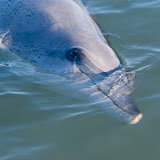 |
| 2008-09-27 Australia |
Saturday, November 15, 2008
Another Sunset
 I think I'm pretty lucky to get these kinds of views walking home from work. Better than staring at someone else's tail lights, that's for sure!
Friday, November 14, 2008
Carbon Offsets
I recently started buying carbon offsets from Planetair. For example, it cost me $650 to offset our flights to Australia and $25 to offset flights to Calgary. I also signed up for $30 per month which is what I calculate our electrical and heating equate to.
There's a lot of debate over carbon offsets and claiming to be carbon neutral. Do I think it will solve our climate change problems? No, but I think it's better than nothing. Just arguing about the best solution won't solve it.
The other question is where the best place to buy carbon offsets is. I just looked for a Canadian company with a good reputation. Planetair is recommended by quite a few organizations and is the only Gold Standard offsets in Canada. (for whatever that's worth) They're definitely not the cheapest, and for air flights they suggest doubling the offset because of the increased affects of emissions at high altitude. But to me it doesn't make much sense to look for the lowest cost.
Even if carbon offsets aren't the best solution, I can always just look at it as donating money towards the development of renewable energy.
As you can tell from the amounts above, it's my long distance travel that is the worst offender. In most other respects I think I'm doing quite a bit better than average. But so far, despite feeling strongly about the issue, I can't bring myself to quit traveling. So I'm also trying to offset a certain amount of guilt.
There's a lot of debate over carbon offsets and claiming to be carbon neutral. Do I think it will solve our climate change problems? No, but I think it's better than nothing. Just arguing about the best solution won't solve it.
The other question is where the best place to buy carbon offsets is. I just looked for a Canadian company with a good reputation. Planetair is recommended by quite a few organizations and is the only Gold Standard offsets in Canada. (for whatever that's worth) They're definitely not the cheapest, and for air flights they suggest doubling the offset because of the increased affects of emissions at high altitude. But to me it doesn't make much sense to look for the lowest cost.
Even if carbon offsets aren't the best solution, I can always just look at it as donating money towards the development of renewable energy.
As you can tell from the amounts above, it's my long distance travel that is the worst offender. In most other respects I think I'm doing quite a bit better than average. But so far, despite feeling strongly about the issue, I can't bring myself to quit traveling. So I'm also trying to offset a certain amount of guilt.
Monday, November 10, 2008
Banff Photos
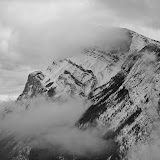
We just got back from our annual trip to the Banff Mountain Book and Film Festivals. We spent a free day hiking up Tunnel Mountain and around the 12km Spray River Loop. It had snowed overnight and the clouds were swirling around.
 |
| 2008-11-05 Banff |
Saturday, November 01, 2008
Glorious Sunrise
One of the good things about spring and fall is that sunrise and sunset coincide with going to and from work. I'm not sure the people in their cars appreciate it, but I sure do.


 (as usual, click for larger versions)


 (as usual, click for larger versions)
Thursday, October 30, 2008
Monday, October 27, 2008
Diving Down Under
There aren't any big mountains in Australia, but there is quite a bit of rock climbing. However, we decided not to haul our climbing gear around with us. Instead we planned to scuba dive. I've been diving for a while, but Shelley had just taken her dive course in the summer. She was a bit nervous about her first "real" dives. One of the things she was nervous about was having to do a big "giant step" entry into the water. Of course, the very first dive we did had the biggest giant step I'd ever done. It was about 3 m (10 ft) from the platform down to the water. That might not sound like much, but all geared up for diving it's a little intimidating. Shelley joked to the dive master that he might have to push her and he replied that it wouldn't be the first time!
Our first dives were out of Exmouth at the north end of the Ningaloo Marine Park. It's the main place to dive the Ningaloo Reef. We dove with Ningaloo Reef Dreaming. Just because of scheduling, our first dive wasn't even on the reef, it was the Navy Pier. It seems funny that you're at this world famous reef and one of the best dives is a pier! But the Exmouth Navy Pier is considered one of the top dive sights in the world. It didn't turn out so good for us. We arrived at the pier to be greeted by high winds, and rough, white capped water. The dive master went in to check conditions but soon returned reporting that visibility was about a meter and we wouldn't be able to dive. So much for that dive.
We came back in the afternoon and it was calmer, but there was still quite a lot of surge and visibility was only about 3 m. On top of that, we had a big group with quite a few beginners. Shelley and I were ready and jumped in first, which of course meant we then had to wait, bobbing up and down, for everyone else to get their act together. Finally everyone was in the water and we could descend. Not surprisingly given the conditions, one of the beginners (not Shelley!) didn't like it and the guide had to take them up and wait till they were safely up in the water. Again, we waited, this time at the bottom of the guide line instead of the top. Eventually the guide returned and we set off.
What a circus! With the poor visibility, everyone was trying to stay as close together as possible, And with the large group and the surge tossing us around, that meant constantly struggling to avoid getting kicked by the fins of the person in front of you. Shelley ended up holding her regulator to make sure it didn't get kicked out. At one point I did have my regulator kicked out of my mouth. I'd thought that would be a scary thing, but it was more confusing. It took me a minute to figure out what had happened and to realize I could no longer breath, at which point I grabbed my regulator and put it back in my mouth. I don't even recall having to clear it of water. Thankfully I didn't have any trouble locating it or I might have got a bit freaked out.
On top of the crowd problems, we were swimming in, around, and under the pilings of the pier while the surge and other people bumped us around. Shelley banged her head under one piling. We did see some big gray nurse sharks, which are one of the attractions, but even that was a rather murky view, obscured not only by the visibility, but also by the other divers struggling to see.
You could tell that in the right conditions it would be a great dive - there were a ton of fish going by and lots of stuff on the pilings. We hoped to get a chance to come back to try a second time but it didn't work out. It also would have been better if we'd explored on our own instead of with the group, but given the conditions and with it being Shelley's "first" dive we didn't. It was definitely a "trial by fire" for Shelley. Too bad we didn't have kinder conditions. But she did really well and handling the challenges gave her more confidence than an easy dive would have.
On the positive side, we saw whales breaching both times we were at the pier. And a big sea turtle swimming lazily alongside the pier.
The next day we headed to the Muiron Islands, about an hour boat ride from Exmouth. Unfortunately, conditions were still pretty rough. I struggled to avoid getting sea sick, keeping my eyes on the horizon. It was a bit sheltered at the first dive site, but there was still some surge. Of course, the rough conditions meant poor visibility again. Great coral and fish though.
I'd been feeling distinctly queasy before the second dive but was alright once I got in the water. But when I got back on the boat after the dive it was rocking and rolling a little too much. I barely got my gear off before rushing to the back of the boat to puke. I was surprised how suddenly it hit me. I skipped the next dive, although it was debatable whether sitting on the rocking boat was any better than diving feeling sick. Shelley still went on the third dive though, good for her. She said it was the best dive of the day, annoyingly!
The next day we went to Lighthouse Bay, a shorter boat ride, and conditions were a bit better. Except that there was quite a strong surface current. Even swimming from the back of the boat to the front (to descend the mooring line) was a struggle, especially for Shelley who was still getting the hang of swimming with all the dive gear on. Starting with a bit less air in her tank, and using it up a bit faster, Shelley needed to surface sooner than the rest of us. She went up with the assistant (trainee) guide. When we came up about 15 min later I was surprised that Shelley wasn't back at the boat. Unfortunately, her guide had misjudged and they came up a long way from the boat. With the strong surface current you had to swim hard just to stay in one place, let alone make any headway. Eventually, with some help from the guides, Shelley made it back to the boat, but she was exhausted and skipped the third dive. Probably just as well since the current was even stronger at the third site. One of the divers gave up before they even made it to the mooring line, after failing to swim against the current and getting pushed and banged against the side of the boat by it. Again, despite the less than ideal conditions, there was fantastic coral and sea life.
And that was the end of our three days of diving in Exmouth. We were a little disappointed that conditions hadn't been better, but there's not much you can do about that. If we'd had more time we could have waited for better conditions, but we had a lot of ground to cover. At least Shelley had 6 dives under her belt and wasn't a total beginner any more.
We did some snorkeling at Turquoise Bay in Cape Range Park near Exmouth. It was awesome snorkeling with lots of coral and fish and even a sea snake. Given the water temperature, you really needed a wet suit though. I had my own with me so I was fine, but Shelley didn't so she couldn't stay in as long.
Our next stop was Coral Bay at the South end of the Ningaloo Reef. This is a smaller town and we weren't even sure if there was a dive operator there. Luckily there was (Ningaloo Reef Dive) but all they had going the next day was a "wildlife viewing trip" with an optional single dive. We signed up. The first part was whale watching and we were lucky to see lots of humpbacked whales. The first sight of them was when one jumped completely out of the water just ahead of the boat. Pretty impressive. At one point we had two separate pods (groups) of whales on either side of the boat. Unfortunately, it's almost impossible to capture the whales in photographs. All you end up with is a a distant view of a sliver of their back. The pictures definitely don't convey how impressive it is to see such huge animals.
We weren't so excited about "swimming with the manta rays". The tour operators share a spotter plan to find the mantas. This day the plane only spotted one so multiple boats converged on it. The manta obviously just wanted to find some peace and quiet so it was swimming away at high speed. So the boat would race after the manta, try to drop us as close to it as possible, and then you were supposed to swim as fast as you could to catch a murky glimpse of the manta before it disappeared. I'm not an especially fast swimmer, especially with my camera in my hand, so the only glimpse I got was when the manta happened to double back past me. I could have done without this part of the outing.
The dive was great. It was inside the reef so it was much calmer. And Shelley and I were the only ones diving so it was just us and the guide. It was quite a shallow dive, at one point only a few meters deep. The coral was some of the best I've seen in size and variety and health. We saw sharks at one point. This is something that a lot of divers get really excited about and spend a bunch of time looking for. I'm not sure what the big attraction is. Usually you just see them cruising by in the distance. I'd rather look at the coral and the fish myself.
We enjoyed the dive so much we immediately signed up to dive the next day. All they had scheduled was a half day trip but at least it was two dives. The first dive wasn't as good as we'd hoped. There was some surge and it was along a wall with a sandy bottom. Not so much coral or fish. I spotted a few nudibranchs and rockfish and eels. But because of the surge, Shelley was hanging back from the wall and didn't see so much. The next dive was more like the day before with good coral and fish.
And that was the end of our diving. We'd have liked to do more but unfortunately we didn't have the time - too many other things we wanted to see and do. Next time ...
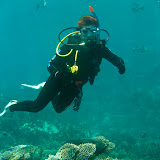
The photos aren't great - it's tough taking decent pictures underwater. But it's still nice to be able to share a little of how fantastic it is down there. (Taken with Canon SD700IS with Canon WP-DC5 underwater case, tweaked with Adobe Lightroom.)
Our first dives were out of Exmouth at the north end of the Ningaloo Marine Park. It's the main place to dive the Ningaloo Reef. We dove with Ningaloo Reef Dreaming. Just because of scheduling, our first dive wasn't even on the reef, it was the Navy Pier. It seems funny that you're at this world famous reef and one of the best dives is a pier! But the Exmouth Navy Pier is considered one of the top dive sights in the world. It didn't turn out so good for us. We arrived at the pier to be greeted by high winds, and rough, white capped water. The dive master went in to check conditions but soon returned reporting that visibility was about a meter and we wouldn't be able to dive. So much for that dive.
We came back in the afternoon and it was calmer, but there was still quite a lot of surge and visibility was only about 3 m. On top of that, we had a big group with quite a few beginners. Shelley and I were ready and jumped in first, which of course meant we then had to wait, bobbing up and down, for everyone else to get their act together. Finally everyone was in the water and we could descend. Not surprisingly given the conditions, one of the beginners (not Shelley!) didn't like it and the guide had to take them up and wait till they were safely up in the water. Again, we waited, this time at the bottom of the guide line instead of the top. Eventually the guide returned and we set off.
What a circus! With the poor visibility, everyone was trying to stay as close together as possible, And with the large group and the surge tossing us around, that meant constantly struggling to avoid getting kicked by the fins of the person in front of you. Shelley ended up holding her regulator to make sure it didn't get kicked out. At one point I did have my regulator kicked out of my mouth. I'd thought that would be a scary thing, but it was more confusing. It took me a minute to figure out what had happened and to realize I could no longer breath, at which point I grabbed my regulator and put it back in my mouth. I don't even recall having to clear it of water. Thankfully I didn't have any trouble locating it or I might have got a bit freaked out.
On top of the crowd problems, we were swimming in, around, and under the pilings of the pier while the surge and other people bumped us around. Shelley banged her head under one piling. We did see some big gray nurse sharks, which are one of the attractions, but even that was a rather murky view, obscured not only by the visibility, but also by the other divers struggling to see.
You could tell that in the right conditions it would be a great dive - there were a ton of fish going by and lots of stuff on the pilings. We hoped to get a chance to come back to try a second time but it didn't work out. It also would have been better if we'd explored on our own instead of with the group, but given the conditions and with it being Shelley's "first" dive we didn't. It was definitely a "trial by fire" for Shelley. Too bad we didn't have kinder conditions. But she did really well and handling the challenges gave her more confidence than an easy dive would have.
On the positive side, we saw whales breaching both times we were at the pier. And a big sea turtle swimming lazily alongside the pier.
The next day we headed to the Muiron Islands, about an hour boat ride from Exmouth. Unfortunately, conditions were still pretty rough. I struggled to avoid getting sea sick, keeping my eyes on the horizon. It was a bit sheltered at the first dive site, but there was still some surge. Of course, the rough conditions meant poor visibility again. Great coral and fish though.
I'd been feeling distinctly queasy before the second dive but was alright once I got in the water. But when I got back on the boat after the dive it was rocking and rolling a little too much. I barely got my gear off before rushing to the back of the boat to puke. I was surprised how suddenly it hit me. I skipped the next dive, although it was debatable whether sitting on the rocking boat was any better than diving feeling sick. Shelley still went on the third dive though, good for her. She said it was the best dive of the day, annoyingly!
The next day we went to Lighthouse Bay, a shorter boat ride, and conditions were a bit better. Except that there was quite a strong surface current. Even swimming from the back of the boat to the front (to descend the mooring line) was a struggle, especially for Shelley who was still getting the hang of swimming with all the dive gear on. Starting with a bit less air in her tank, and using it up a bit faster, Shelley needed to surface sooner than the rest of us. She went up with the assistant (trainee) guide. When we came up about 15 min later I was surprised that Shelley wasn't back at the boat. Unfortunately, her guide had misjudged and they came up a long way from the boat. With the strong surface current you had to swim hard just to stay in one place, let alone make any headway. Eventually, with some help from the guides, Shelley made it back to the boat, but she was exhausted and skipped the third dive. Probably just as well since the current was even stronger at the third site. One of the divers gave up before they even made it to the mooring line, after failing to swim against the current and getting pushed and banged against the side of the boat by it. Again, despite the less than ideal conditions, there was fantastic coral and sea life.
And that was the end of our three days of diving in Exmouth. We were a little disappointed that conditions hadn't been better, but there's not much you can do about that. If we'd had more time we could have waited for better conditions, but we had a lot of ground to cover. At least Shelley had 6 dives under her belt and wasn't a total beginner any more.
We did some snorkeling at Turquoise Bay in Cape Range Park near Exmouth. It was awesome snorkeling with lots of coral and fish and even a sea snake. Given the water temperature, you really needed a wet suit though. I had my own with me so I was fine, but Shelley didn't so she couldn't stay in as long.
Our next stop was Coral Bay at the South end of the Ningaloo Reef. This is a smaller town and we weren't even sure if there was a dive operator there. Luckily there was (Ningaloo Reef Dive) but all they had going the next day was a "wildlife viewing trip" with an optional single dive. We signed up. The first part was whale watching and we were lucky to see lots of humpbacked whales. The first sight of them was when one jumped completely out of the water just ahead of the boat. Pretty impressive. At one point we had two separate pods (groups) of whales on either side of the boat. Unfortunately, it's almost impossible to capture the whales in photographs. All you end up with is a a distant view of a sliver of their back. The pictures definitely don't convey how impressive it is to see such huge animals.
We weren't so excited about "swimming with the manta rays". The tour operators share a spotter plan to find the mantas. This day the plane only spotted one so multiple boats converged on it. The manta obviously just wanted to find some peace and quiet so it was swimming away at high speed. So the boat would race after the manta, try to drop us as close to it as possible, and then you were supposed to swim as fast as you could to catch a murky glimpse of the manta before it disappeared. I'm not an especially fast swimmer, especially with my camera in my hand, so the only glimpse I got was when the manta happened to double back past me. I could have done without this part of the outing.
The dive was great. It was inside the reef so it was much calmer. And Shelley and I were the only ones diving so it was just us and the guide. It was quite a shallow dive, at one point only a few meters deep. The coral was some of the best I've seen in size and variety and health. We saw sharks at one point. This is something that a lot of divers get really excited about and spend a bunch of time looking for. I'm not sure what the big attraction is. Usually you just see them cruising by in the distance. I'd rather look at the coral and the fish myself.
We enjoyed the dive so much we immediately signed up to dive the next day. All they had scheduled was a half day trip but at least it was two dives. The first dive wasn't as good as we'd hoped. There was some surge and it was along a wall with a sandy bottom. Not so much coral or fish. I spotted a few nudibranchs and rockfish and eels. But because of the surge, Shelley was hanging back from the wall and didn't see so much. The next dive was more like the day before with good coral and fish.
And that was the end of our diving. We'd have liked to do more but unfortunately we didn't have the time - too many other things we wanted to see and do. Next time ...
The photos aren't great - it's tough taking decent pictures underwater. But it's still nice to be able to share a little of how fantastic it is down there. (Taken with Canon SD700IS with Canon WP-DC5 underwater case, tweaked with Adobe Lightroom.)
 |
| 2008 Australia Underwater |
Monday, October 20, 2008
A Fall Walk
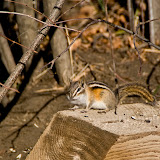
I went for a walk Sunday morning, just to enjoy the sunshine and the fresh air. Of course, I took my camera. It helps (forces?) me to look at everything in a different way, a good way I think.
My camera (the Pentax K10D) was behaving a little strangely at one point. Every other picture was much darker, even though I wasn't changing anything. It was even on a tripod so I wasn't even moving it. Looking at the metadata afterwards, it appears it was switching ISO,which it does normally, but without also changing the aperture or shutter speed. Very strange. It only did it for that one sequence of photos. They happened to be the ones where I used the tripod but I can't imagine how that would affect it. It's never done this before, that I've noticed, but in many situations I might not notice it, I'd just think the exposure was off.
 |
| 2008-10-19 Fall Walk |
My camera (the Pentax K10D) was behaving a little strangely at one point. Every other picture was much darker, even though I wasn't changing anything. It was even on a tripod so I wasn't even moving it. Looking at the metadata afterwards, it appears it was switching ISO,which it does normally, but without also changing the aperture or shutter speed. Very strange. It only did it for that one sequence of photos. They happened to be the ones where I used the tripod but I can't imagine how that would affect it. It's never done this before, that I've noticed, but in many situations I might not notice it, I'd just think the exposure was off.
Tuesday, October 14, 2008
Fall Sunset
When I stepped out of the building to go home the red tinge to the light told me the sun was setting. As I biked home, the crisp air (and the jacket and gloves) told me it was fall. There was a big harvest moon in the sky:

For some reason I didn't notice the sunset till I was almost home.


For some reason I didn't notice the sunset till I was almost home.

Sunday, October 12, 2008
Back from Down Under
We got back from Australia yesterday. 12 hours of sleep and I'm almost feeling normal.
I apologize for not blogging during the trip. I prefer to write about things at the time rather than after the fact but it obviously didn't this time. We were camping (tenting) for most of the time which isn't conducive to blogging or sorting photos. And there weren't a lot of internet places, partly because we were (deliberately) off the "beaten path". But even to me, those seem more like excuses. The big reason (problem?) was that we were too busy. Writing and sorting through photos takes me a fair bit of time.
There's such a drive to "fill up" your time, to not miss anything, to see as many things as possible. It's good but it leaves me feeling uncomfortable. It doesn't seem right that you're so busy that you look forward to coming home so you can relax. That's where my last trip to Mexico was nice. Apart from the diving I did, I didn't have any agenda, no sights to see, no places to go, no things to do. Just hanging out in a different place, soaking up the different place.
A recent post by Timothy Ferris interviewing Rolf Potts echoes this:
In any case, it was a great trip and I'm hoping to write it up "real soon". And post some pictures, as soon as I get a chance to pick out some good ones (out of the roughly 4500 I took - about 150 per day!)
I apologize for not blogging during the trip. I prefer to write about things at the time rather than after the fact but it obviously didn't this time. We were camping (tenting) for most of the time which isn't conducive to blogging or sorting photos. And there weren't a lot of internet places, partly because we were (deliberately) off the "beaten path". But even to me, those seem more like excuses. The big reason (problem?) was that we were too busy. Writing and sorting through photos takes me a fair bit of time.
There's such a drive to "fill up" your time, to not miss anything, to see as many things as possible. It's good but it leaves me feeling uncomfortable. It doesn't seem right that you're so busy that you look forward to coming home so you can relax. That's where my last trip to Mexico was nice. Apart from the diving I did, I didn't have any agenda, no sights to see, no places to go, no things to do. Just hanging out in a different place, soaking up the different place.
A recent post by Timothy Ferris interviewing Rolf Potts echoes this:
[I enjoyed Rolf's book Vagabonding and I'm looking forward to reading his new book, Marco Polo Didn’t Go There.]Travel isn’t about efficiency. It’s about leaving yourself open to new experiences. You can’t do this when you’re racing around on a strict itinerary. If you examine the truly life-affecting experiences I describe in my new book, you’ll find that they most all happened by accident. If you aren’t open to the unexpected — if you aren’t willing to get lost from time to time — you’ll be selling your travels short.
[Suggestion from Tim: reread the previous paragraph substituting "travel" and "travels" with "life".]
In any case, it was a great trip and I'm hoping to write it up "real soon". And post some pictures, as soon as I get a chance to pick out some good ones (out of the roughly 4500 I took - about 150 per day!)
Wednesday, September 10, 2008
2008 Prairie Pitch
I always breath a sigh of relief when the last racer crosses the finish line and I'm no longer "responsible" for them. And a final sigh of relief when the course is all taken down and I'm home again.
This year's race was a bit of a roller coaster, with Murphy doing his best to mess us up, and lady luck doing her best to rescue us. Maybe it was payback for everything going so smoothly last year. (Of course, I thought last year was payback for the problems the year before!) For example:
Several weeks before the race there's no water in the creek we're supposed to canoe on. Luckily it was only because they diverted water for irrigation and it came back again.
One land owner didsn't want us on his land, so I re-routed the course around it. Then, two weeks before the race, we found out his land actually juts out on one corner so I had to re-route the course again. In the process our proposed rappel location no longer worked and we had to hurriedly scout out another one. Luckily, we found a good spot nearby.
The people I'm counting on to lend us orienteering flags end up having an event the same weekend. Yikes! I arrange to borrow some from Alberta but they have an event the weekend before. Luckily, the flags arrive an hour before I leave for the race. Nothing like cutting it close!
Although statistically this area should have had little to no rain, the week before the race there's over 2 inches of rain. Two days before the race because of the mud we can't get our vehicle to the rappel and have to carry 4 big metal tripods and all the ropes and anchors a kilometer from the highway. Five trips later and I've completed the first 10 km of my race. (Of course, if I didn't keep forgetting things I could have cut out a couple of trips!) Things had just barely dried out enough to make the dirt roads passable and then it rained most of the night before the race. Even then, we might still have squeaked by but it rained again in the first few hours of the race.
The day before the race the water system at the camp burst and we had no water for toilets, let alone showers! Luckily it was easy to fix.
Because of all the changes I ended up printing the maps at the last minute. Of course, the printer has major problems - actually melting one of the rollers! Luckily we have a spare, even though it's not something we normally keep a spare of.
Anyway, you get the idea. It definitely added to the stress of organizing the race.
On top of the stress, there's just a lot of work involved in organizing this kind of event. I made 5 trips down to the area, totaling 14 days. (No wonder I didn't get out climbing much this summer!) Even just the driving time added up to 40 or 50 hours - a full work week! And then there's the countless hours preparing the maps and other materials, handling registration, and organizing volunteers, and all the hassles associated with each of those. Thank goodness Don Hernberg looked after dealing with the land owners - that was another big job all by itself.
Don and his son Michael have been wanting to organize their own race in the area. After the race I asked Don if he still wanted to do his own race. I had to smile at his response: "Well, I don't know, it's a huge amount of work."
Don't get me wrong - I enjoy it, especially the scouting and the planning. But still sometimes I wonder why I get myself into these things!
Race day just continued the roller coaster. I lay awake most of the short night before the race (the start is at 4 am) listening to the rain and wishing it would stop. It actually did stop about 3:30 am but then we had to decide what to do. Would the roads be passable for the volunteers and support vehicles? We decided they wouldn't be, so I quickly shuffled parts of the course to try to piece something together. But then the volunteers who had gone to the first location said that conditions weren't that bad, so we decided we'd go back to the original plan. Then, after we'd committed to that, it started raining again. And the vehicles that had gone ahead further reported that the roads were no good and we'd never get the support vehicles down them safely. So I had to re-shuffle the course yet again. As the saying goes, "No plan survives contact with the enemy."
I thought I'd designed the first foot stage in the dark to be fairly easy. You could follow a fence line from one road to another, and then follow the road to the transition. Even in the dark, you wouldn't think that should be too hard. And it wasn't for some teams. But others had more problems. Teams arrived up to 45 minutes late. One team arrived at the transition from the opposite direction, having somehow missed the road and done a big circle. One team quit and went home after this stage.
We'd carefully instructed teams not to cross the fence into the out of bounds area. Somehow, between racers and volunteers some teams heard "don't cross any fences". So when they came to the first fence they had to cross, they retreated. Even though the fence was fallen down, and we'd gone to the trouble to mark the route with a glow stick, and the map was pretty clear. Of course, after they retreated they found out they had been in the right place after all and they had to go back again (up a big hill). Ouch! I do have to give them credit for following instructions though!
Meanwhile, the racers were all on their way to a transition area where we couldn't get to and they were going to arrive to find no one there. I jumped on the quad with another volunteer and we got there as fast as we could. (I'm not a big fan of things like quads, but it's hard to argue in this kind of situation.) Surprisingly, despite the mud plastered biking, the racers were in good spirits and were understanding about the problems. We sent them on their way to bike another 10 km of mud to meet up with their support vehicles.
I stayed to wait for the last few teams. At this point I realized that there I was, alone, in the middle of nowhere with no water, no food, no pack, no first aid kit, no nothing. But hey, I had my clipboard! On the positive side, by this time the sun had come out and it turned into a reasonable day.
Once we'd regrouped all the racers and support in one location (the Jensen's farm) I let the racers vote on whether to continue biking, which they'd have to do if they wanted to do the bulk of the original course. As I expected, there were some teams that had had enough of biking in the mud, but most wanted to continue. In the end only one team decided not to get back on their bikes. At least everyone had a bit of a break and a chance to clean the worst of the mud off their bikes.
We took all the support people back to the camp, and at this point the volunteers and I could relax a little. We had 4 hours or so till we'd see the racers again.
The race finished up with the climbing wall and zip line and a foot section around the camp. Everyone crossed the finish line within about a 40 minute period - one of the nice things about the score format with timed stages. (Previous point-to-point Prairie Pitches had people crossing the finish line over as much as a six hour period.)
In hindsight, I could have planned the canoe stage near the camp. Not so nice, but we could have done it regardless of conditions. And I probably shouldn't have planned a transition in a spot we knew we wouldn't be able to get to if it rained a lot. (Regardless of whether a lot of rain should have been about as likely as winning the lottery.) But hindsight is always 20:20.
Even without the bad conditions, I also suspect I made the course a little too tough for the beginner teams. It's so hard to judge. When I raced in the Prairie Pitch I usually came in somewhere near the middle. So I figure I can regard myself as somewhat "average". However, when it comes to the hills, all my climbing experience probably makes me not so average. And after scouting the course multiple times it all starts to seem pretty easy!
An even bigger problem is the huge variation. Fast teams are twice as fast (or more) as slow teams. And bad conditions can easily be twice as slow as good conditions. So a fast team on a good day could be 4 times as fast as a slow team on a bad day. So do you allow an hour for a stage, or four hours? (Then add another factor of two for navigation skill!) In theory, the score format and its optional points accommodate for this. And it did for the most part. But because conditions were slow (at least on the biking) it meant that people got very few (if any) optional points, which makes the race less interesting.
Of course, you're not dealing with a blank slate when you're designing the course. There are all kinds of constraints that make it tough to adjust things the way you'd ideally like to. There are only roads and trails in certain spots. The interesting terrain is only in certain spots. Canoeing is only possible in certain spots. Support and volunteer vehicles can only reach certain spots. And, of course, you want to include as much good stuff as possible.
Oh well, it was definitely an adventure, for the organizers as well as racers. For the most part I think everyone had a good time despite the hiccups. All I can do is try to learn from the experience when I'm planning next year's race. Not that I want to think about that just yet!
I have to admit I'm looking forward to leaving tomorrow for a month in Australia where the most stressful decision will be which beach to lie on! (Ok, slight exaggeration, anyone who knows me knows that lying on the beach isn't exactly my style. But you get the idea.)
Links:
ACC Sask race web site
Photos
Map and Point List
This year's race was a bit of a roller coaster, with Murphy doing his best to mess us up, and lady luck doing her best to rescue us. Maybe it was payback for everything going so smoothly last year. (Of course, I thought last year was payback for the problems the year before!) For example:
Several weeks before the race there's no water in the creek we're supposed to canoe on. Luckily it was only because they diverted water for irrigation and it came back again.
One land owner didsn't want us on his land, so I re-routed the course around it. Then, two weeks before the race, we found out his land actually juts out on one corner so I had to re-route the course again. In the process our proposed rappel location no longer worked and we had to hurriedly scout out another one. Luckily, we found a good spot nearby.
The people I'm counting on to lend us orienteering flags end up having an event the same weekend. Yikes! I arrange to borrow some from Alberta but they have an event the weekend before. Luckily, the flags arrive an hour before I leave for the race. Nothing like cutting it close!
Although statistically this area should have had little to no rain, the week before the race there's over 2 inches of rain. Two days before the race because of the mud we can't get our vehicle to the rappel and have to carry 4 big metal tripods and all the ropes and anchors a kilometer from the highway. Five trips later and I've completed the first 10 km of my race. (Of course, if I didn't keep forgetting things I could have cut out a couple of trips!) Things had just barely dried out enough to make the dirt roads passable and then it rained most of the night before the race. Even then, we might still have squeaked by but it rained again in the first few hours of the race.
The day before the race the water system at the camp burst and we had no water for toilets, let alone showers! Luckily it was easy to fix.
Because of all the changes I ended up printing the maps at the last minute. Of course, the printer has major problems - actually melting one of the rollers! Luckily we have a spare, even though it's not something we normally keep a spare of.
Anyway, you get the idea. It definitely added to the stress of organizing the race.
On top of the stress, there's just a lot of work involved in organizing this kind of event. I made 5 trips down to the area, totaling 14 days. (No wonder I didn't get out climbing much this summer!) Even just the driving time added up to 40 or 50 hours - a full work week! And then there's the countless hours preparing the maps and other materials, handling registration, and organizing volunteers, and all the hassles associated with each of those. Thank goodness Don Hernberg looked after dealing with the land owners - that was another big job all by itself.
Don and his son Michael have been wanting to organize their own race in the area. After the race I asked Don if he still wanted to do his own race. I had to smile at his response: "Well, I don't know, it's a huge amount of work."
Don't get me wrong - I enjoy it, especially the scouting and the planning. But still sometimes I wonder why I get myself into these things!
Race day just continued the roller coaster. I lay awake most of the short night before the race (the start is at 4 am) listening to the rain and wishing it would stop. It actually did stop about 3:30 am but then we had to decide what to do. Would the roads be passable for the volunteers and support vehicles? We decided they wouldn't be, so I quickly shuffled parts of the course to try to piece something together. But then the volunteers who had gone to the first location said that conditions weren't that bad, so we decided we'd go back to the original plan. Then, after we'd committed to that, it started raining again. And the vehicles that had gone ahead further reported that the roads were no good and we'd never get the support vehicles down them safely. So I had to re-shuffle the course yet again. As the saying goes, "No plan survives contact with the enemy."
I thought I'd designed the first foot stage in the dark to be fairly easy. You could follow a fence line from one road to another, and then follow the road to the transition. Even in the dark, you wouldn't think that should be too hard. And it wasn't for some teams. But others had more problems. Teams arrived up to 45 minutes late. One team arrived at the transition from the opposite direction, having somehow missed the road and done a big circle. One team quit and went home after this stage.
We'd carefully instructed teams not to cross the fence into the out of bounds area. Somehow, between racers and volunteers some teams heard "don't cross any fences". So when they came to the first fence they had to cross, they retreated. Even though the fence was fallen down, and we'd gone to the trouble to mark the route with a glow stick, and the map was pretty clear. Of course, after they retreated they found out they had been in the right place after all and they had to go back again (up a big hill). Ouch! I do have to give them credit for following instructions though!
Meanwhile, the racers were all on their way to a transition area where we couldn't get to and they were going to arrive to find no one there. I jumped on the quad with another volunteer and we got there as fast as we could. (I'm not a big fan of things like quads, but it's hard to argue in this kind of situation.) Surprisingly, despite the mud plastered biking, the racers were in good spirits and were understanding about the problems. We sent them on their way to bike another 10 km of mud to meet up with their support vehicles.
I stayed to wait for the last few teams. At this point I realized that there I was, alone, in the middle of nowhere with no water, no food, no pack, no first aid kit, no nothing. But hey, I had my clipboard! On the positive side, by this time the sun had come out and it turned into a reasonable day.
Once we'd regrouped all the racers and support in one location (the Jensen's farm) I let the racers vote on whether to continue biking, which they'd have to do if they wanted to do the bulk of the original course. As I expected, there were some teams that had had enough of biking in the mud, but most wanted to continue. In the end only one team decided not to get back on their bikes. At least everyone had a bit of a break and a chance to clean the worst of the mud off their bikes.
We took all the support people back to the camp, and at this point the volunteers and I could relax a little. We had 4 hours or so till we'd see the racers again.
The race finished up with the climbing wall and zip line and a foot section around the camp. Everyone crossed the finish line within about a 40 minute period - one of the nice things about the score format with timed stages. (Previous point-to-point Prairie Pitches had people crossing the finish line over as much as a six hour period.)
In hindsight, I could have planned the canoe stage near the camp. Not so nice, but we could have done it regardless of conditions. And I probably shouldn't have planned a transition in a spot we knew we wouldn't be able to get to if it rained a lot. (Regardless of whether a lot of rain should have been about as likely as winning the lottery.) But hindsight is always 20:20.
Even without the bad conditions, I also suspect I made the course a little too tough for the beginner teams. It's so hard to judge. When I raced in the Prairie Pitch I usually came in somewhere near the middle. So I figure I can regard myself as somewhat "average". However, when it comes to the hills, all my climbing experience probably makes me not so average. And after scouting the course multiple times it all starts to seem pretty easy!
An even bigger problem is the huge variation. Fast teams are twice as fast (or more) as slow teams. And bad conditions can easily be twice as slow as good conditions. So a fast team on a good day could be 4 times as fast as a slow team on a bad day. So do you allow an hour for a stage, or four hours? (Then add another factor of two for navigation skill!) In theory, the score format and its optional points accommodate for this. And it did for the most part. But because conditions were slow (at least on the biking) it meant that people got very few (if any) optional points, which makes the race less interesting.
Of course, you're not dealing with a blank slate when you're designing the course. There are all kinds of constraints that make it tough to adjust things the way you'd ideally like to. There are only roads and trails in certain spots. The interesting terrain is only in certain spots. Canoeing is only possible in certain spots. Support and volunteer vehicles can only reach certain spots. And, of course, you want to include as much good stuff as possible.
Oh well, it was definitely an adventure, for the organizers as well as racers. For the most part I think everyone had a good time despite the hiccups. All I can do is try to learn from the experience when I'm planning next year's race. Not that I want to think about that just yet!
I have to admit I'm looking forward to leaving tomorrow for a month in Australia where the most stressful decision will be which beach to lie on! (Ok, slight exaggeration, anyone who knows me knows that lying on the beach isn't exactly my style. But you get the idea.)
Links:
ACC Sask race web site
Photos
Map and Point List
Tuesday, September 02, 2008
2008 Prairie Pitch Adventure Race
The Shaunavon Standard has run a couple of stories on this year's race - Race trek and Gearing up for adventure.
I enjoy planning and organizing these races, but it's a lot of work, and can be a little stressful. I'm just crossing my fingers the weather isn't too evil!
I enjoy planning and organizing these races, but it's a lot of work, and can be a little stressful. I'm just crossing my fingers the weather isn't too evil!
Thursday, August 28, 2008
Elephants in Bangkok
Check out the story and photos. Amazing!
I love the angles and light in the photos.
Bangkok is such a huge busy city full of cars and people. It's bizarre to think of elephants there. It makes me want to go visit. If I ever get back to Bangkok I'll have to look for them.
I love the angles and light in the photos.
Bangkok is such a huge busy city full of cars and people. It's bizarre to think of elephants there. It makes me want to go visit. If I ever get back to Bangkok I'll have to look for them.
Tiger, Tiger, Burning Bright
I was riding my bicycle to work yesterday and encountered a tiger salamander. Of course, I jammed on the brakes, hopped off my bike, and pulled out my camera.
 The question, of course, is why did the tiger salamander cross the road? I'm not sure. It rained a lot yesterday which may have something to do with it. It surprises me that they're active when it's cold - the overnight low must have been around 5 c and it had only warmed up to about 8 by this time. I wonder if they move to different places to spend the winter? Or if they're out looking for mates? A couple of years ago I saw another one near here at a similar time of the year in even colder temperatures.
 When I moved close to photograph him (her?), he'd curl up his tail. But after I squatted in front of him for a few minutes without moving he approached my feet and appeared to be looking for a hiding spot under my shoes.
 They almost look like they're smiling. After taking pictures I backed off and watched to see where he'd go, assuming he'd cross the trail and head off into the grass. But no, he seemed intent on heading straight down the middle of the path. This is a busy trail with bicycles and walkers and dogs and I didn't think the trail was the best place for him so I carefully picked him up and moved him onto the grass where he soon disappeared.
I'm not sure what the attraction of the trail was. Maybe to a salamander it resembled some kind of drainage that it was programmed (by evolution) to follow to the next pool of water.
I put my camera away and got back on my bike, only to encounter a second salamander a few hundred meters away.
 This one was slightly larger and appeared to still have remnants of the gills they have in their aquatic larval stage.
I know to a lot of people it'd just be another ugly critter and a slimy, crawly one at that. But I love 'em all.
 The question, of course, is why did the tiger salamander cross the road? I'm not sure. It rained a lot yesterday which may have something to do with it. It surprises me that they're active when it's cold - the overnight low must have been around 5 c and it had only warmed up to about 8 by this time. I wonder if they move to different places to spend the winter? Or if they're out looking for mates? A couple of years ago I saw another one near here at a similar time of the year in even colder temperatures.
 When I moved close to photograph him (her?), he'd curl up his tail. But after I squatted in front of him for a few minutes without moving he approached my feet and appeared to be looking for a hiding spot under my shoes.
 They almost look like they're smiling. After taking pictures I backed off and watched to see where he'd go, assuming he'd cross the trail and head off into the grass. But no, he seemed intent on heading straight down the middle of the path. This is a busy trail with bicycles and walkers and dogs and I didn't think the trail was the best place for him so I carefully picked him up and moved him onto the grass where he soon disappeared.
I'm not sure what the attraction of the trail was. Maybe to a salamander it resembled some kind of drainage that it was programmed (by evolution) to follow to the next pool of water.
I put my camera away and got back on my bike, only to encounter a second salamander a few hundred meters away.
 This one was slightly larger and appeared to still have remnants of the gills they have in their aquatic larval stage.
I know to a lot of people it'd just be another ugly critter and a slimy, crawly one at that. But I love 'em all.
* The title is from a line from a William Blake poem.
Saturday, August 16, 2008
A Letter to Arc'teryx
I recently sent this to Arc'teryx:
I love your products. I have used your clothes, packs, and harnesses for many years. I love the attention you pay to design and details
However, I was recently shopping for a new harness at MEC and I was quite disappointed to see the metal box packaging.
In a time when we should be placing more and more emphasis on sustainability and the environment I think it's awful that you would choose such wasteful packaging.
Sure, the metal boxes look nice, but they aren't even very good packaging. Once you pull a harness out to look at it or check sizing it's just about impossible to fit it back in the box, with the result that the sales rack is full of lids and boxes with harnesses hanging out. Not the elegant look that I assume you were aiming for.
Please consider changing your packaging. A simple mesh bag or cardboard box would be more than enough.
If you agree, consider sending your own letter to Arc'teryx.
I love your products. I have used your clothes, packs, and harnesses for many years. I love the attention you pay to design and details
However, I was recently shopping for a new harness at MEC and I was quite disappointed to see the metal box packaging.
In a time when we should be placing more and more emphasis on sustainability and the environment I think it's awful that you would choose such wasteful packaging.
Sure, the metal boxes look nice, but they aren't even very good packaging. Once you pull a harness out to look at it or check sizing it's just about impossible to fit it back in the box, with the result that the sales rack is full of lids and boxes with harnesses hanging out. Not the elegant look that I assume you were aiming for.
Please consider changing your packaging. A simple mesh bag or cardboard box would be more than enough.
If you agree, consider sending your own letter to Arc'teryx.
Friday, August 15, 2008
Ouch!
Shelley and I were out climbing a few days ago.
The first day we had planned to do a climb called Joy in Kananaskis but we woke up to rain and low clouds - not the kind of conditions we wanted to start a 10 or 12 pitch climb, even if it was easy.
So we drove out to Yamnuska where the weather was at least a bit better. The clouds were higher and it only sprinkled on us a couple of times. We did an easy route called Kings Chimneys which we'd done before but not for many years.
The next day we met up with a couple of friends (Mark and Jackie) and set out to do a route called Gooseberry on the side of Tunnel Mountain just outside Banff. Again, we'd done the route before, but not for a few years.
One of the nice things about Gooseberry is the short approach - it only takes 15 minutes of easy walking from car to base. We arrived early and set off. The plan was for Mark to practice leading on some of the easy pitches and for Shelley and I to lead the harder pitches. Shelley and Mark would climb on one rope, Jackie and I on another.
Shelley led the first pitch, Mark the second. I was belaying Jackie up the second pitch as Mark belayed Shelley on the third pitch. The third pitch is the crux of the route. Not hard by modern standards, but a bit awkward and slippery. Both Shelley and I had led it previously without any problems.
Shelley was around the corner out of sight, but we heard a yell and the rope went tight to Mark. Holy shit! Shelley had fallen! There was no warning, she hadn't been in trouble or off route. It was a scary minute or two. At first all we could hear was some groaning. We yelled to try to find out if she was ok. I thought she didn't sound too bad but Mark had never heard Shelley make those kind of noises and he thought she might be hurt badly.
Eventually (probably less than a minute but it felt much longer) Shelley yelled down that she was "ok".
There was a guided party on a nearby route and the guide had seen Shelley fall. He talked her out of immediately climbing back up and trying again. (Shelley can be quite determined!)
Luckily (?) the last piece of protection had been a bolt. Mark was able to lower her back down to the belay. Between the rope going around the corner, Shelley being above the anchor, and then the rope stretch, she'd fallen almost 20 feet, luckily stopping just before a broken ledge.
Considering the fall she'd just taken, she looked remarkably unscathed. No blood or even visible scrapes. Her harness had dug into her ribs on one side and she'd hit her tail bone on something but neither seemed serious. Apparently she had been climbing along just fine when her foot had slipped off with no warning.
At first she was still talking about going back up to finish the pitch. When we talked her out of leading she still wanted to follow on the rest of the climb. But as time passed her bumps and bruises became more painful and she finally started to talk about going down.
Next, she wanted to go down on her own, so the rest of us could continue the climb. We refused to let her go down alone. She argued but I told her the victim doesn't get to make the decisions! We lowered Jackie down and then Shelley rappelled so she could control her descent (with Jackie controlling the bottom of the rope to stop her if necessary). Luckily we were less than 60 meters off the ground and we could do this with a single rope.
Predictably, when we dropped the rope to them it got caught and Jackie couldn't pull it down. So Mark and I had to pull the rope off the next pitch so he could lower me to where I could unsnag it.
Shelley insisted that Mark and I should finish the climb and we agreed, partly because I knew Shelley would be pissed off if she "ruined" our day.
We had started early, to avoid other people on the route, but by the time we finished all this two other parties had passed us, with the very slow guided group in front. We waited almost an hour more on the ledge before they'd all gone by and we could continue. We ended up having to wait at every belay and twice I had to wait 10 or 15 minutes halfway up a pitch because the belay was too crowded.
I was a little nervous leading the pitch Shelley had just fallen off, but it went fine. As did the rest of the route (albeit slowly). Despite the rather unnerving events, Mark led three of the seven pitches and did very well.
Not being in shape for climbing (having only been out a few days this year) I relied on my experience and finesse more than strength. Thankfully that's possible on a relatively moderate route like this. (Speaking of experience, when we were on Kings Chimneys the day before I'd been having trouble remembering the route from the first time I climbed it. Shelley pointed out that it wasn't surprising since it was 30 years ago!)
While we finished the climb I was concerned about Shelley but she'd seemed ok. The worst part was that every time I shared a belay with the guide he kept telling me how bad the fall looked and how he sure hoped she was ok. Still, I was grateful he had talked her into going down instead of trying to finish leading the pitch.
We met up with Shelley and Jackie after the climb. They'd gone to the hospital for x-rays and everything looked ok. A bad bruise on her tail bone, and maybe some torn cartilage around her ribs, but no broken bones.
Shelley and I have had a remarkably "uneventful" climbing career. This was the first lead fall either of us have had (other than on single pitch bolted sport climbs). We hadn't even been around when anyone else had taken a bad fall. That's partly due to our conservative style, but it's also pretty lucky considering all the years of climbing we've done.
If I was religious I'd be thanking God. A fall like this could have been so much worse - broken bones, compound fractures, hitting your head. I don't even like to think about it. To come out with only a few bruises was incredibly good fortune.
Shelley's ribs are still quite painful, but I came home yesterday to find her mowing the lawn! So I guess she's not going to let it slow her down too much. And, of course, she's insistent that we have to go back so she can finish leading that pitch!
The first day we had planned to do a climb called Joy in Kananaskis but we woke up to rain and low clouds - not the kind of conditions we wanted to start a 10 or 12 pitch climb, even if it was easy.
So we drove out to Yamnuska where the weather was at least a bit better. The clouds were higher and it only sprinkled on us a couple of times. We did an easy route called Kings Chimneys which we'd done before but not for many years.
The next day we met up with a couple of friends (Mark and Jackie) and set out to do a route called Gooseberry on the side of Tunnel Mountain just outside Banff. Again, we'd done the route before, but not for a few years.
One of the nice things about Gooseberry is the short approach - it only takes 15 minutes of easy walking from car to base. We arrived early and set off. The plan was for Mark to practice leading on some of the easy pitches and for Shelley and I to lead the harder pitches. Shelley and Mark would climb on one rope, Jackie and I on another.
Shelley led the first pitch, Mark the second. I was belaying Jackie up the second pitch as Mark belayed Shelley on the third pitch. The third pitch is the crux of the route. Not hard by modern standards, but a bit awkward and slippery. Both Shelley and I had led it previously without any problems.
Shelley was around the corner out of sight, but we heard a yell and the rope went tight to Mark. Holy shit! Shelley had fallen! There was no warning, she hadn't been in trouble or off route. It was a scary minute or two. At first all we could hear was some groaning. We yelled to try to find out if she was ok. I thought she didn't sound too bad but Mark had never heard Shelley make those kind of noises and he thought she might be hurt badly.
Eventually (probably less than a minute but it felt much longer) Shelley yelled down that she was "ok".
There was a guided party on a nearby route and the guide had seen Shelley fall. He talked her out of immediately climbing back up and trying again. (Shelley can be quite determined!)
Luckily (?) the last piece of protection had been a bolt. Mark was able to lower her back down to the belay. Between the rope going around the corner, Shelley being above the anchor, and then the rope stretch, she'd fallen almost 20 feet, luckily stopping just before a broken ledge.
Considering the fall she'd just taken, she looked remarkably unscathed. No blood or even visible scrapes. Her harness had dug into her ribs on one side and she'd hit her tail bone on something but neither seemed serious. Apparently she had been climbing along just fine when her foot had slipped off with no warning.
At first she was still talking about going back up to finish the pitch. When we talked her out of leading she still wanted to follow on the rest of the climb. But as time passed her bumps and bruises became more painful and she finally started to talk about going down.
Next, she wanted to go down on her own, so the rest of us could continue the climb. We refused to let her go down alone. She argued but I told her the victim doesn't get to make the decisions! We lowered Jackie down and then Shelley rappelled so she could control her descent (with Jackie controlling the bottom of the rope to stop her if necessary). Luckily we were less than 60 meters off the ground and we could do this with a single rope.
Predictably, when we dropped the rope to them it got caught and Jackie couldn't pull it down. So Mark and I had to pull the rope off the next pitch so he could lower me to where I could unsnag it.
Shelley insisted that Mark and I should finish the climb and we agreed, partly because I knew Shelley would be pissed off if she "ruined" our day.
We had started early, to avoid other people on the route, but by the time we finished all this two other parties had passed us, with the very slow guided group in front. We waited almost an hour more on the ledge before they'd all gone by and we could continue. We ended up having to wait at every belay and twice I had to wait 10 or 15 minutes halfway up a pitch because the belay was too crowded.
I was a little nervous leading the pitch Shelley had just fallen off, but it went fine. As did the rest of the route (albeit slowly). Despite the rather unnerving events, Mark led three of the seven pitches and did very well.
Not being in shape for climbing (having only been out a few days this year) I relied on my experience and finesse more than strength. Thankfully that's possible on a relatively moderate route like this. (Speaking of experience, when we were on Kings Chimneys the day before I'd been having trouble remembering the route from the first time I climbed it. Shelley pointed out that it wasn't surprising since it was 30 years ago!)
While we finished the climb I was concerned about Shelley but she'd seemed ok. The worst part was that every time I shared a belay with the guide he kept telling me how bad the fall looked and how he sure hoped she was ok. Still, I was grateful he had talked her into going down instead of trying to finish leading the pitch.
We met up with Shelley and Jackie after the climb. They'd gone to the hospital for x-rays and everything looked ok. A bad bruise on her tail bone, and maybe some torn cartilage around her ribs, but no broken bones.
Shelley and I have had a remarkably "uneventful" climbing career. This was the first lead fall either of us have had (other than on single pitch bolted sport climbs). We hadn't even been around when anyone else had taken a bad fall. That's partly due to our conservative style, but it's also pretty lucky considering all the years of climbing we've done.
If I was religious I'd be thanking God. A fall like this could have been so much worse - broken bones, compound fractures, hitting your head. I don't even like to think about it. To come out with only a few bruises was incredibly good fortune.
Shelley's ribs are still quite painful, but I came home yesterday to find her mowing the lawn! So I guess she's not going to let it slow her down too much. And, of course, she's insistent that we have to go back so she can finish leading that pitch!
Subscribe to:
Posts (Atom)