Tuesday, April 18, 2017

Walking to Work

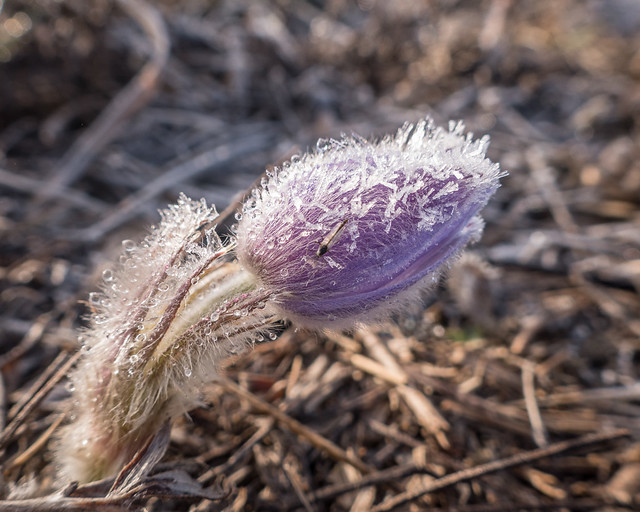
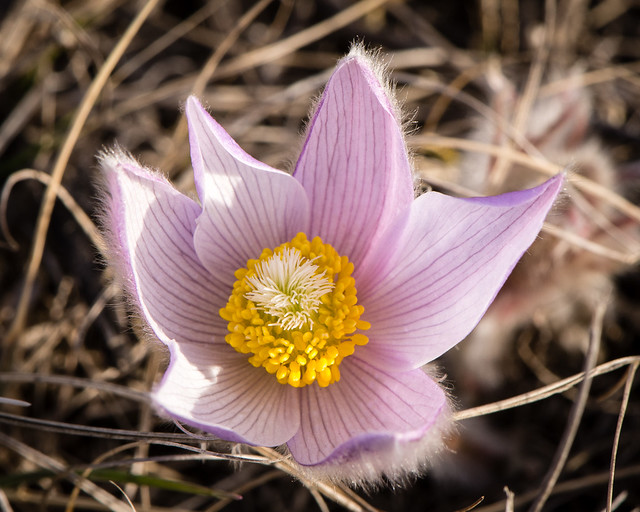
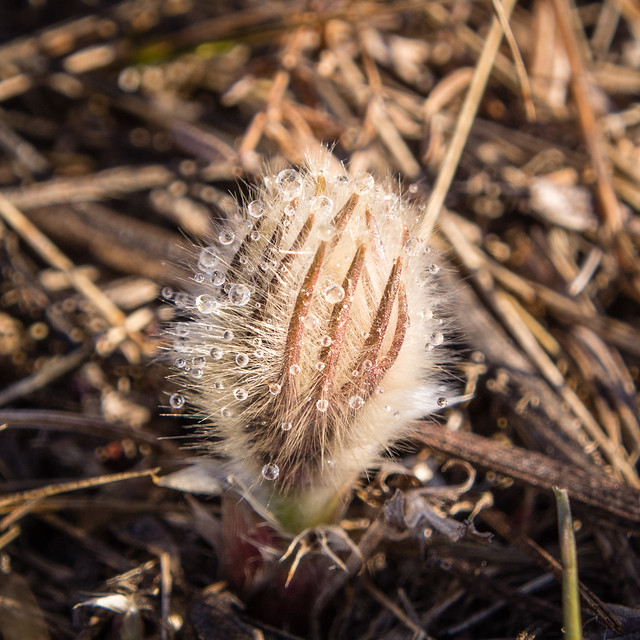
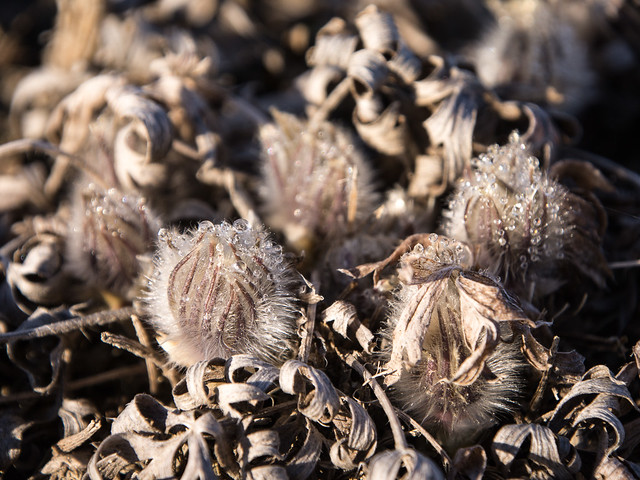
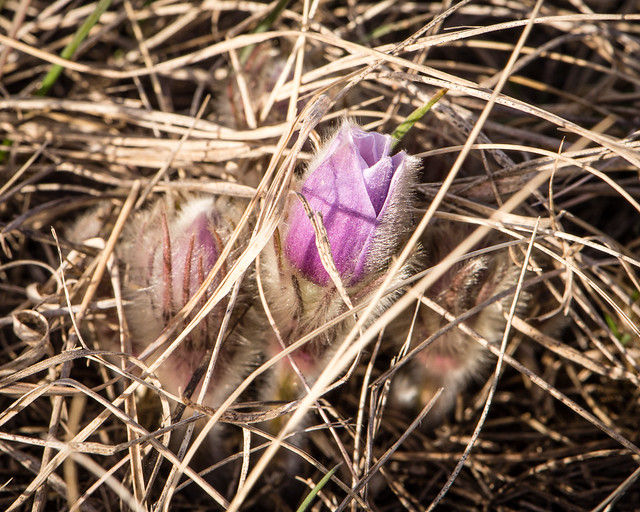
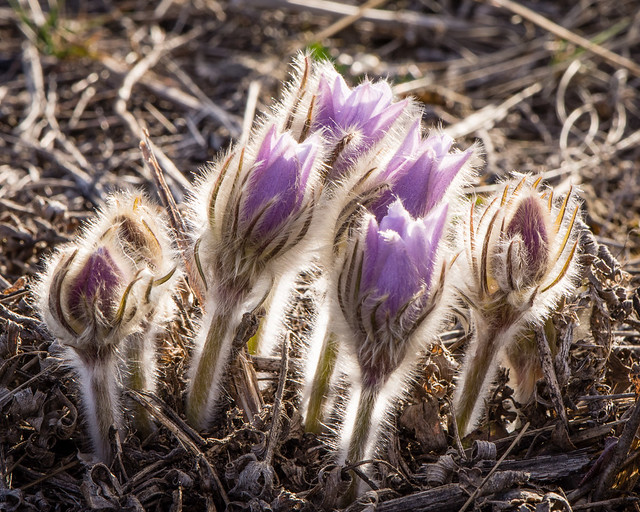
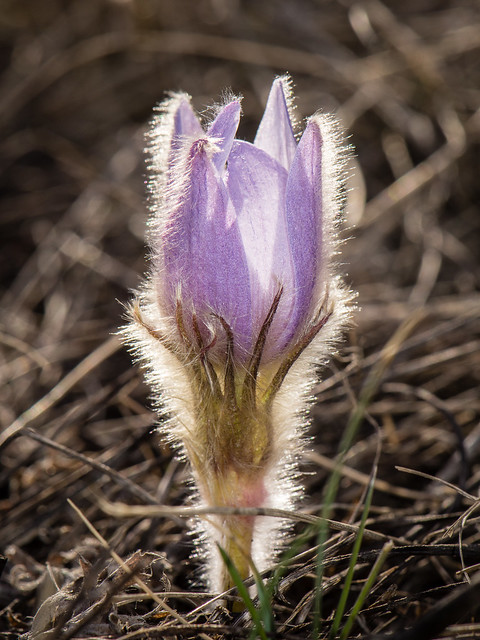
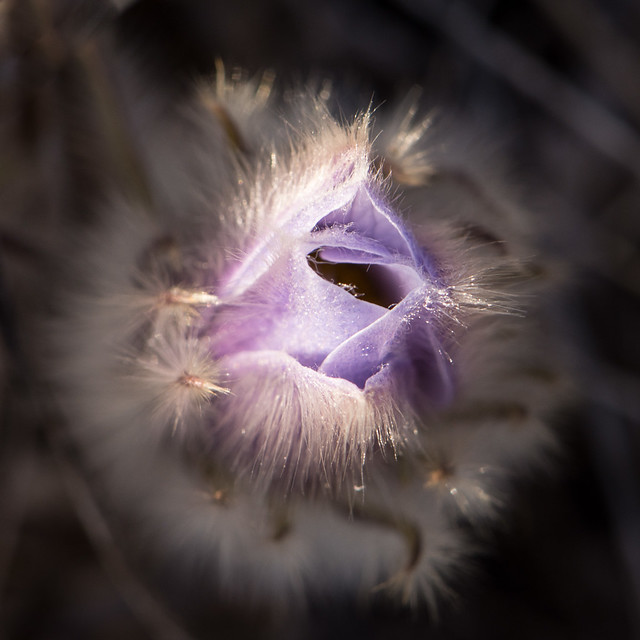
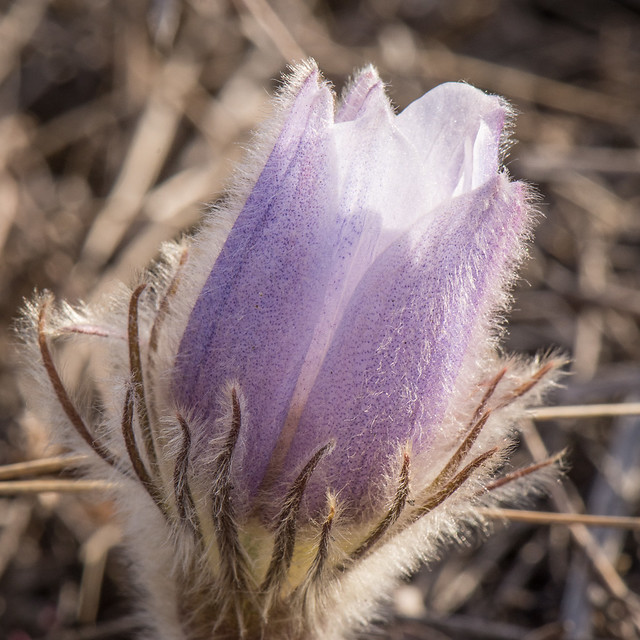
More photos from walking to work. The crocuses continue to bloom gorgeously. This morning there was still some frost on them when I first got there, but it melted rapidly in the sun.
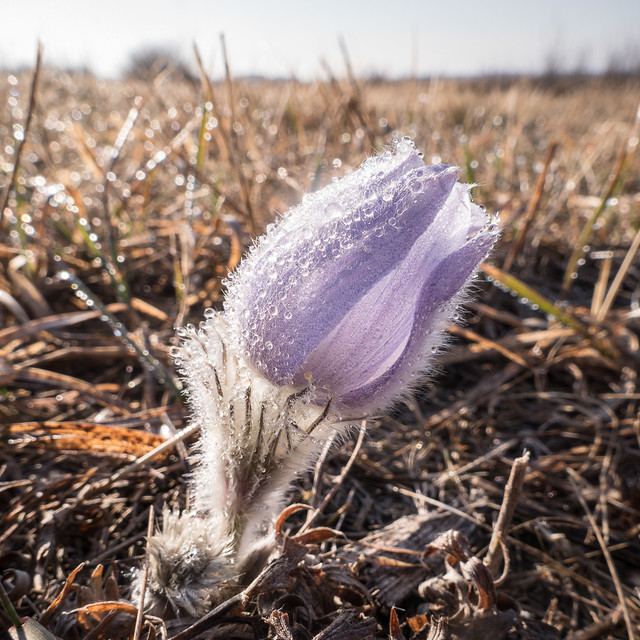
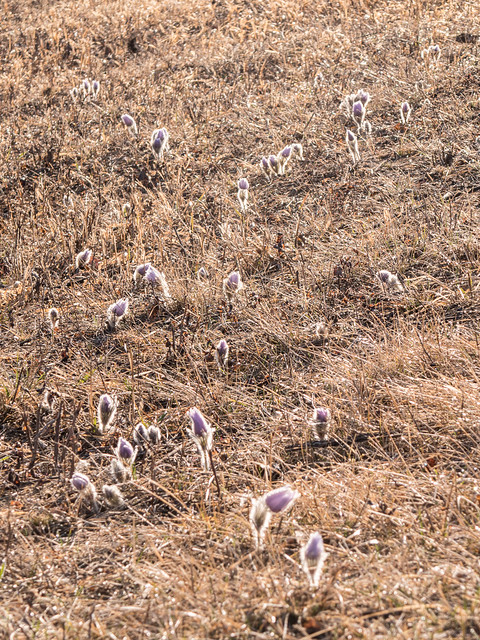
Prairie Crocus

Prairie Crocus

Prairie Crocus

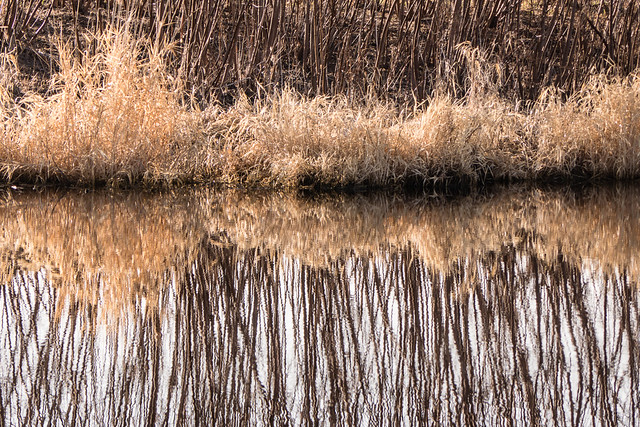
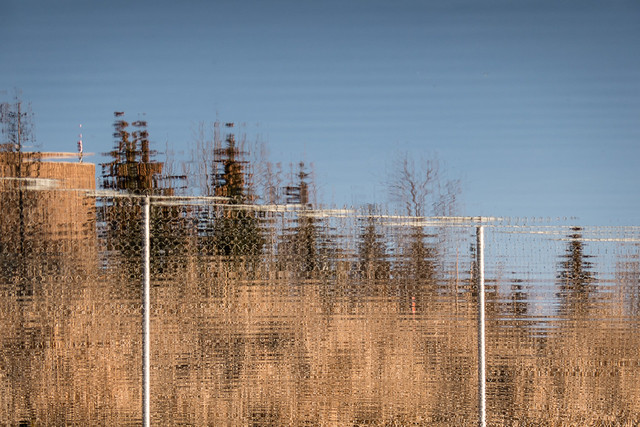
There was almost no wind that day and the dugout was like a mirror.
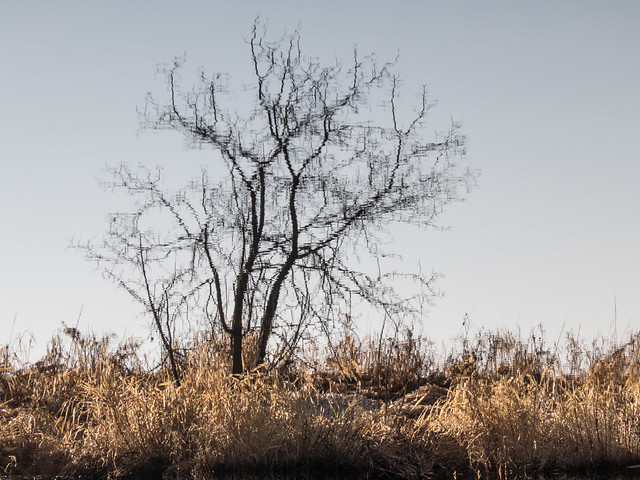
reflections

reflections

Some of the old cattails end up quite bizarre looking.
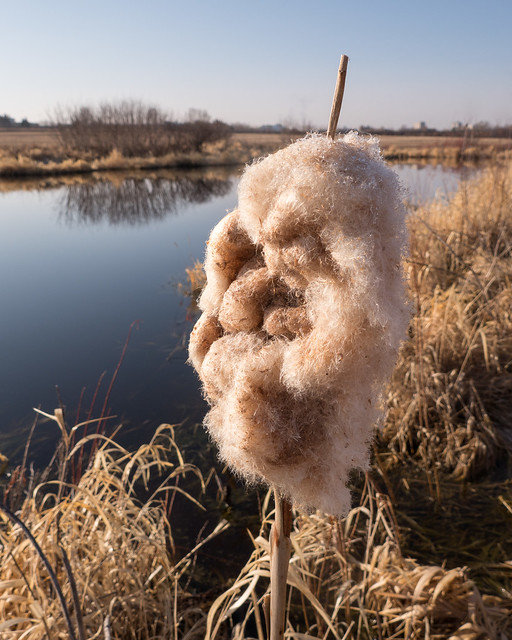
cattail

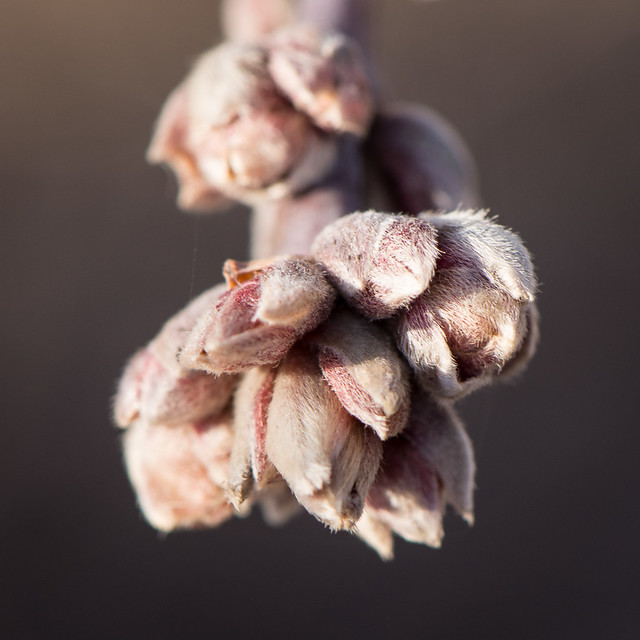
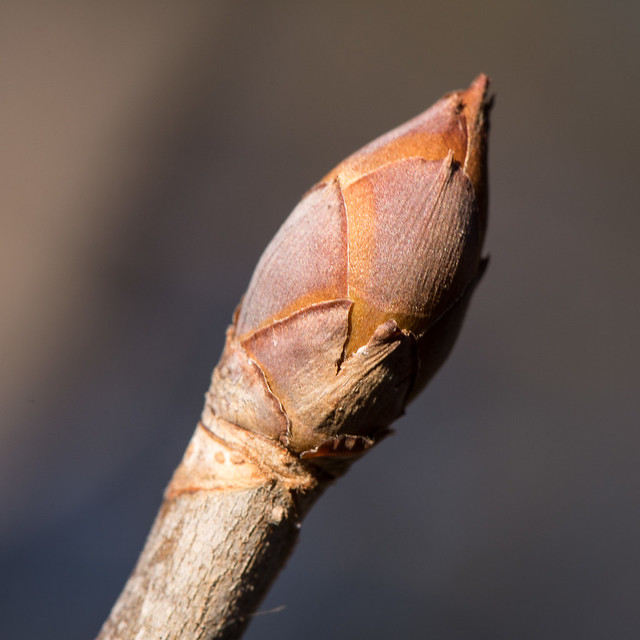
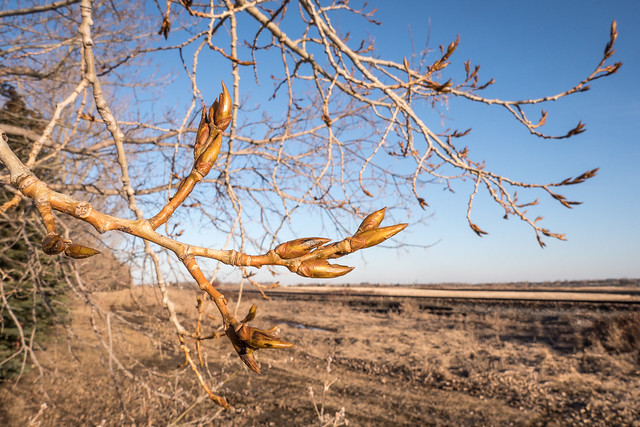
I continue to monitor the buds on the trees as they slowly open. It's amazing how they can survive nights well below freezing (-10c).
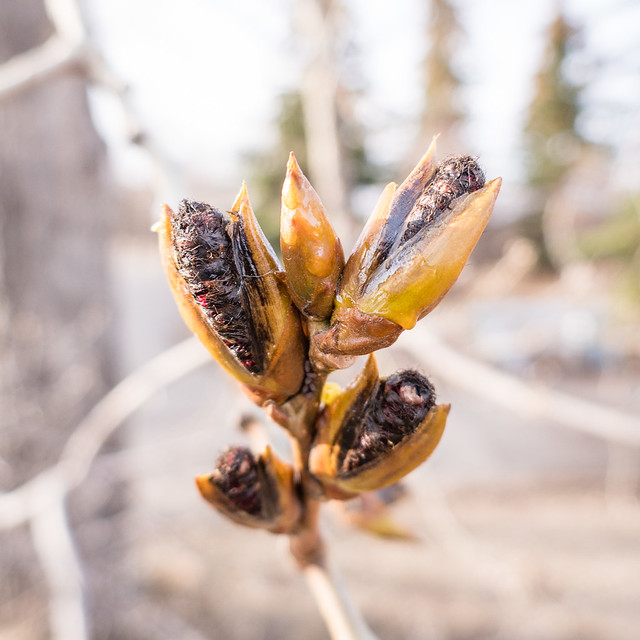
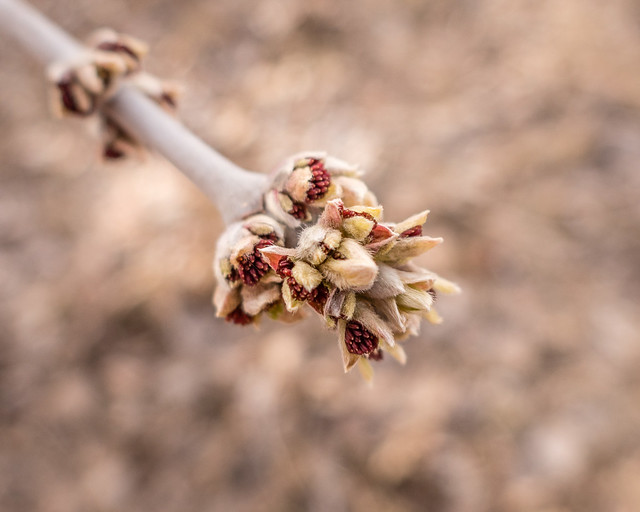
tree buds

tree buds

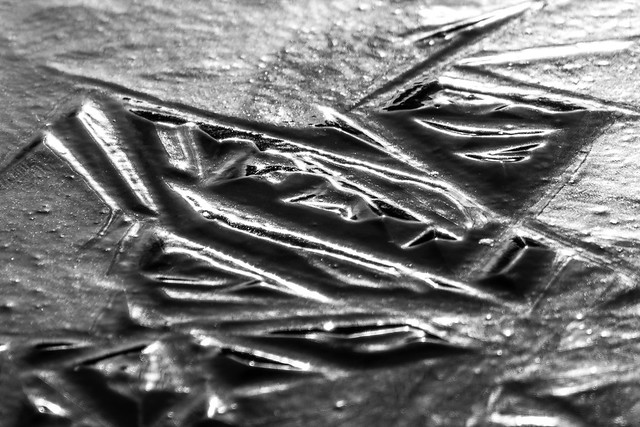
The pond at Innovation Place has been freezing over at night, making some interesting patterns.
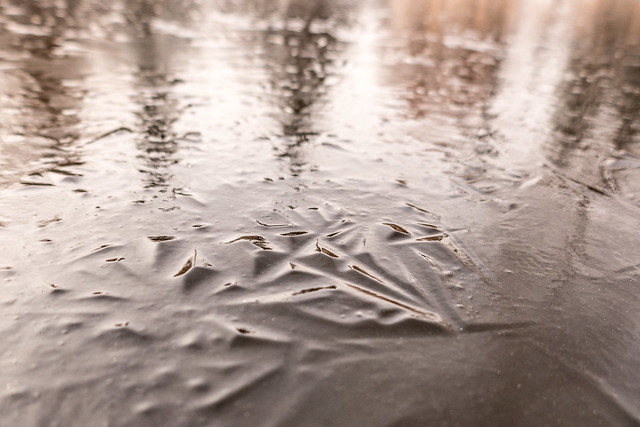
ice

ice

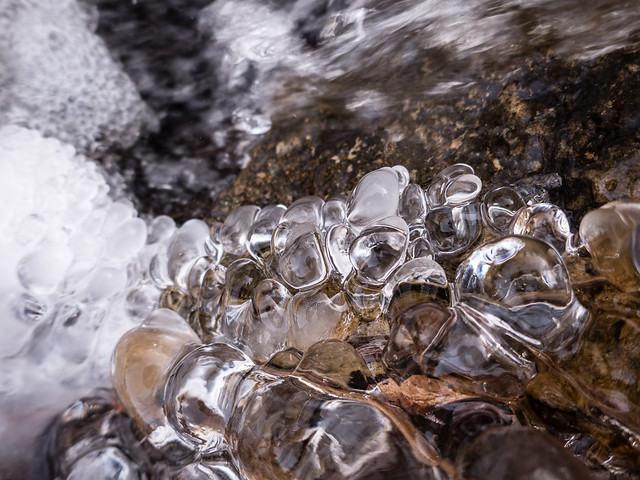
The little (artificial) stream splashes the grass and freezes into weird and wonderful shapes.
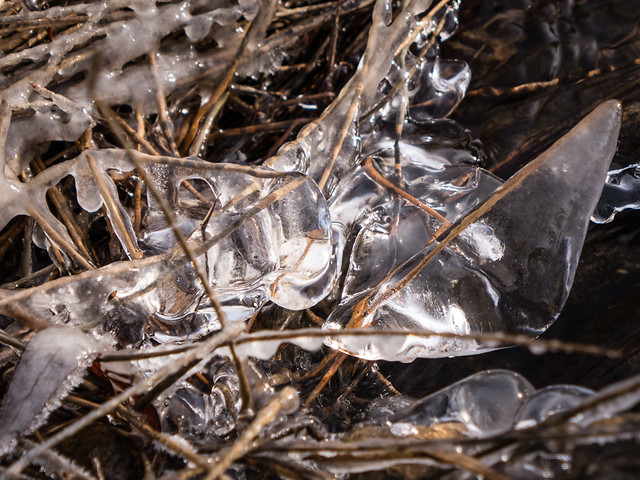
ice

ice

While I was crouched down by the water several birds came to visit.
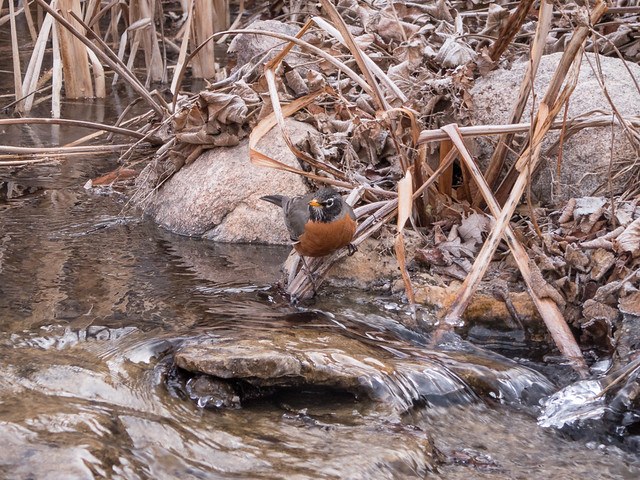
American Robin

This house finch was too shy for a good photograph.
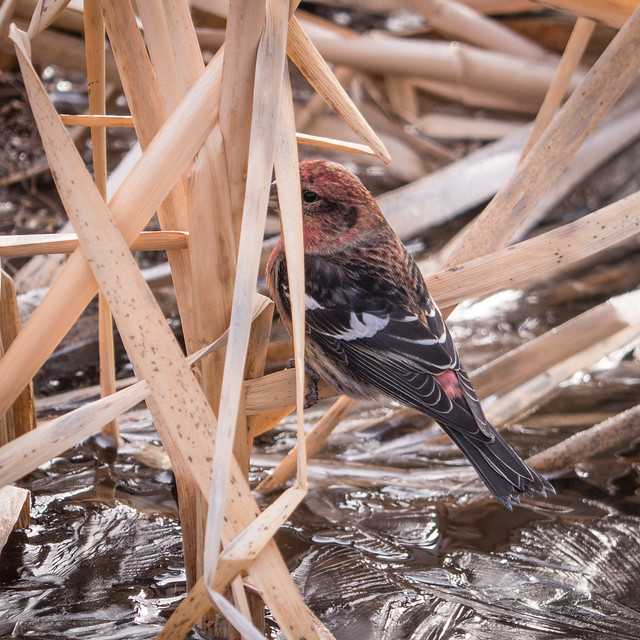
shy house finch

See all 37 photos
Sunday, April 16, 2017

Deadfall

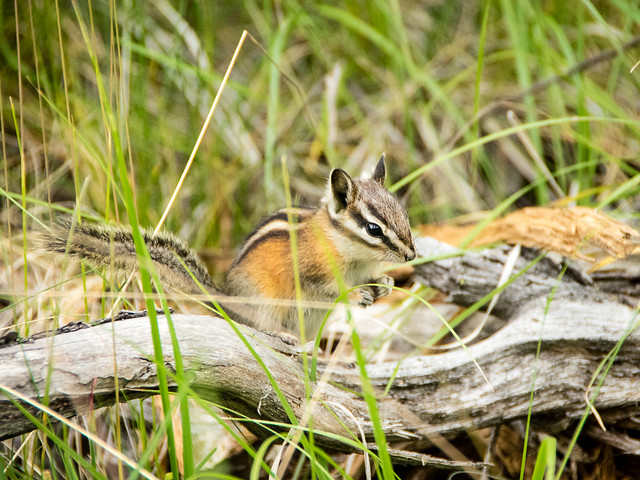
chipmunk

One of the excuses the city has been giving for butchering the trees and bulldozing the riverbank is that there was a lot of "deadfall". They say this in horrified tones as if it was some terrible disease.

Gimme a break, deadfall is perfectly normal. A healthy forest will have deadfall. It provides shelter and homes to birds and insects and other animals.  Lichen and moss and mushrooms and other fungi grow on it. It decomposes and provides nutrients to the soil.

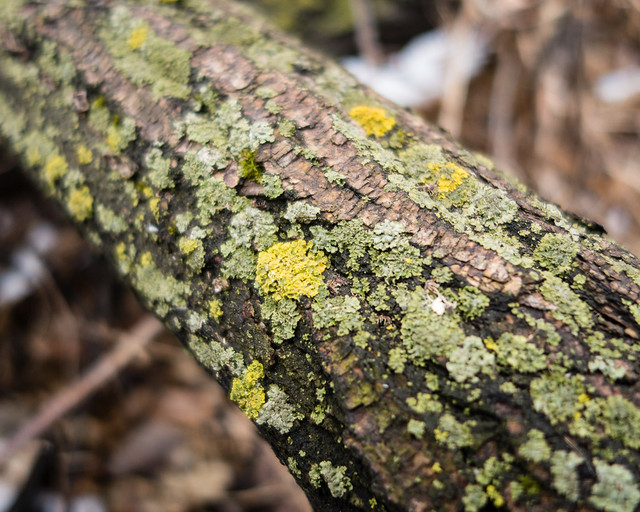
moss & lichen

Maybe you've seen them clearing deadfall from forests. The reason we do that is because we've suppressed the natural cycle of fires. And so we pile mistake on top of mistake.

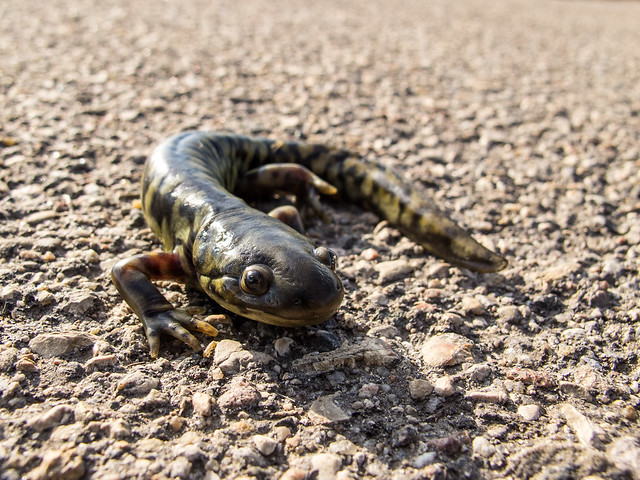
Humans have a seemingly insatiable desire to manage nature. We can't have a natural area without supervising it, which means roads and trails and all kinds of interference. We turn Grasslands National Park into a giant cattle pasture, supposedly to make up for wiping out the buffalo. Of course, you can't have cattle without fences and roads and dugouts. How about we just bring the buffalo back. Of course, we can't do that without treating them like cattle and rounding them up and herding them around. We can't have wolves or bears or cougars without radio collaring them. Perhaps it's some deep seated fear of the wild. After all, who knows what horrible beast (without a radio collar!) might be lurking under that deadfall. Perhaps something fearsome like a salamander.

Tiger Salamander

Come on people, nature did perfectly well for billions of years without us to "manage" it. The only reason we need to manage it is because we're in the process of destroying it. If our management did anything to slow down this destruction it might be worth it. But it doesn't. If anything it just hastens the process.

I think another part of the problem is that humans don't have much patience and they seldom take the long view. It takes decades or even centuries to grow trees. It's so much quicker to cut them down and plant grass and asphalt.

I'm ok with making a path so people can enjoy nature. Perhaps they won't destroy it quite so quickly if they appreciate it. But if you destroy the very nature that they're coming to see, in the process of creating the path so they can see it, all you end up with is yet another stretch of sterile pavement. If that's what people wanted they'd be spending their time in parking lots. Oh yeah, I forgot, that is the great outdoors for most people.

We're in the middle of the worst extinction event in the billions of years of our planets existence. Since 1900 the rate of extinctions has been approximately 1000 times faster than normal. If the current rate of human disruption of the biosphere continues, one-half of Earth's higher lifeforms will be extinct by 2100. All as a result of "progress" and "management".

Saturday, April 15, 2017

More Spring

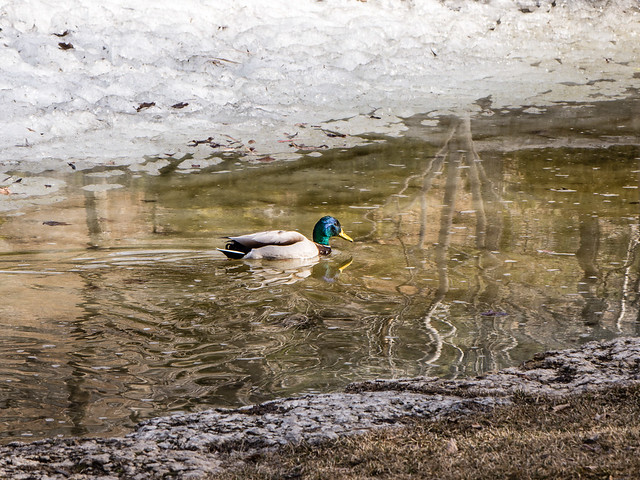
Mallard

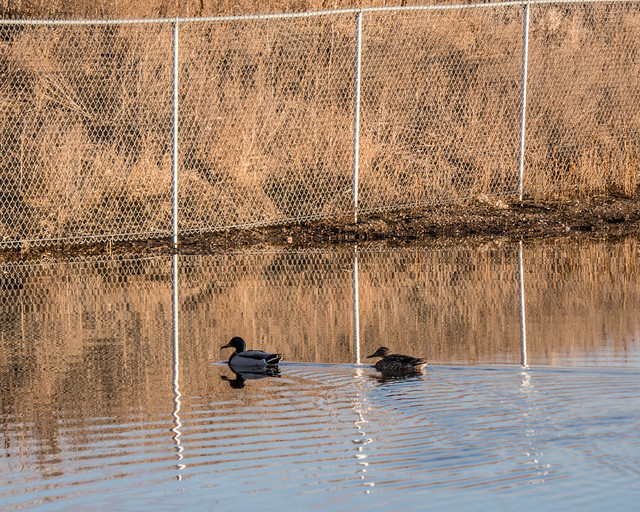
Ducks and geese often check out the pond at Innovation Place. This Mallard duck didn't have much open water around the ice.

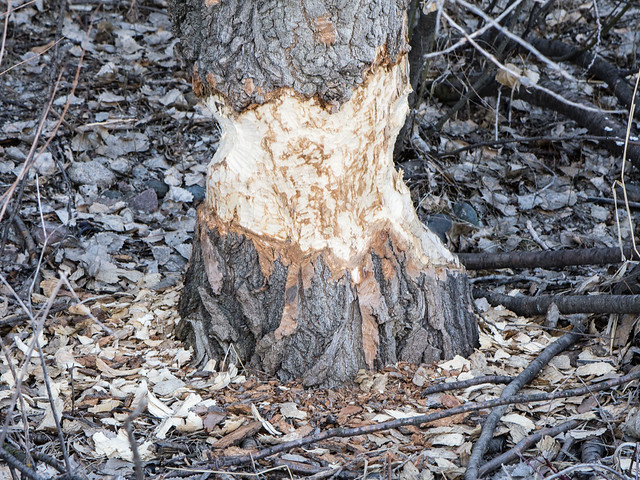
I haven't seen any beavers yet this spring, but there are lots of signs of them. Unfortunately, they are cutting down quite a few older trees along the east side of the river. The city and Meewasin are quiet about it but sadly they've been know to try to get rid of the beavers. Which doesn't even work - it's far too easy for beavers to move along the river. I'd prefer that the city put their efforts into wrapping the big trees with chicken wire and letting the beavers have the smaller stuff. Of course it's different when the city butchers the trees along Spadina to build a bigger path for humans. Decades to grow those beautiful old trees, and five minutes with a chain saw to get rid of them. "Progress" :-(

Beavers are destructive but at least their destruction is quickly self limiting - after they cut down all the trees in an area they are forced to move on. Unfortunately the feedback is much slower with human caused destruction of the ecosystem. And we don't have any other planets to move on to.

beavers at work

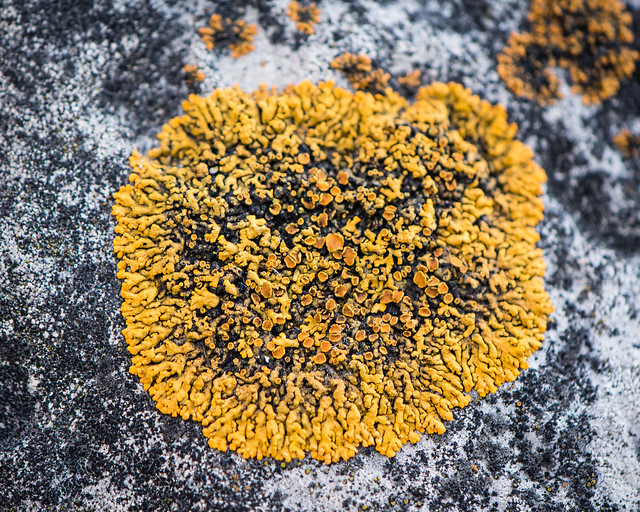
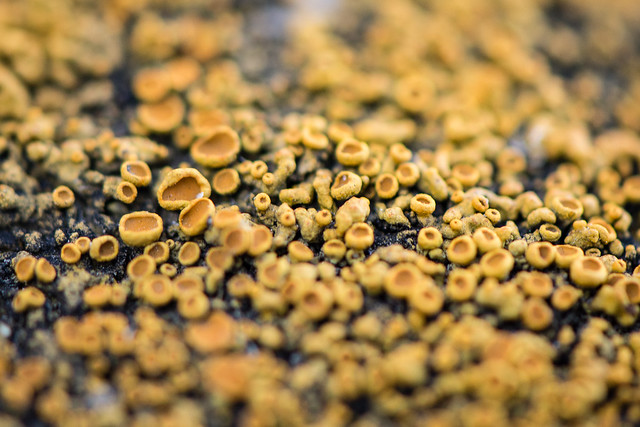
I had my macro lens on for the crocuses so I took the opportunity to photograph some of the lichen on the rocks. It's nice to see healthy lichen since it's a sign of good air quality.

You can either try to stay within the shallow depth of focus,

lichen

or let it be part of the image.

lichen

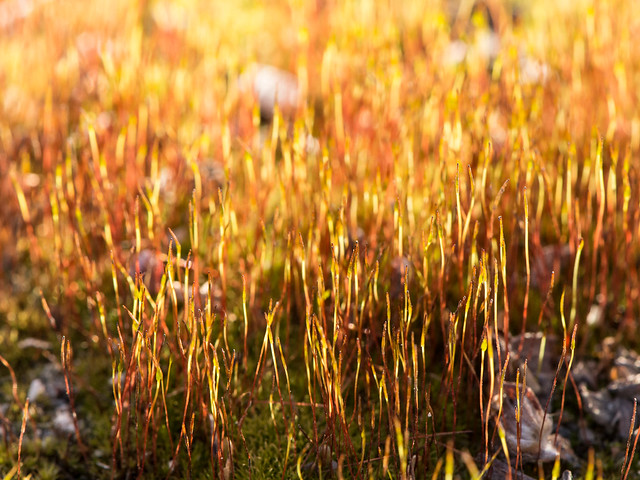
One of the first things to turn green at Innovation Place is a small patch of moss (or at least that's what it looks like). I always try to photograph it, but I find it a difficult subject. I like the colors in this shot.

moss

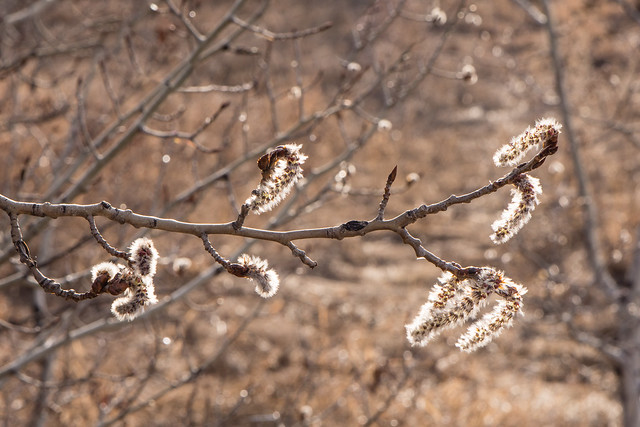
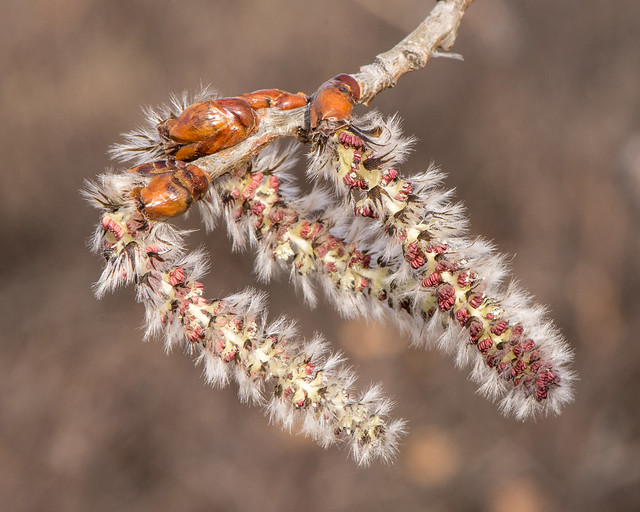
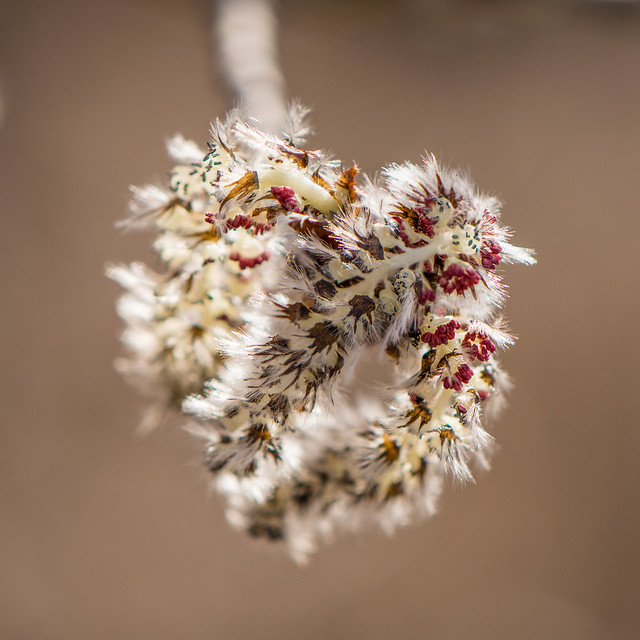
I always enjoy monitoring the progress of the trees flowering. This isn't the obvious flowering trees like the cherries and crabapples (which are later in the spring), this is the regular trees that most people probably don't even notice are flowering. It's interesting how some trees in a group will flower sooner than others. And sometimes just one branch of a tree.

trees flowering

trees flowering

trees flowering

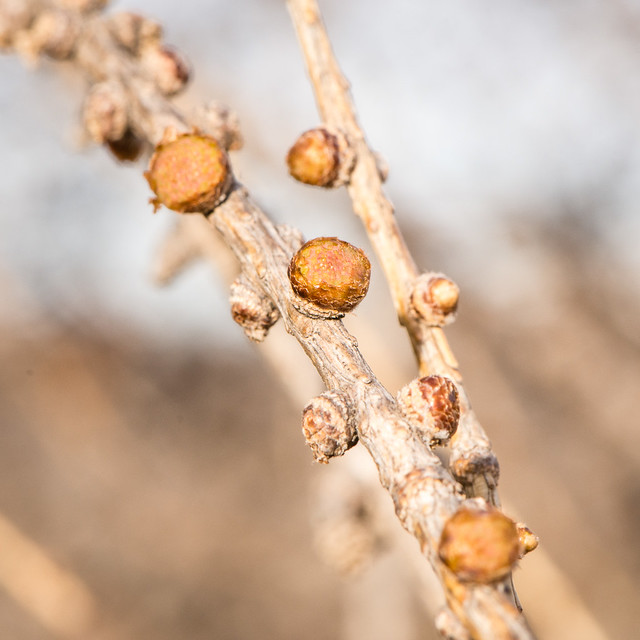
The larches have interesting flowers. These buds are just starting to develop.

larch buds

Other trees have less flashy, but still interesting buds:

tree buds

tree buds

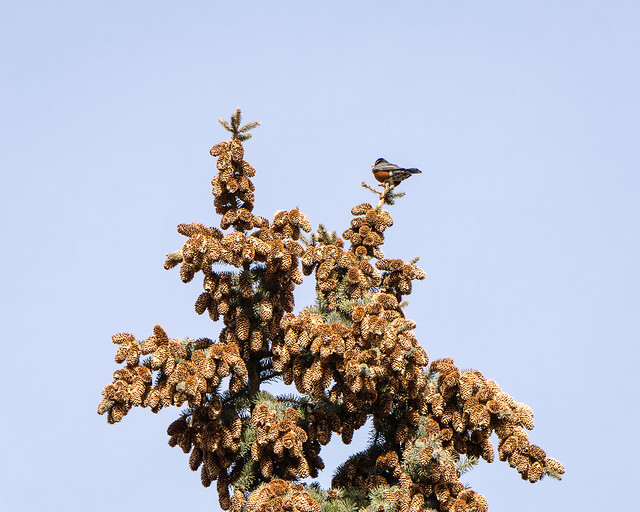
It's always a good sign of spring when the robins return and join the chorus. It took me a minute to locate the source of the birdsong in the top of this tree (with a healthy crop of pine cones!)

robin in a tree

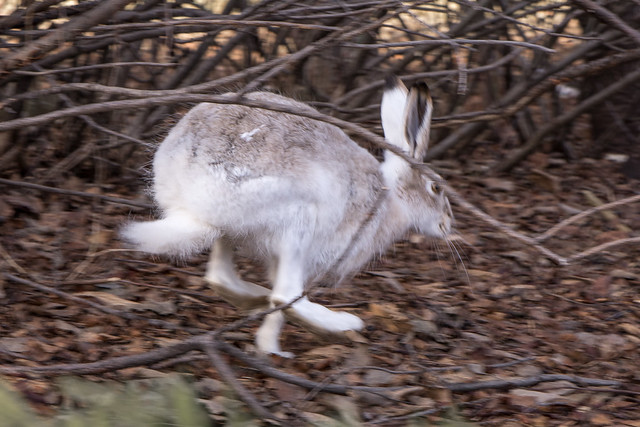
The pair of jackrabbits around Innovation Place are fairly tolerant of people but if you get too close or move too suddenly they will still run away. Everything I've read says white-tailed jackrabbits are nocturnal and hide during the day. But these two missed that memo. From my office window I see them running throughout the middle of the day. Of course, they are easier to spot this time of the year when they are still quite light colored.

Jackrabbit

See all 27 photos
Tuesday, April 11, 2017

Crocuses

Prairie crocuses

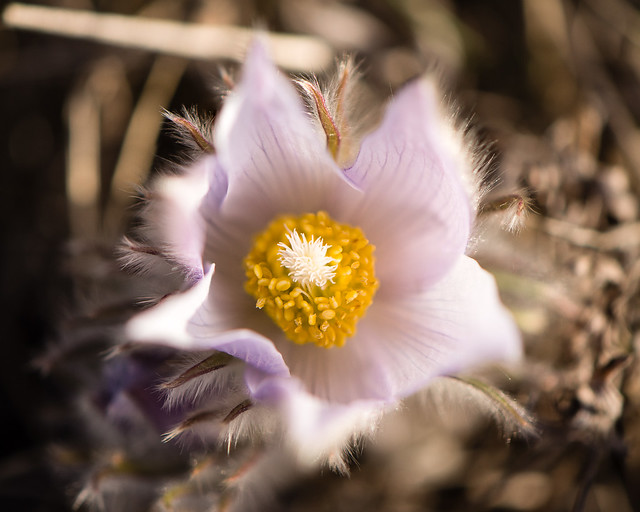
Prairie crocuses or Pasque flowers are one of the sure signs of spring in Saskatchewan. They're definitely the first flowers we see, often poking through the snow and frost.

Technically, they aren't crocuses, which are in the lily family, they are actually anemones, in the buttercup family. What's more, the petals aren't actually petals, they're modified sepals. Of course, we also have gophers which aren't gophers (they're ground squirrels), rabbits that aren't rabbits (they're hares), and daddy longlegs spiders that aren't spiders (although they are arachnids).

I first went to look for the crocuses on Monday. If I take an alternate, slightly longer, walk to work I go right by one of the places where they grow. Although they're not uncommon, they're somewhat picky about where they grow. I didn't find any flowers, but I did find the plants starting to grow and the flowers developing. There was dew on the ground that morning which made for interesting photographs.

Prairie crocuses

I love how the crocuses emerge from the dead grass and vegetation.

Prairie crocuses

Prairie crocuses

I went again on Wednesday to see how they were coming and there were a few flowers open. I was visiting early in the morning, and the flowers close up at night, so it's likely there were more flowers open midday. By Friday most of the flowers were out.  It seems like a good crop this year.

Prairie crocuses

I'm a sucker for back light, and the low early morning sun was perfect for highlighting the flowers and their furry covering. (Some of the back lit shots I used the flash so I didn't just get silhouettes.)

Prairie crocuses

Prairie crocuses

I've taken so many crocus photos over the years that it's hard to come up with a new angle. I used my macro lens this year and was playing with closeups and depth of focus and even a little focus stacking.
Prairie crocuses

Prairie crocuses

Apparently, individual plants may live for 50 years or more. However, they depend on unplowed prairie so as that dwindles, so may the wild crocuses.

See all 36 photos
Saturday, April 08, 2017

Last Ice

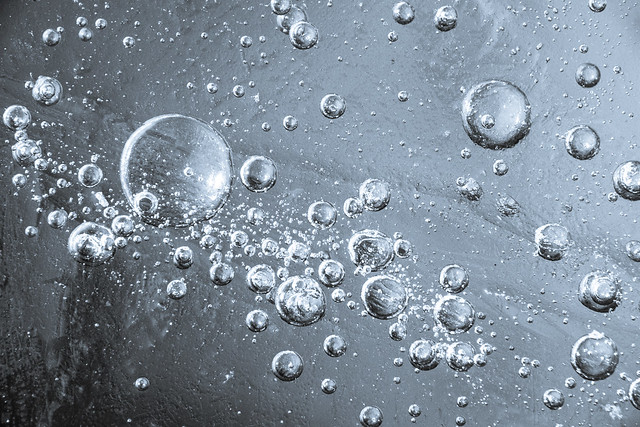
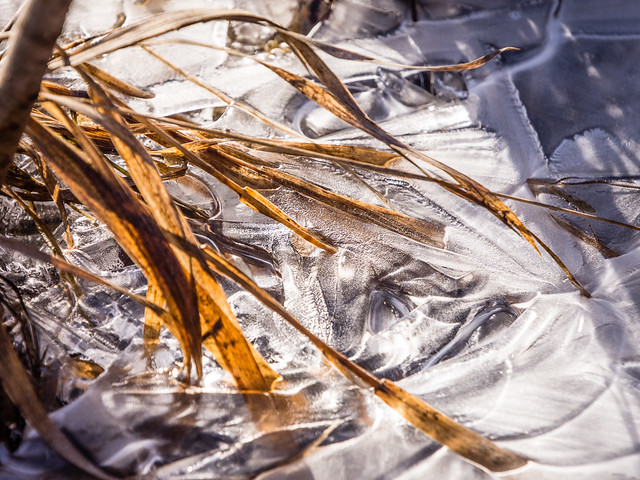
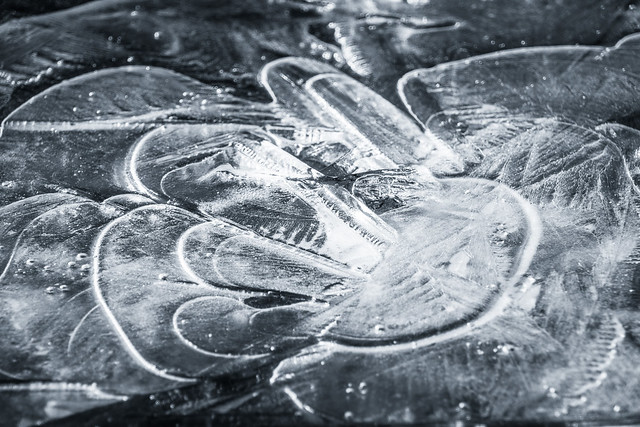
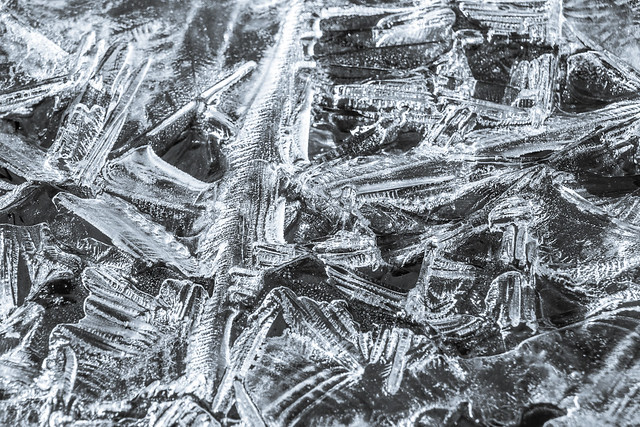
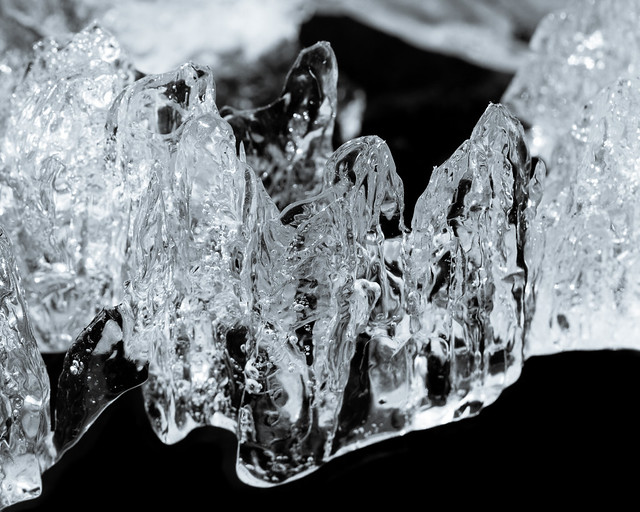
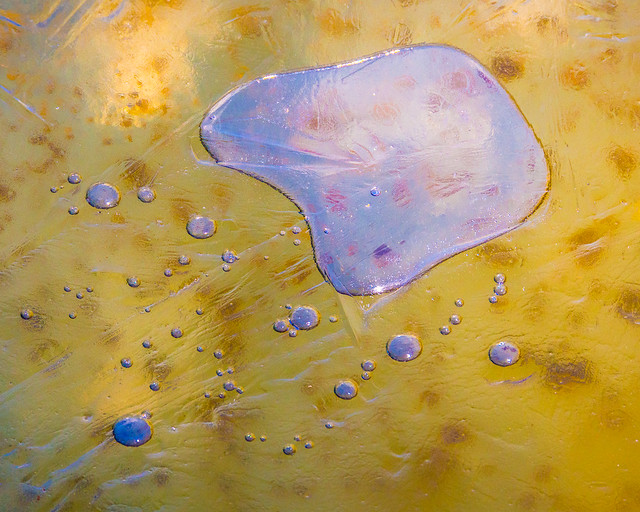
With the warmer spring weather I've been taking lots of photos. (Roughly 1000 in the last week, but don't worry, I won't try to share them all :-) Mostly they're of nature awakening, but I couldn't resist the abstract patterns and shapes of the melting ice.

bubbles in ice

ice and grass

Usually I try to be conservative with processing my photos. My goal is to make them look their best, without looking artificial. I'm a little more aggressive with my abstracts. Most of these ice shots were converted to black and white (which helps to hide the dirt) given a healthy dose of clarity and contrast, and then split toned slightly blue (because to me that's how ice looks).

ice

ice

ice

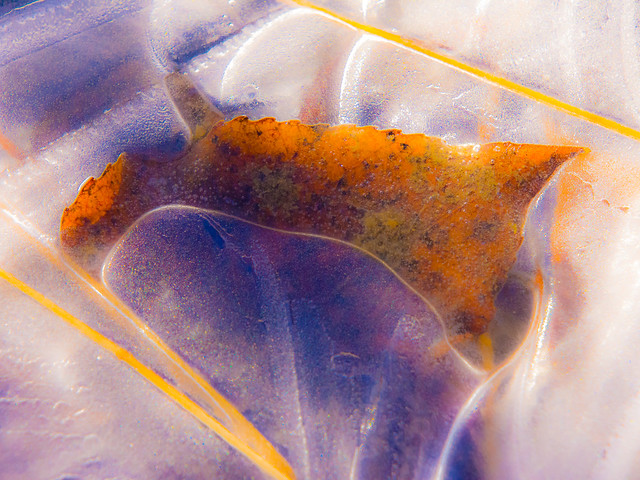
Occasionally I get the urge to crank some sliders to the max and see what happens. Here's a couple of results.

bubbles in ice

leaf in ice

To balance all this cold abstract ice, here's a few softer, more realistic subjects.

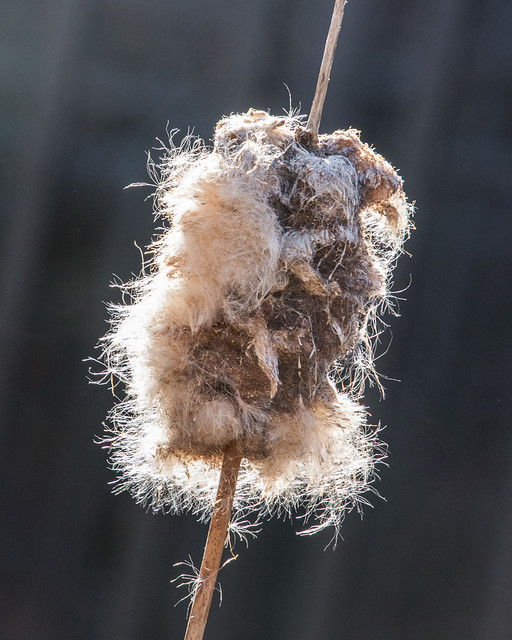
last year's cattail

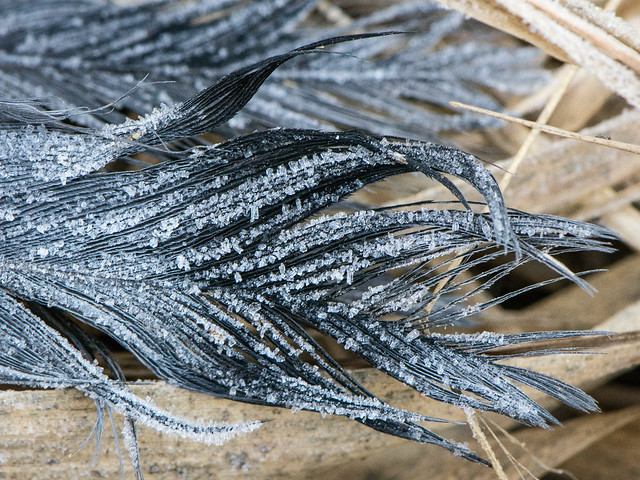
frosty feathers

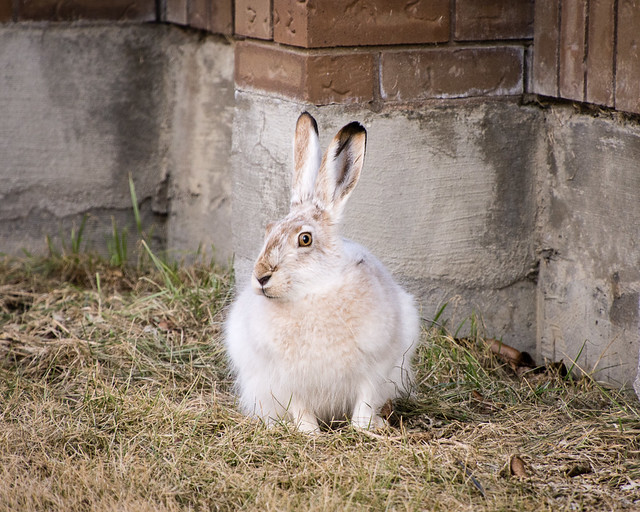
rabbit

See all 21 photos
Tuesday, April 04, 2017

Print of the Week

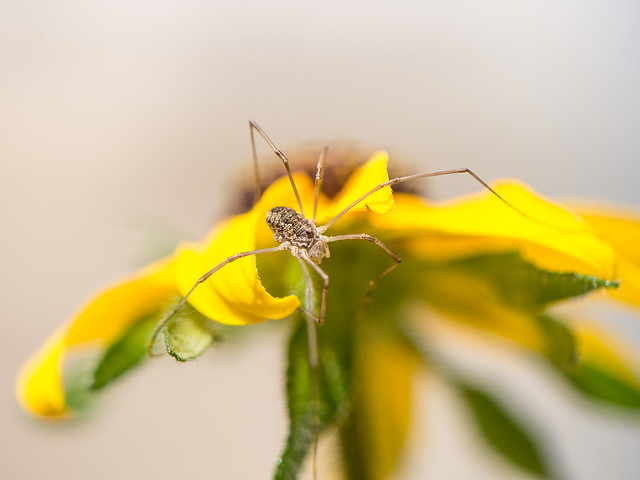
Harvestman spider on Black-eyed susan

One from last summer, taken with the 85mm macro lens. This was a lucky shot with the shallow depth of focus, getting the body and legs fairly sharp.

It's a good thing Shelley doesn't mind spiders or she might object to giant photos of them on the dining room wall :-) One of the fishing spiders was up until recently.

Saturday, April 01, 2017

Walking Home

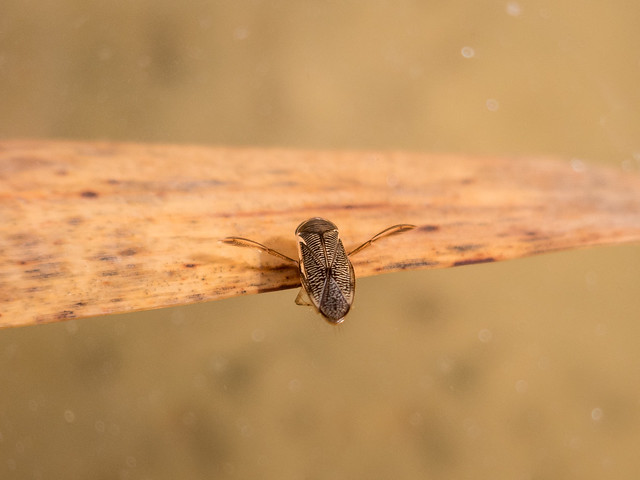
On my way home I stopped at the pond to see what was happening. It had frozen overnight, but thawed again during the day. I figured I'd see a few more water boatmen.

water boatmen

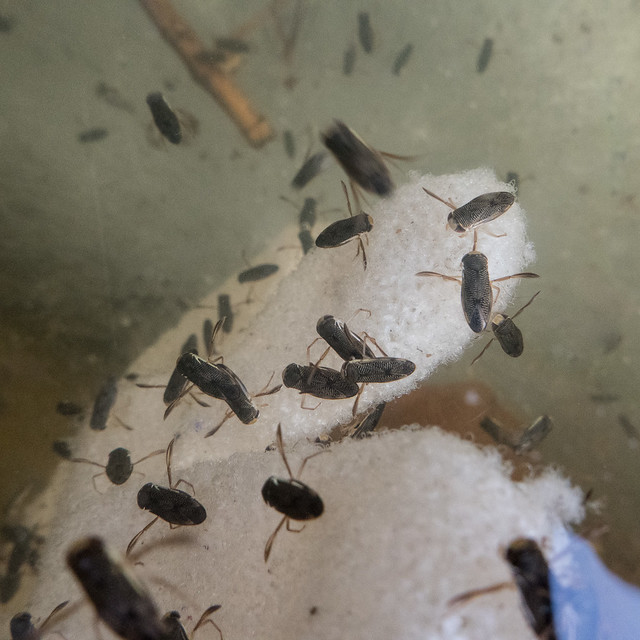
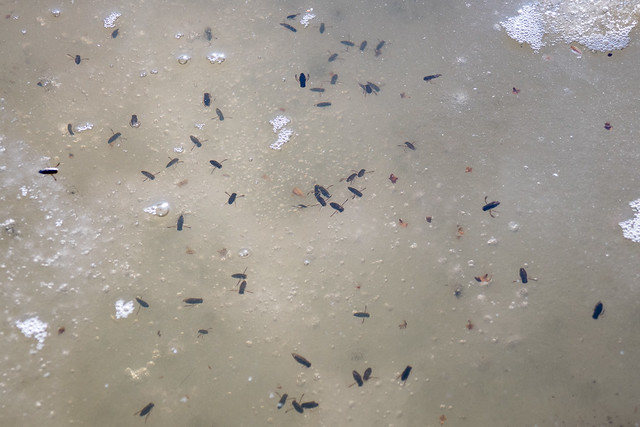
To my surprise, there were thousands of them! It was hard to get a photo showing the numbers, but this gives you an idea. It's amazing that they can be active swimming around with the ice and slush.

water boatmen

water boatmen

I wonder where they all came from? There has only been open water for a few days, which doesn't seem long enough to hatch from eggs. They could have over-wintered at the bottom of the pond, but I didn't see this many in the fall. Maybe they hatch and grow at the bottom while the pond is still frozen over. They have quite large forward facing eyes like predators, but I'm not sure what they'd find at this time. I didn't spot anything else in the water.

I had to be careful taking the closeups because the ZS100 focuses at only a few centimeters and a couple of times I came close to dunking the end of the lens into the water.

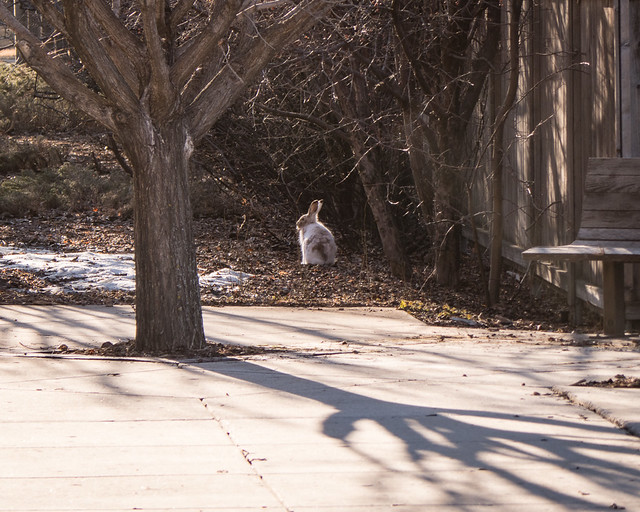
I finally left the water boatmen and a few minutes later spotted one of the rabbits (technically hare's).

rabbit

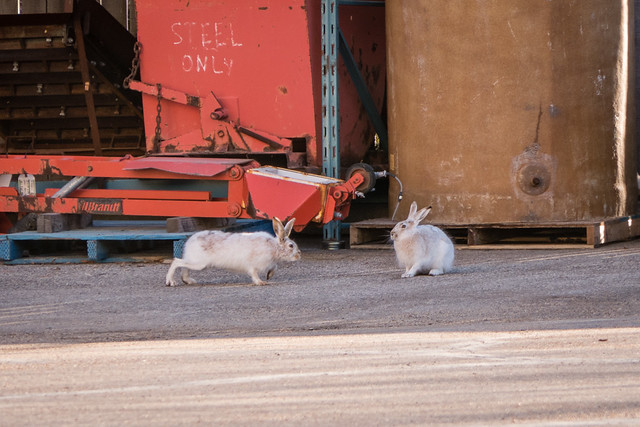
When I tried to slowly approach it disappeared through the hedge. I followed to the adjacent parking lot where I found two of them. See, they do multiply!

rabbits

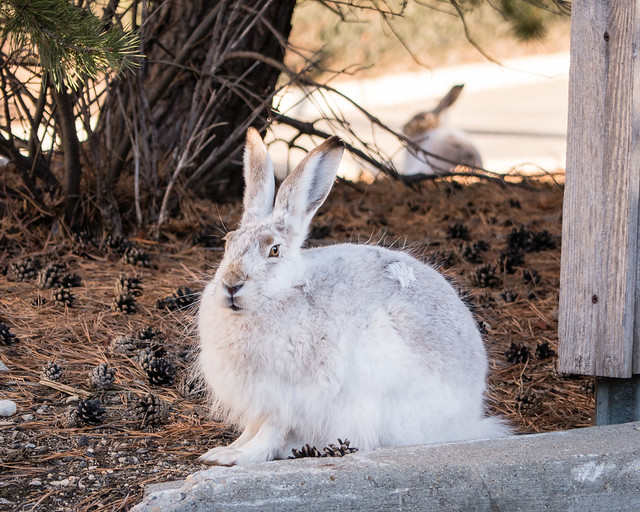
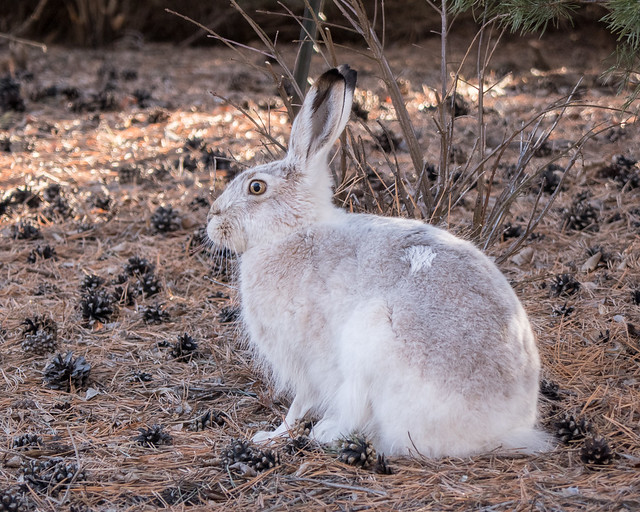
Again, I slowly approached, and this time they let me get closer, although still gradually moving away. I assume they are a pair. Mostly they ignored each other, but a few times they got close and chased each other away. They are still transitioning from their winter white. One of them was browner than the other.

rabbit

Seen from the side, their eyes are huge. I guess if you're at the bottom of the food chain, and you're often out at dawn and dusk, then it helps to have good eyes. They must have almost 360 degree peripheral vision for spotting predators.

rabbit

Eventually another person  came along, the rabbits ran away, and I continued on my way home.

I stopped to check on the progress of the swelling buds on one of the trees that tends to flower first.

swelling buds

And then stopped to watch a pair of ducks on some temporary water.

ducks

Of course, I couldn't resist the reflections.

Untitled

I did eventually did make it home. Shelley was out with Search and Rescue so I didn't have to worry about being late.

See all 22 photos