Tuesday, July 31, 2018

A Few Flowers

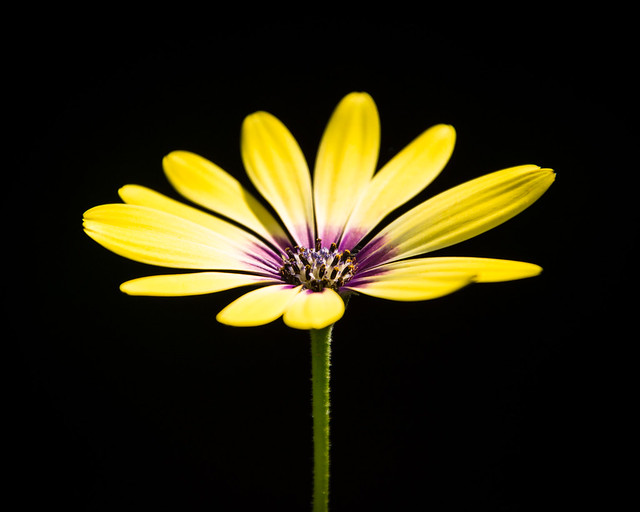
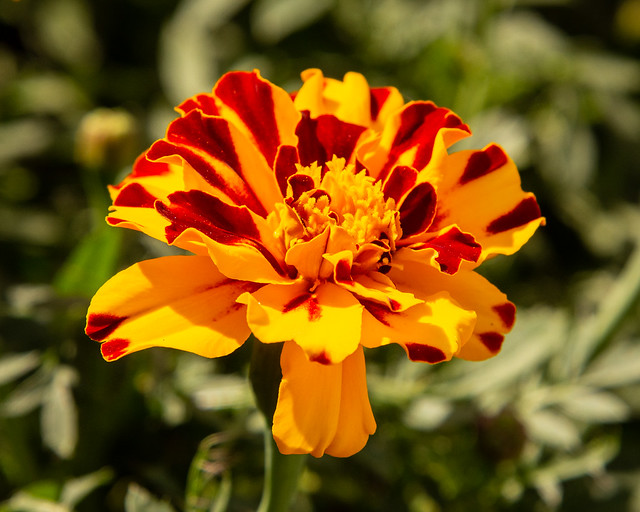
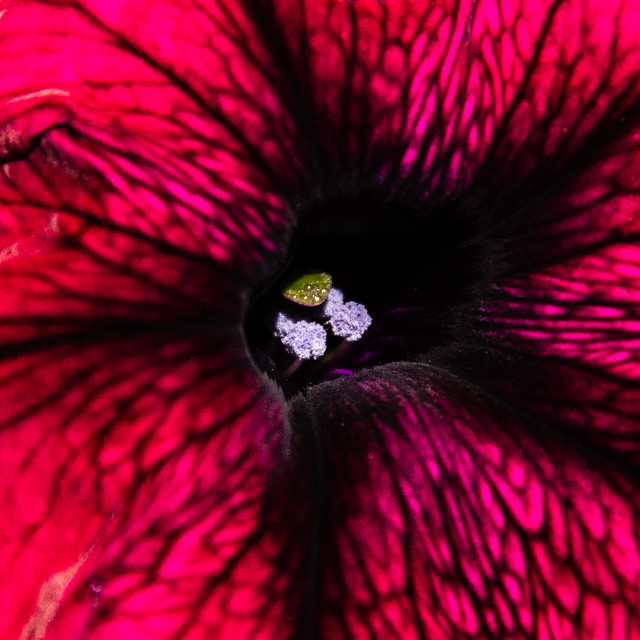
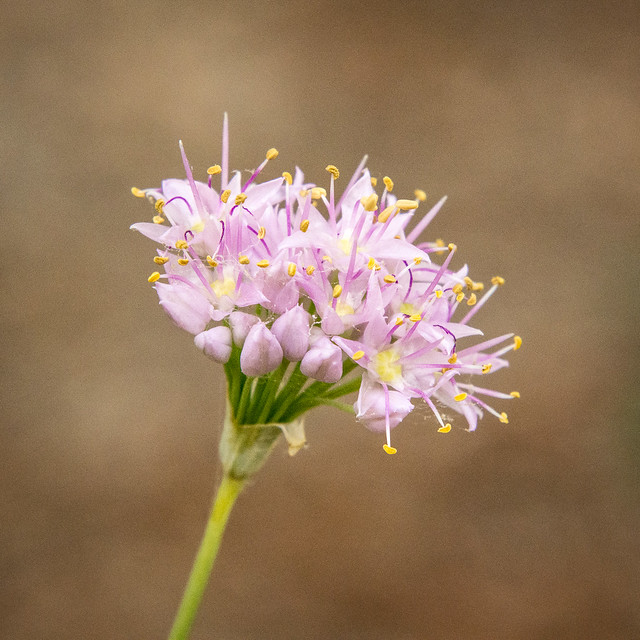
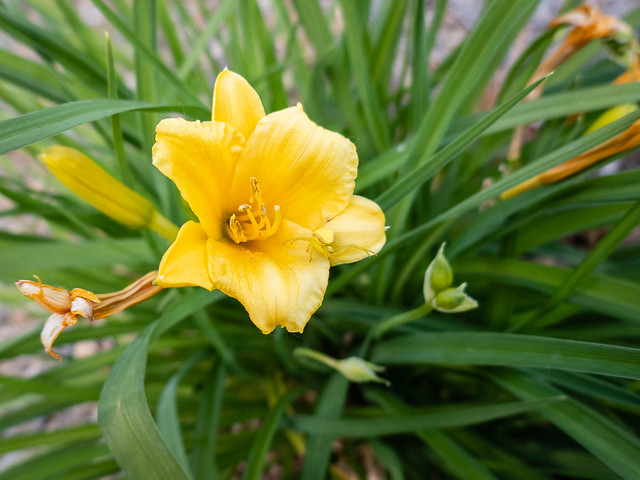
There was a butterfly hanging around our flowers so I went and got my camera. Of course, by the time I got back the butterfly was long gone so I took a few flower photos instead.

flower

flower

flower closeup

flower

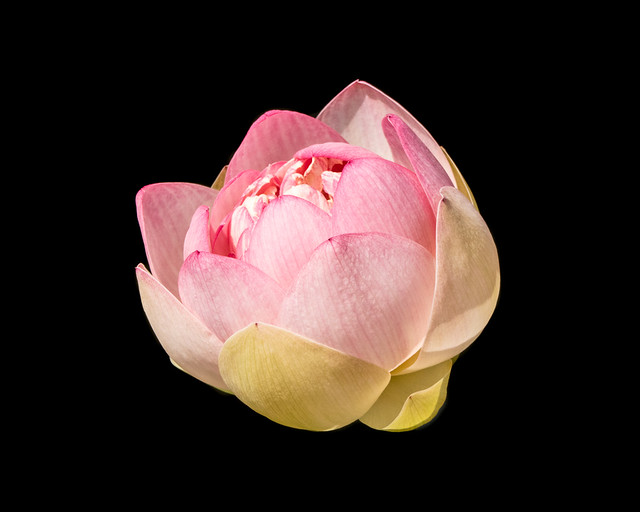
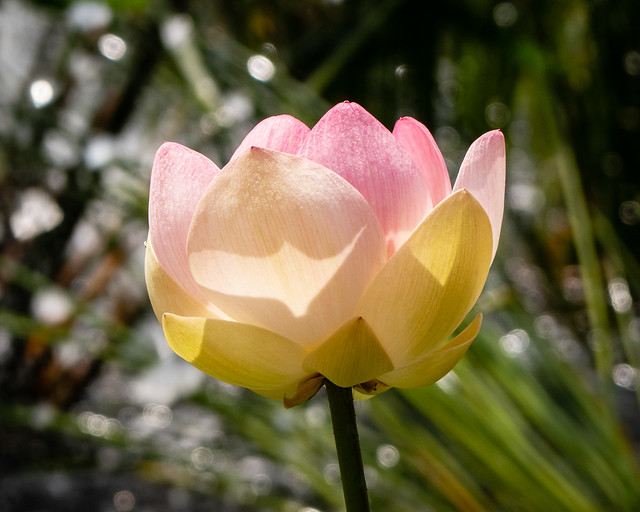
I usually focus on the pond at Innovation Place, but I have to remember that the Lotus flowers are in the fountain. Lovely big (grapefruit sized) showy flowers.

Lotus flower

Lotus flower

I like it when I can find a dark enough background to turn it black (or light enough to turn it white).

Saturday, July 28, 2018

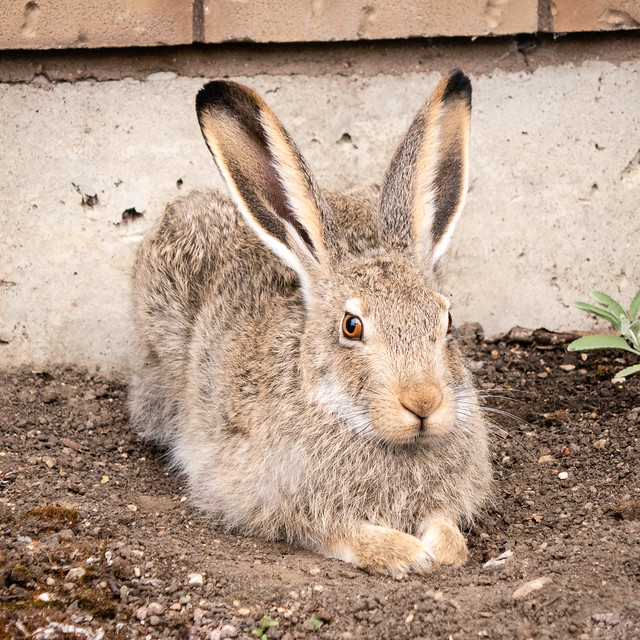
Jackrabbit

I was checking out some flowers at Innovation Place when I got the feeling that I was being watched. I turned around expecting a person, but instead there was a jackrabbit watching me from the flower bed, not 10 feet away. I backed away around the corner and got out my camera. But it seemed pretty relaxed and went about its business. I took some photos and then some video before leaving it in peace. As usual, I love the big ears and eyes.

jackrabbit


Although it's getting almost as big as an adult, I think this is one of this year's offspring that I've seen off and on for the last while. 

Sunday, July 22, 2018

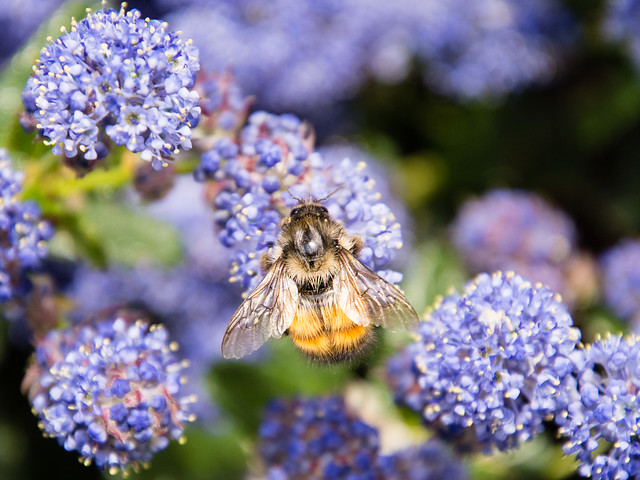
Print of the Week

bee on flowers

One of the few sharp ones out of many attempts. Busy bees don't sit still!

Monday, July 09, 2018

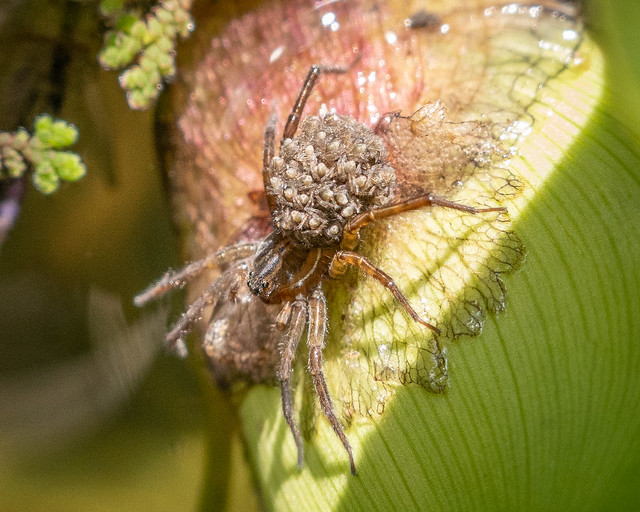
Fishing Spider Mother

This is something I haven't seen in my last few years of observing the fishing spiders - a mother carrying her babies. We don't usually think of spiders as having motherly instincts but these ones do.

Fishing spider carrying babies

The funny part is that I took this photo a few days ago, thinking it was some new kind of spider. I couldn't see it very well (eyesight not what it used to be) but I could tell it didn't have the shape or coloring of a fishing spider. I snapped a few photos and moved on. It wasn't till today, looking at it on the computer, that I realized what it was.

I haven't had as much luck this year spotting fishing spiders. The layout of the water plants is a bit different and the koi have gotten very large and have been foraging in the shallows, sending the spiders into hiding.

I didn't spot any mothers carrying their egg sacs this year. But I have spotted a few nursery webs that the mothers build to protect the hatching spiders. One of the nursery webs had an adult beside it, presumably the mother "guarding" it. (I attempted photographs but she ran away.)


Thursday, July 05, 2018

Pronghorn

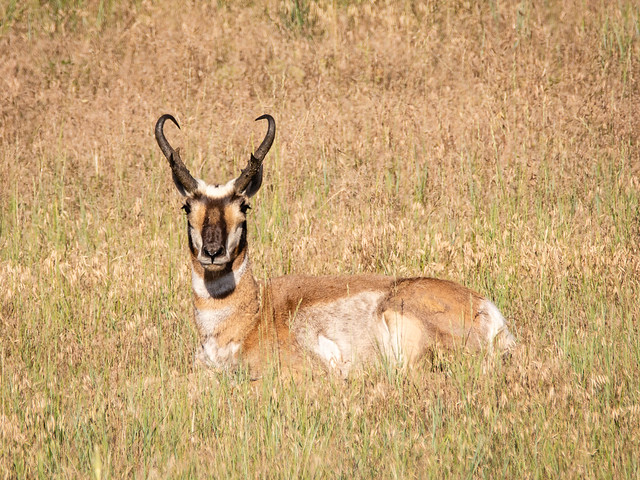
solitary male pronghorn

Pronghorn are fascinating animals. We saw lots of them on our recent road trip in Montana and Wyoming. They are most famous for being the fastest land mammal in the Western hemisphere, second only to African cheetahs. But they can sustain high speeds longer than cheetahs so you could say they're the fastest in the world. They've been observed to have at least 13 distinct gaits, including one reaching nearly 24 feet per stride! To help absorb the impact when running at high speeds, their hooves have two long, cushioned, pointed toes.

But despite their speed they can't jump well and have problems with fences, often going under or through fences instead of over. Land owners are encouraged to either remove or use a barbless bottom wire on fences.

They're often called "pronghorn antelope" but they actually aren't related to antelope. Their closest living relatives are giraffes and okapi.  Three other kinds of pronghorn existed in North America but went extinct around the time humans arrived. More recently, the current pronghorn almost went extinct as well. By the 1920's hunting had reduced the population to 13,000 and many thought they were on their way out. But conservation efforts, primarily the creation of refuges, helped them recover to an estimated population of 500,000 to 1,000,000. Until recently, pronghorn outnumbered humans in Wyoming and parts of Colorado :-)

They form mixed-sex herds in winter, but in summer they split up, the females and offspring forming groups, and the adult males living solitarily. We saw both female/offspring groups and solitary males.
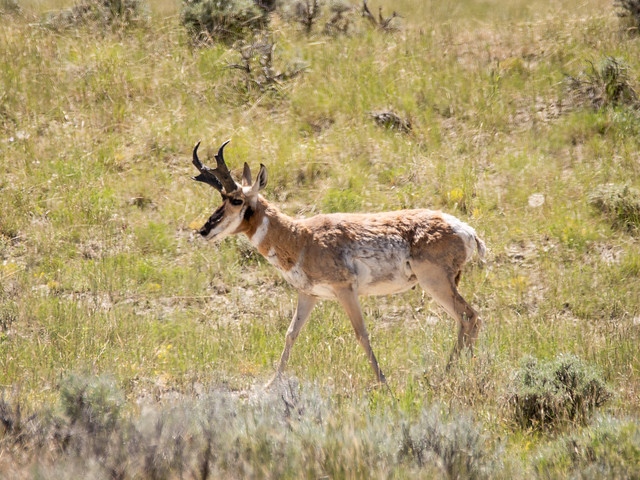
solitary male pronghorn

Both males and females have "horns" but female's horns are much smaller. The "horns" are actually permanent blades of bone, covered in a keratinous (like your fingernails) sheath which is shed and regrown annually.

At one point in our trip we saw an animal crossing the road ahead of us. I thought it was maybe a coyote, but it was followed by a bunch of pronghorn and it turned out to be a pronghorn fawn. We stopped and watched the group. Although the group was headed in one direction, the fawn decided to go in the opposite direction.
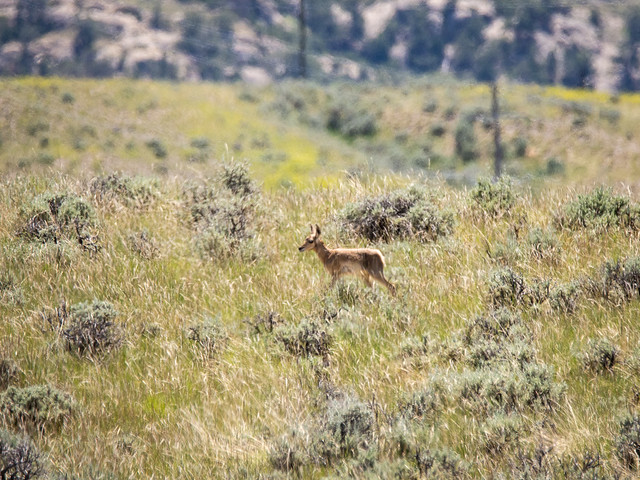
pronghorn fawn

After a bit it lay down in the tall grass, making it very hard to see. Can you spot it? For the first month, young fawns spend much of their time hiding.
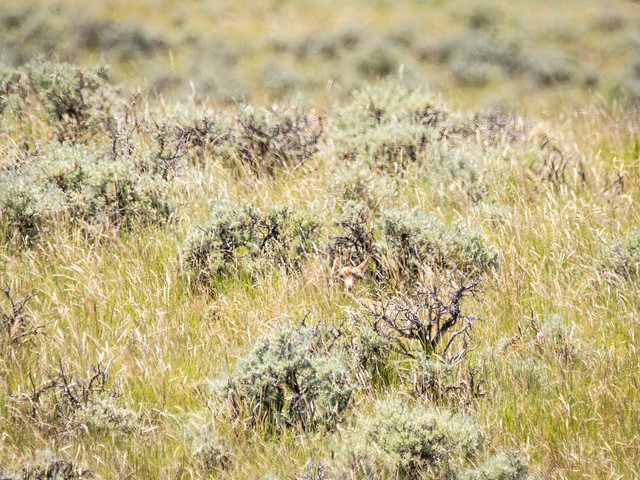
spot the pronghorn fawn

At first the adults didn't pay attention, but eventually one of them, presumably the mother, went back. The fawn made one last attempt to go in the opposite direction but the mother gave it a nudge with her nose and got it moving back to the group.
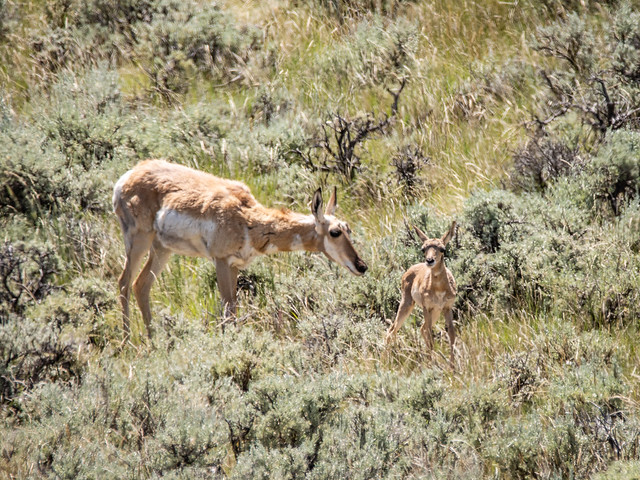
pronghorn and fawn

A bit later we saw another mother and fawn. Apparently they have a single fawn in their first litter, and then twins after that. We only saw single fawns.
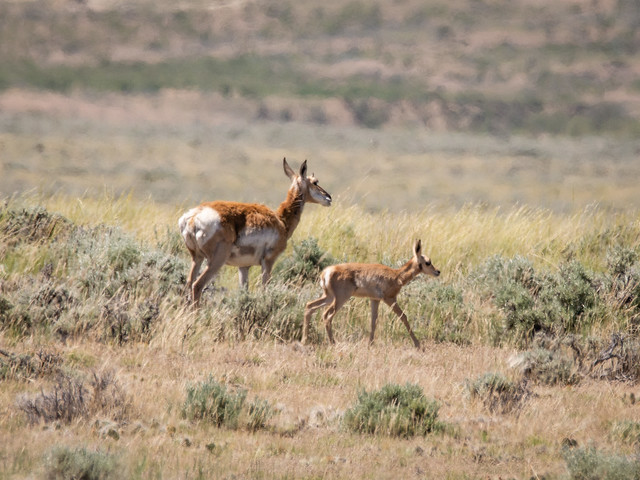
pronghorn and fawn

See more photos from this roadtrip
Tuesday, July 03, 2018

Along the River

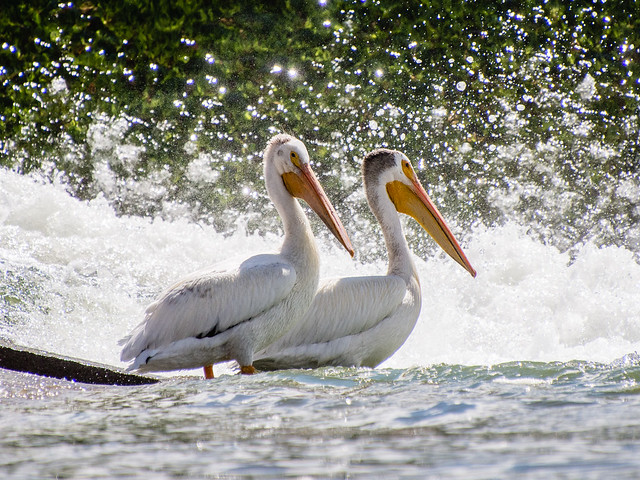
pelican pals

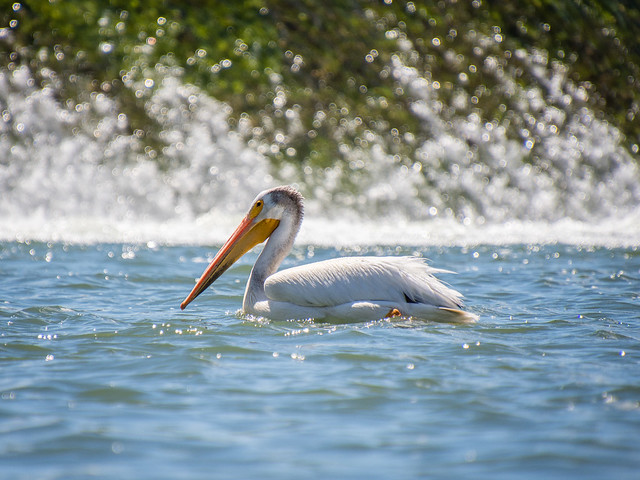
I finally got out on the river with the kayak, and a camera of course. Managed to get reasonably close to these pelicans and find an eddy to park the kayak while I took photos. It's a fun challenge to hold a telephoto steady while you're bobbing around in the water. Many fuzzy photos!

pelican

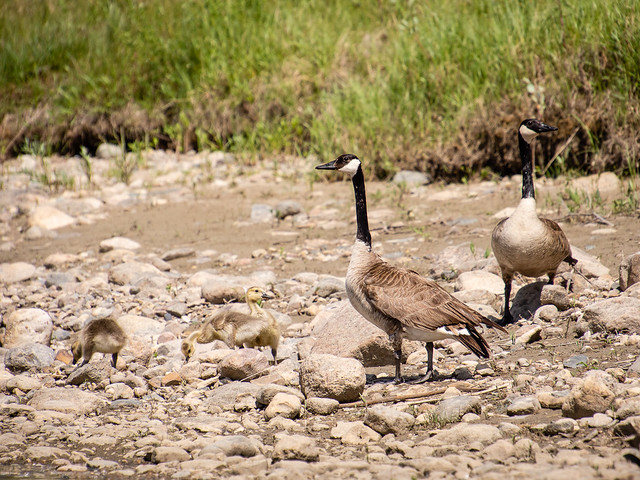
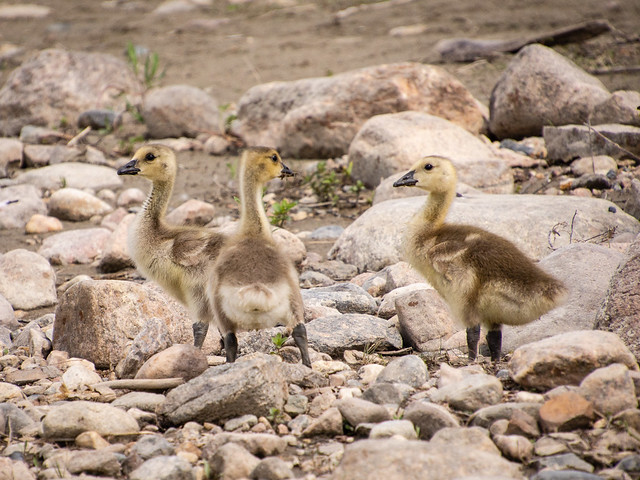
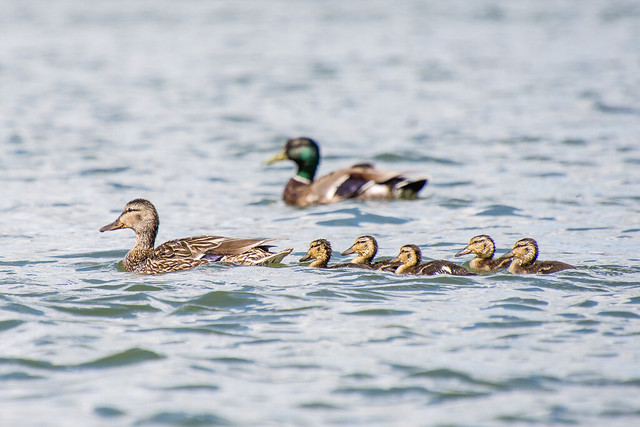
By this time of year most of the goslings and ducklings are getting bigger. Some of the ducklings were almost as big as their mothers.

Canada Geese and goslings

Canada Geese goslings

I got a kick out of this family group. Although the male in the background probably isn't actually the father.

mallards and ducklings

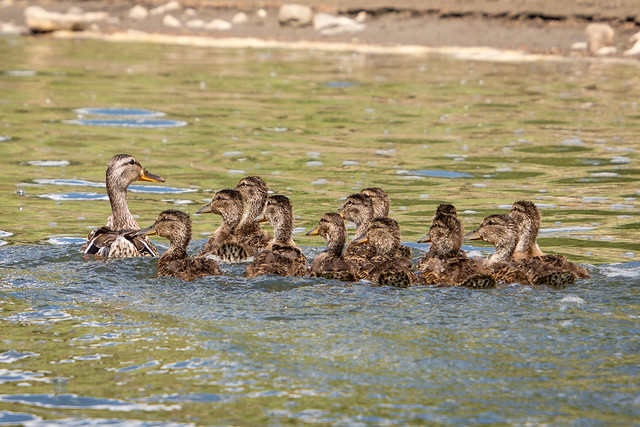
Some of the Mallard families had a lot of ducklings. I count 12 in this group.

mallards and ducklings

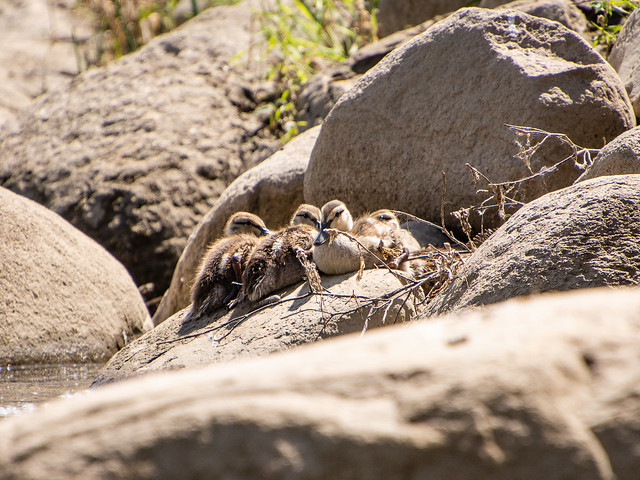
These ones appeared to be having a nap in the sun. Mum was on a nearby rock, as were another bunch of ducklings.
mallard ducklings

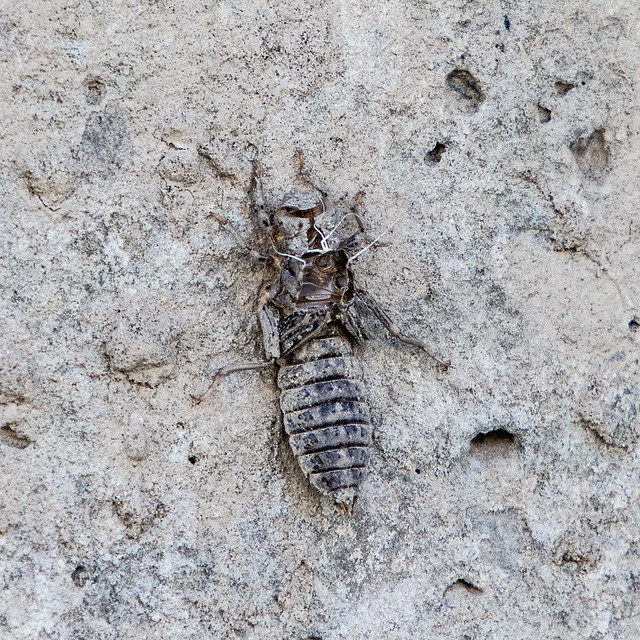
Pausing in the eddies behind the bridge pier, I noticed a number of dragonfly nymph exuvia (the skin they leave behind when the adult dragonfly emerges). I would have thought the river flowed too fast for dragonfly nymphs, but obviously some of them find their way to the eddies.

dragonfly nymph exuvia

I wondered about the significance of the white threads and did some searching on the web. Apparently, as they emerge they have to transition from using gills underwater to breathing air and the threads pull out of the tracheal openings to open them for breathing.

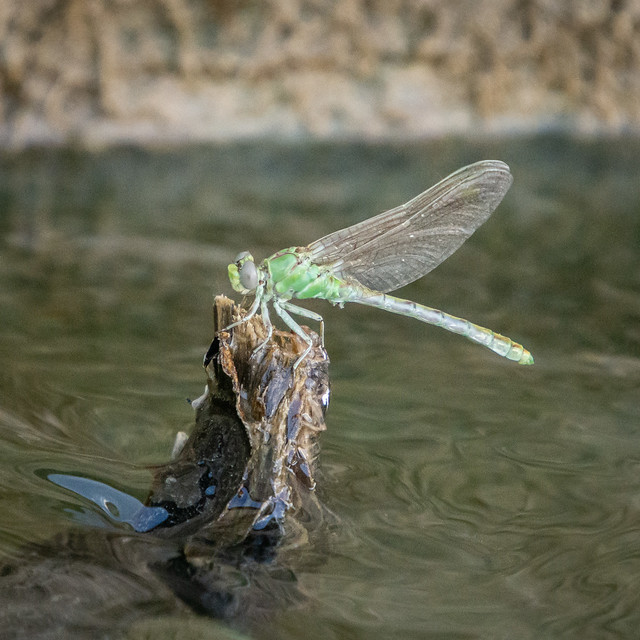
Just at the end of my kayak I noticed something bright green on one of the piers and found a couple of newly emerged dragonflies. (I'm guessing that based on the bright color and the wings that don't look fully extended.) There was another one on the pier but this one was easier to photograph. If you look closely on the right hand side of its perch you can see the exuvia it presumably emerged from.

newly emerged dragonfly

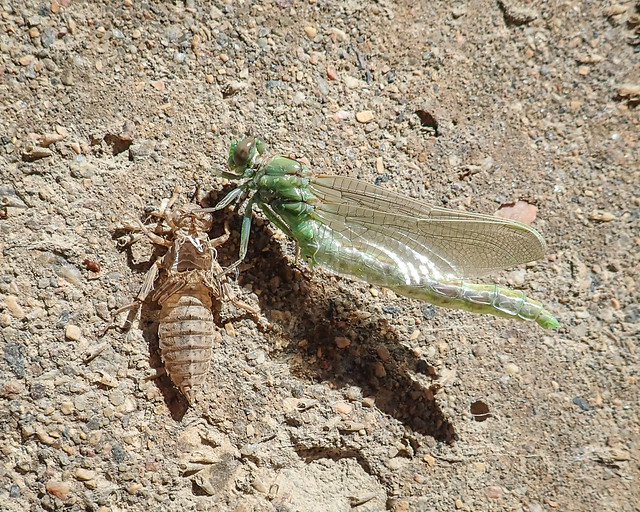
[Update] A few days later, out kayaking on the river again, I found a couple more emerging dragonflies. The one I really wanted to photograph hadn't expanded its wings yet. But unfortunately it was in a spot where I couldn't keep the kayak in place without paddling, which made it impossible to take photos. This one was in an easier spot to photograph.

freshly emerged dragonfly

See all 18 photos

Saturday, June 30, 2018

Swainson's Hawk

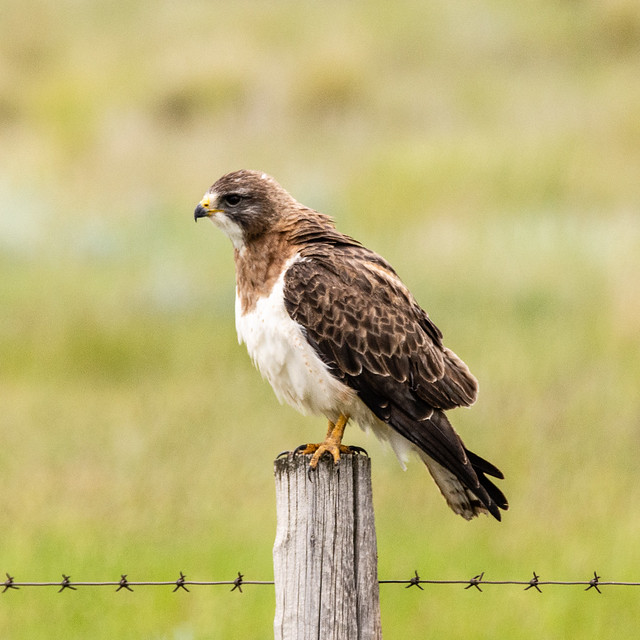
Swainson's hawk

Seeing hawks on fenceposts while I'm driving is frustrating. First, it's hard to spot them in time to stop. And if there's traffic and not much shoulder, then stopping may not even be an option. If you drive by they ignore you. But if you stop, they often immediately fly away. Or even more annoying, they sit long enough for you to get your camera almost ready, and then they fly away. This was one of the more cooperative subjects.

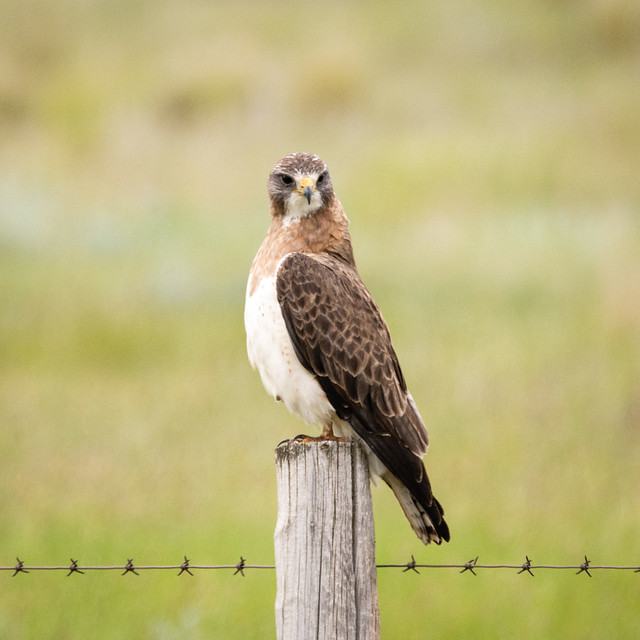
Swainson's hawk

As usual, these aren't as sharp as I'd like. It's hard to hand hold a 900mm equivalent lens!

Wednesday, June 27, 2018

Three Forks

When we're in the area we like to stay at the historic Sacajawea Hotel in Three Forks. And if we have time we'll go for a walk in the nearby Missouri Headwaters State Park. And take photos, of course.

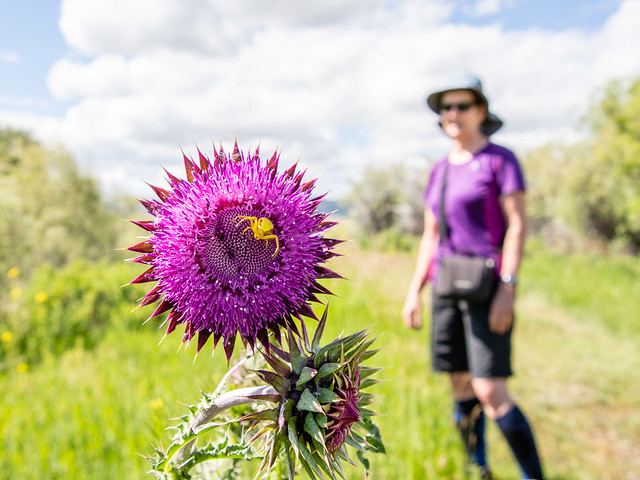
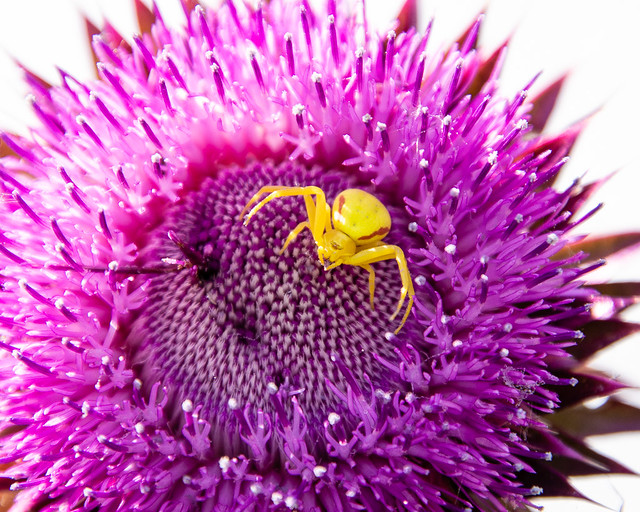
I noticed this single bright purple thistle by the path and when I got closer I found it had a resident goldenrod crab spider. They can change color but only between white and yellow, so it stood out against the purple.

crab spider on thistle

Shelley waited patiently while I took a bunch of photographs. She even wore a matching colored t-shirt :-)

crab spider on thistle

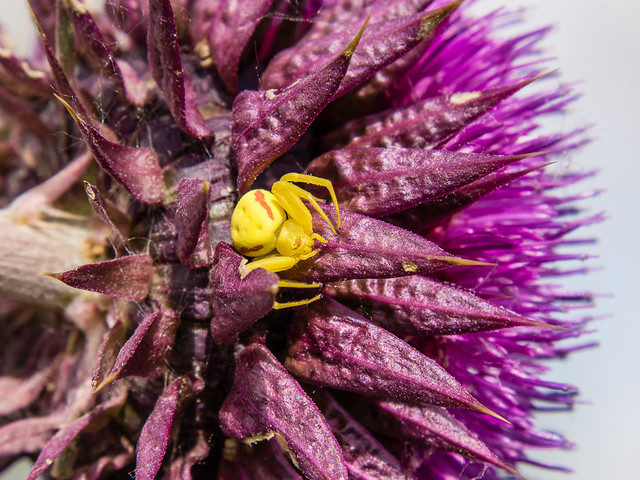
When we came back at the end of the hike, at first we couldn't find the spider, but it was just hiding behind.

crab spider on thistle

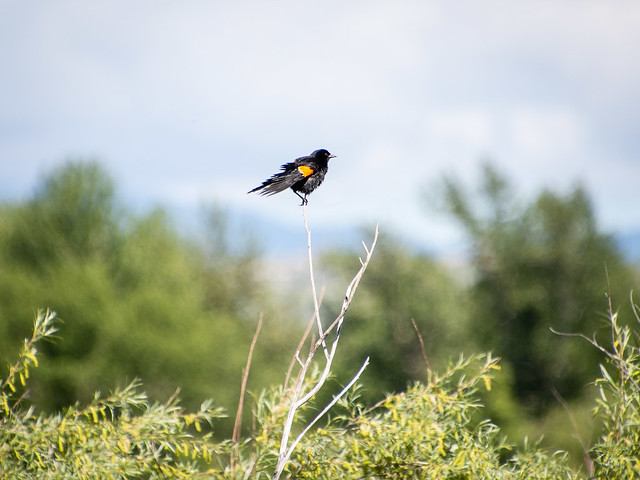
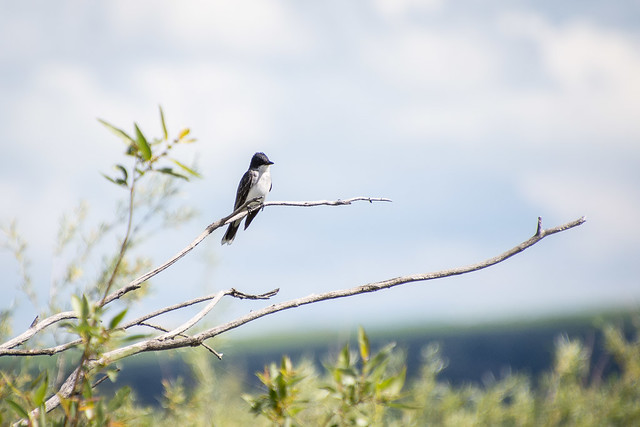
There were a few birds around, but I didn't get close to any of them.

Red-winged blackbird

swallow (?)

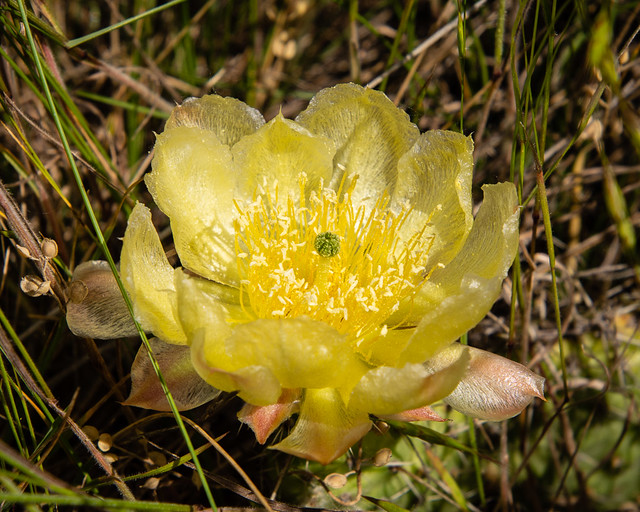
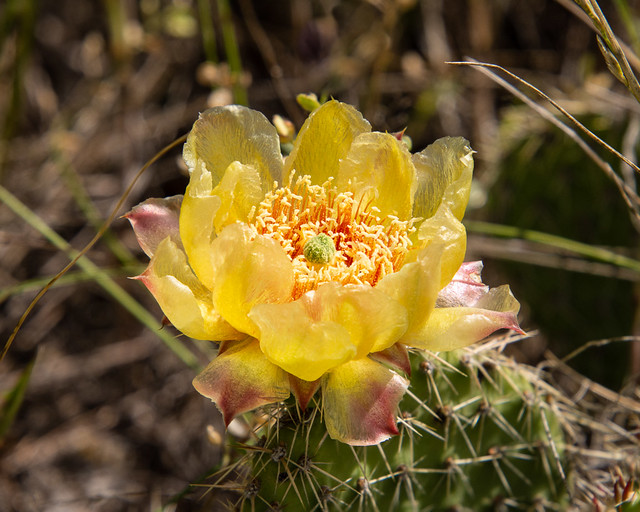
The prickly pear cactus was flowering. I'm always impressed by the showy flowers from a plant that often hides in the grass.

Prickly pear cactus flower

I'm not sure why some are pure yellow, and some have red. Different species? Different stages?

Prickly pear cactus flower

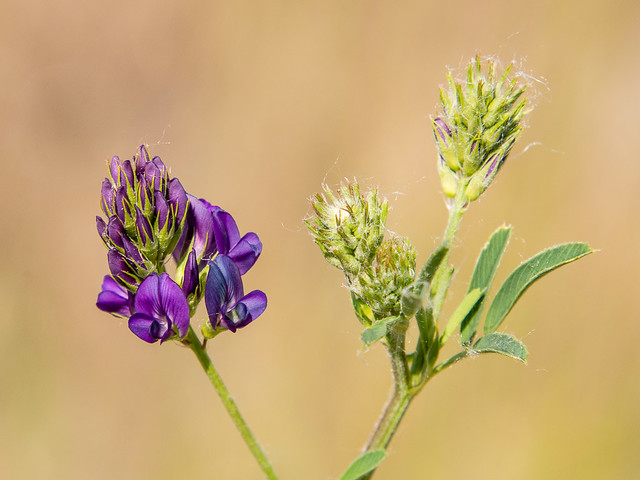
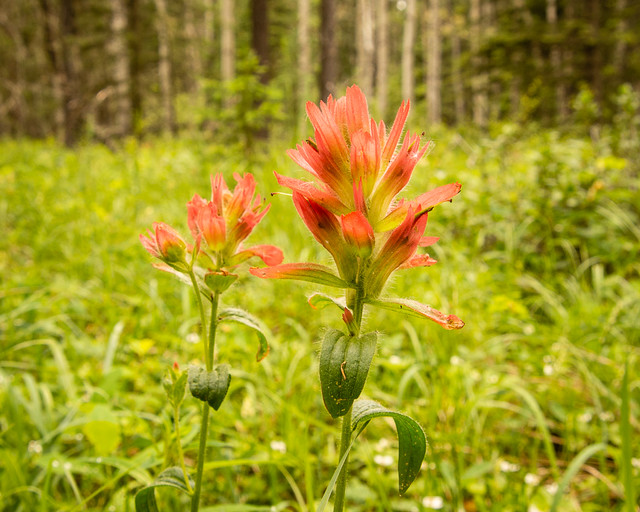
Another pretty flower (that I don't know the name of :-)

flower

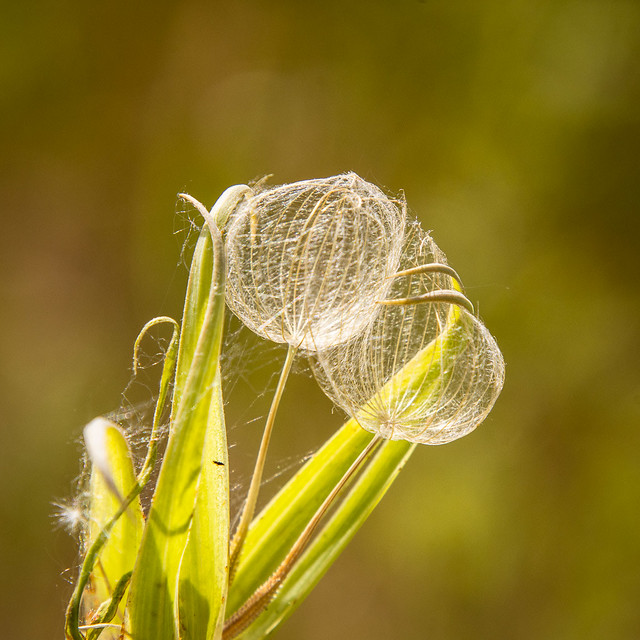
And some backlit seeds that caught my eye.

seeds

Tuesday, June 26, 2018

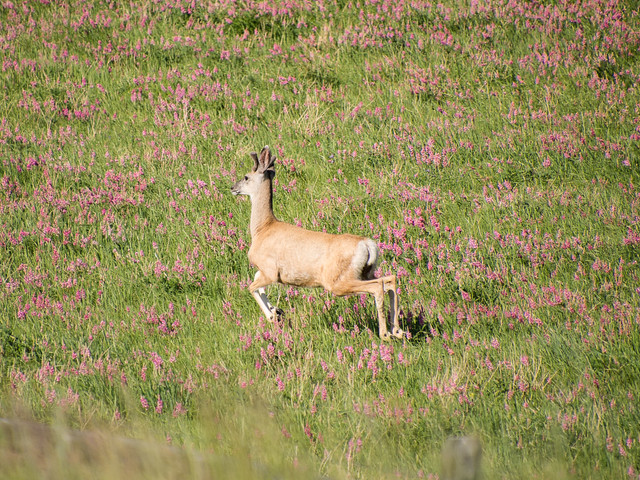
Deer in the Flowers

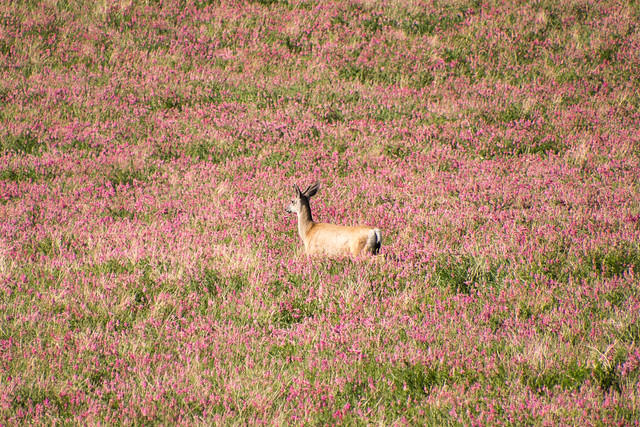
deer in the flowers

As we drove past this patch of flowers beside the highway, I noticed this deer. The deer was nothing special but I liked the combination of deer and flowers so I got Shelley to turn around and we drove back. Luckily it hadn't disappeared and had actually moved a bit closer the the road, which was good since I didn't have my big lens on the camera.

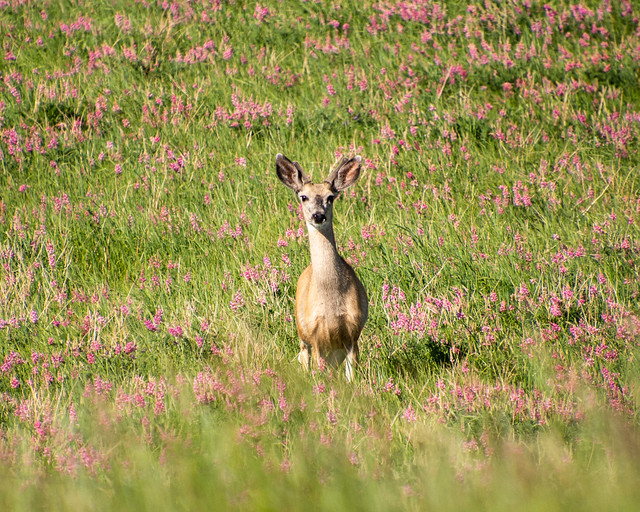
It definitely noticed us, but it hung around for a few photos

deer in the flowers

deer in the flowers

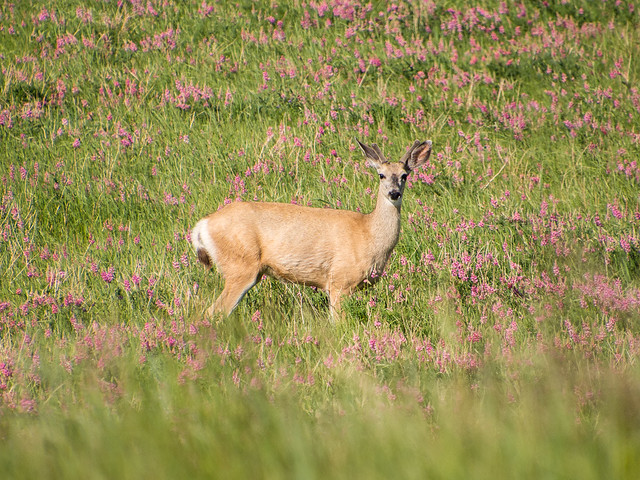
before deciding enough was enough.

deer in the flowers

This was just south of Glacier National Park on the way to Helena.

Monday, June 25, 2018

Back to Nature

20180622-DSC_0820

After the weather ended our flying at Air Adventures in Drayton Valley we were headed south. I had previously seen something about Back to Nature B+B so I checked if they happened to have a room and they did. The house itself is an amazing log home built by the Timber Kings of tv fame. And the owners are nature photographers so the house is also filled with wonderful photographs. (They also have photography and birding packages.) We had a short walk around the woods in the evening when we arrived but unfortunately rain in the morning prevented further explorations. It would be great to come back for a few days and enjoy the area.

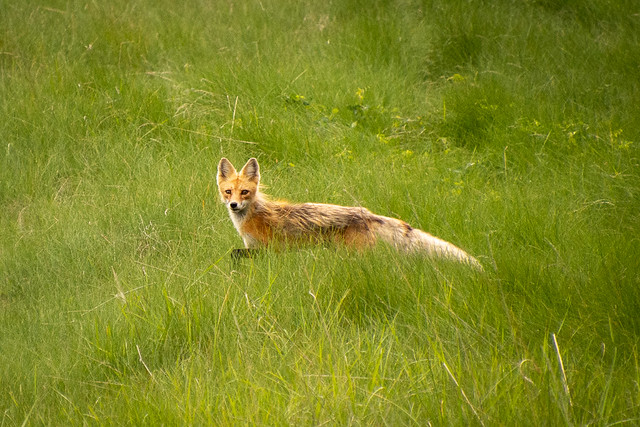
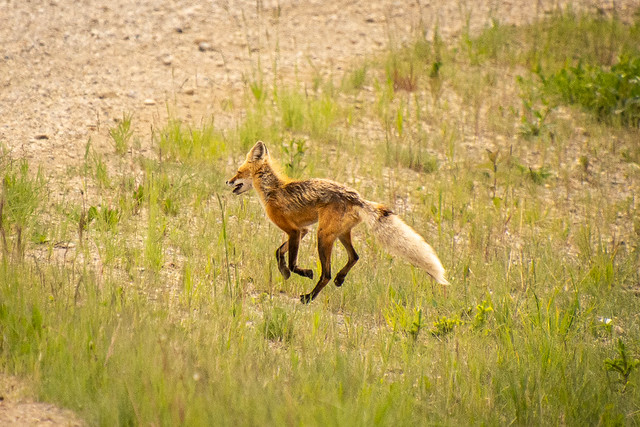
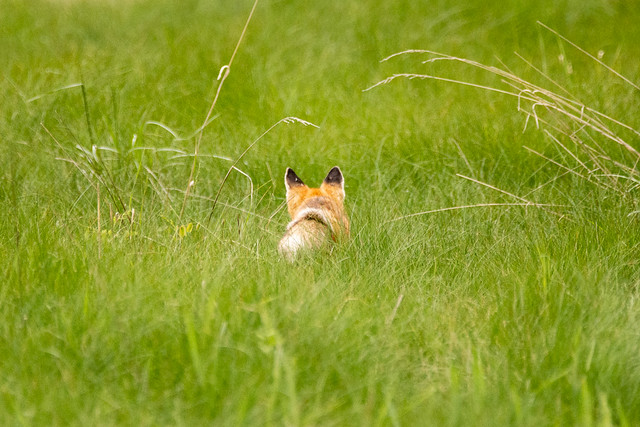
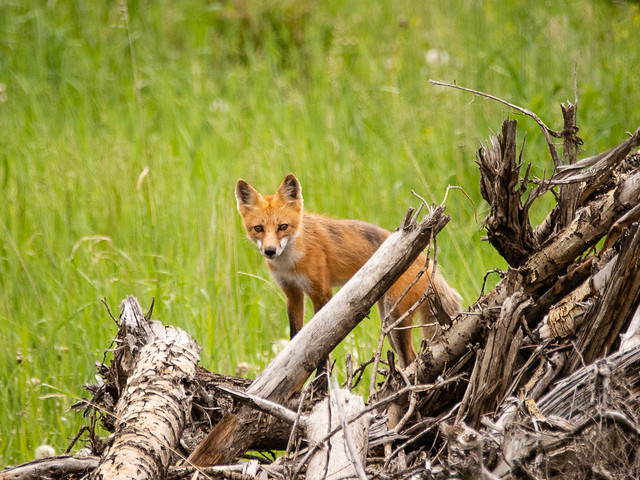
They told us to watch out for the Great Gray Owls but sadly we didn't see any. We did see a couple of red foxes though, and enjoyed watching and photographing them.

Red fox

Quite the tails on them!

Red fox

And the long legs remind me of a deer.

Red fox

They were definitely aware of us, but apart from keeping their distance didn't seem too concerned.

Red fox

They were hunting (for mice?) in the long grass but despite a few leaps they didn't appear to catch anything.

More photos on Flickr.

Sunday, June 24, 2018

One-eyed Sphinx Moth

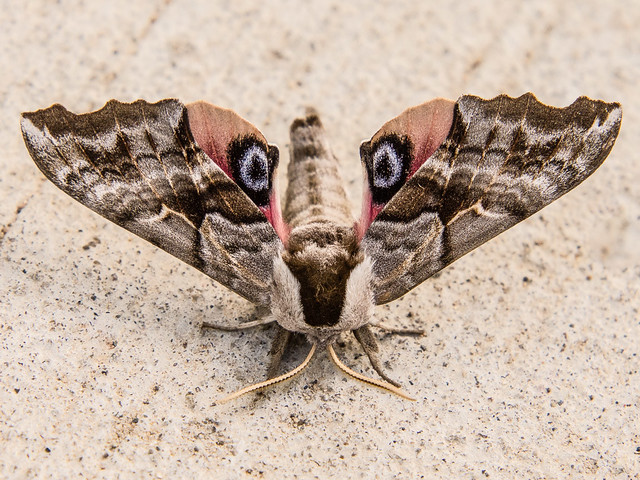
I spotted this moth on the ground near Drayton Valley south-west of Edmonton. I didn't know what it was but I posted it on iNaturalist and someone identified it for me :-)

One-eyed Sphinx moth

When it settled down it would half close its wings and the pink parts with the eye spots would be hidden. But a little nudging would get it to open its wings like this. They are apparently quite wide spread - from Alaska to Baja, but this was the first one I recall seeing. This is one of the moths where the adult does not feed, so perhaps they are not around long. (mate, lay eggs, and die)

Tuesday, June 19, 2018

Sunday, June 17, 2018

Crab Spiders

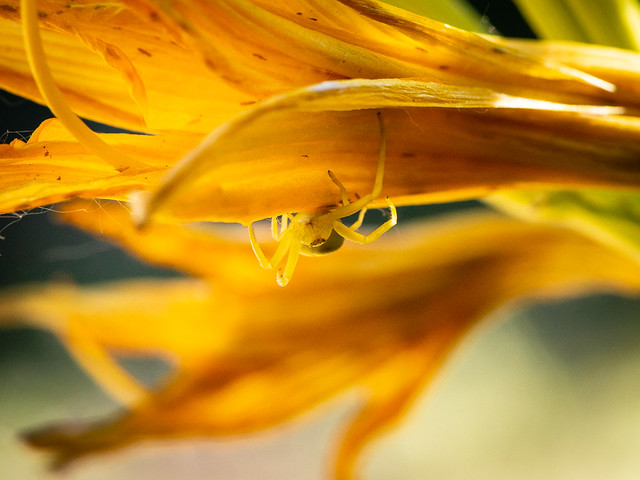
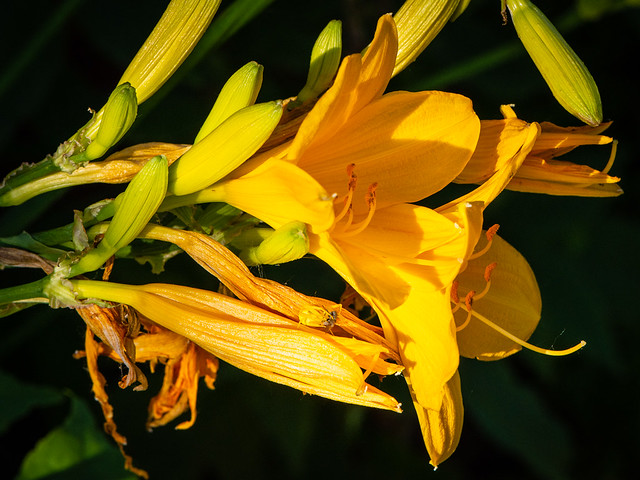
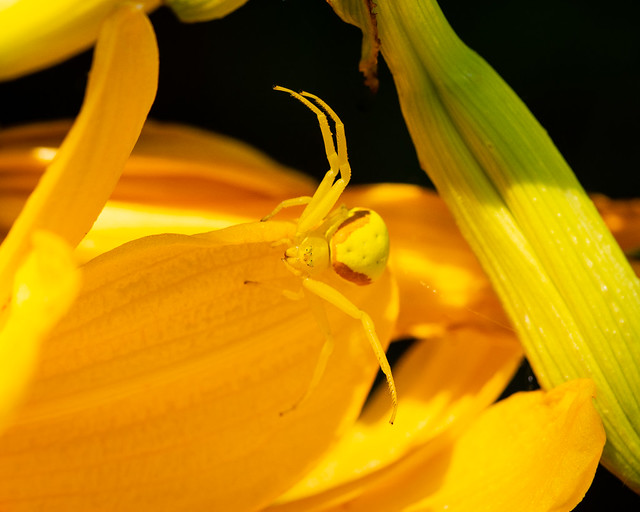
I'm always on the look out for crab spiders. I often spot them on daylilies, although they are on other flowers as well. I hadn't had much success until I spotted this one at Innovation Place on my way home from work.

Crab spider

Crab spider

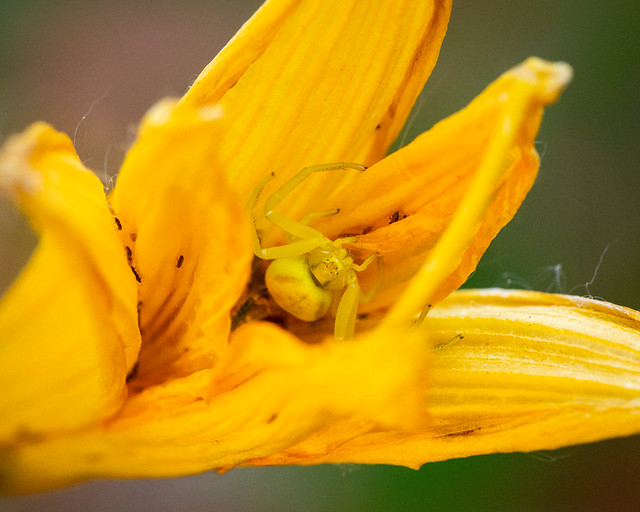
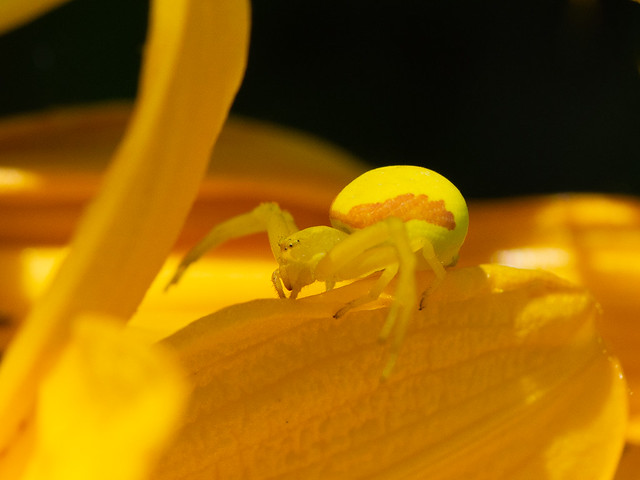
There are some daylilies in the back alley just near our house where I often find crab spiders. I spotted one the other day that was white so I assume it had just arrived, since they change color to match what they're on. I went back on the weekend with my macro lens. I first spotted this medium sized one on the underside of a flower.

Crab spider

It moved around to the inside of the flower and I got a better shot.

Crab spider

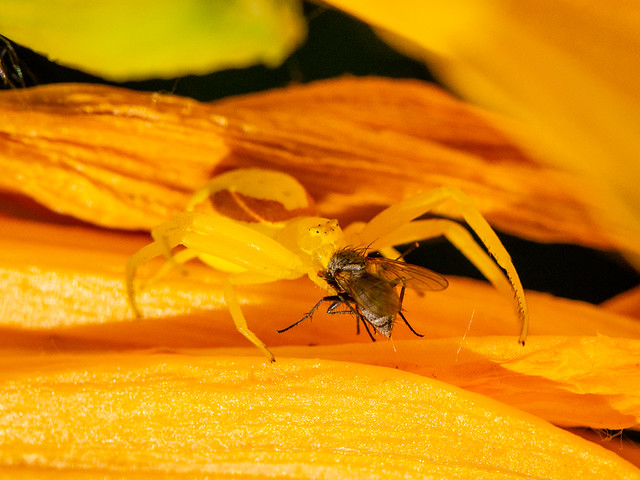
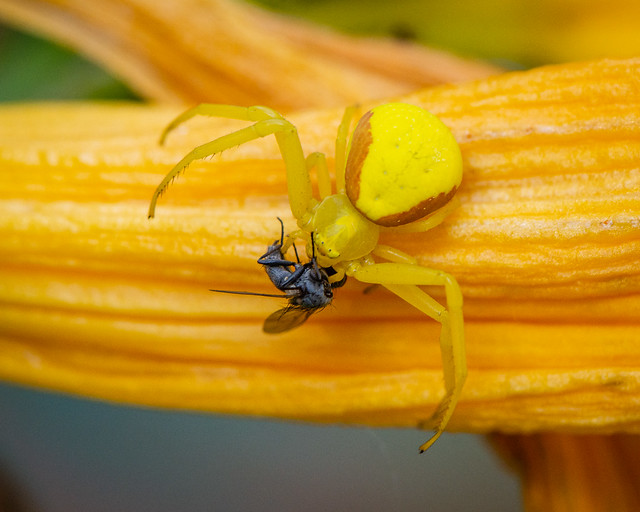
Then I found this larger one (.5cm / .25in body) busy eating a fly. (They inject digestive fluids and then suck out the result.) This one had slightly different markings, but I think they are the same kind (Goldenrod crab spiders)

Crab spider

You can see the eight eyes in this one. Sometimes it looks like they only have six, but there are two that point to the sides.

Crab spider

If you look closely in some of these shots you can see the fly's head is detached. (It's behind in this photo.) I'm not sure if the spider did that deliberately?

Crab spider

I was trying to keep a small aperture (f11 - 16) for depth of focus, but that meant quite slow shutter speeds, even with high ISO. So in the afternoon I went back with my monopod. A tripod would have been even better but it's awkward getting the right angle and following them as they move around. By this point it had finished its meal (I assume it's the same spider since it was in the same flower). I'm guessing they hold their legs like that ready to grab prey. Strangely, the "hairs" on the legs point the wrong direction for holding onto something. The legs end in a single curved "claw".

Crab spider

Crab spider

I ended up taking almost 400 photos. That probably seems excessive but out of a batch of 10 or 20 from the same angle, there might only be one or two decently sharp so you need to take lots. (The benefits of digital!)

See all 20 photos