 |
| Cusco to Arequipa |
Sunday, February 28, 2010
Peru from Cusco to Arequipa
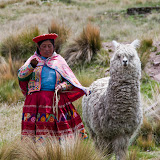
I found I had another bunch of photos I hadn't posted yet starting in Cusco, traveling via train to Puno on Lake Titicaca, and then by bus to Arequipa.

Saturday, February 27, 2010
Sunrise on the Way to Work
I always enjoy in the spring and fall when the sunrise coincides with my walk to work. I've said it before, but I continue to be so grateful I get to walk (or bike) to work and see views like this instead of being trapped in a metal box in traffic.


It's getting warmer and the ducks and geese are returning. Spring is coming, even to Saskatchewan.


It's getting warmer and the ducks and geese are returning. Spring is coming, even to Saskatchewan.
Saturday, February 20, 2010
Machu Picchu
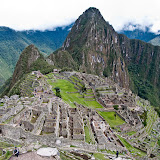
Machu Picchu is pretty awesome, my photos don't do it justice. When we arrived after five days on the Inca Trail all Shelley and I wanted to do was get her father back down to civilization. We passed through the ruins but didn't really pay much attention to them. And after being on the trail the hordes of people were a bit of a shock. (Thank goodness this was the low season!)
Thankfully we had allowed for a second visit the next morning and that's when I took these photos. (And some by Shelley.) One of the advantages of the large size of Machu Picchu is that it is possible to get away from the crowds if you wander off the beaten path. Unfortunately, I had picked up some stomach problems and wasn't feeling my best. I spent much of my time sitting in one spot while the others hiked around. That wasn't all bad though, it was nice to just sit and absorb the feel of the place. It's a spectacular location with a fantastic view. Hard to imagine all the work that must have gone into building it. And hard to imagine what it would have been like to live here. (Preferably as one of the Inca nobility and not one of the peon workers!)
This batch of photos pretty much completes our recent trip.
Thankfully we had allowed for a second visit the next morning and that's when I took these photos. (And some by Shelley.) One of the advantages of the large size of Machu Picchu is that it is possible to get away from the crowds if you wander off the beaten path. Unfortunately, I had picked up some stomach problems and wasn't feeling my best. I spent much of my time sitting in one spot while the others hiked around. That wasn't all bad though, it was nice to just sit and absorb the feel of the place. It's a spectacular location with a fantastic view. Hard to imagine all the work that must have gone into building it. And hard to imagine what it would have been like to live here. (Preferably as one of the Inca nobility and not one of the peon workers!)
 |
| Machu Picchu |
This batch of photos pretty much completes our recent trip.
Thursday, February 18, 2010
Kingfisher

Now that I'm trying to get most of my books either on my Kindle or from the library, about the only books I'm allowing myself to buy are coffee table type books with photographs. This one was an impulse buy when I spotted it at McNallys. (Finding books like this is one of the reasons I hope bookstores like McNallys stay in business, and why I continue to buy from them.)
Apart from the photographs, I was attracted by the text which told the story around the photos, including some of the background on how they were taken. Obviously, this won't be of interest to everyone, but it definitely was to me.
I have to admire someone who has devoted a considerable portion of their life to taking photographs of one kind of bird. And despite the spectacular photographs, he still talks about how he needs to get better photographs. I guess you'd have to be a bit of a perfectionist to get to this point. I can only shake my head since his photographs (and the lengths he goes to get them) are way beyond me.
We have Belted Kingfishers in Saskatchewan (and much of North America) but they're not quite as colorful as the ones in the book. I've only caught brief glimpses of them. I'll have to keep a closer eye out for them.
If you get a chance, I'd recommend taking a look at the book. I see he has a new one coming out soon - Halcyon River Diaries. It's definitely on my wish list.
You can see some of his photos (including some of the kingfisher ones) on his website: charliehamiltonjames.com
Wednesday, February 17, 2010
Wallpaper Photo
I love the ocean. It's always hard to capture the waves in a photograph. This one is from Australia. Two sizes this time, for 4x3 monitors as well as wide screen.


Tuesday, February 16, 2010

Monday, February 15, 2010
Books, Frogs, and Turtles
I recently read Following the Water by David Carroll and Amphibian by Carla Gunn.
 Amphibian is a novel about nine year old Phin Walsh. Phin is a geeky kid, too smart for his own good, frustrated with school and finding his teacher's mistakes. He watches the Green Channel on TV and is upset about the state of the environment. His mother sends him to a shrink and they end up banning him from watching the Green Channel. Of course, this does nothing to alleviate his anxiety. The problem is, the environment is in trouble, and this makes it hard to reassure him that everything is ok. I can't help but agree with Phin that he's the one that's in touch with reality and it's the rest of the world that has its head in the sand.
That probably sounds way too serious, but the book also has a lighter side and had me chuckling numerous times, for example, when Phin and his best friend "jail break" the school's pet frog.
 Following the Water is non-fiction, the latest in his series of books about turtles and their habitat, including The Year of the Turtle, Swamp Walkers Journal, and Self Portrait With Turtles. I loved his other books and I loved this one. Of course, that's not too surprising considering I'm a turtle fan myself. You can get a glimpse of the author in a short piece of an interview on You Tube.
This book continues his fascinating real life observations and natural history, and his wonderful artwork. But I can't help but get a bit of a melancholy feeling from the book. He's concerned about the fate of the land where he has roamed for so many years. At the end of the book he learns that the land has been "protected" but this is not the good news you might think:

That probably sounds way too serious, but the book also has a lighter side and had me chuckling numerous times, for example, when Phin and his best friend "jail break" the school's pet frog.

This book continues his fascinating real life observations and natural history, and his wonderful artwork. But I can't help but get a bit of a melancholy feeling from the book. He's concerned about the fate of the land where he has roamed for so many years. At the end of the book he learns that the land has been "protected" but this is not the good news you might think:
This landscape, an extensive mosaic of contiguous wetland, riparian, and upland elements, all embracing a lingering wildness and extraordinary biodiversity, possesses an ecological integrity that, in the face of the global loss and marginalization of habitats, becomes rarer by the hour. It seemed for a time that it could go differently here, that this place could be exempted even from the intrusion of "passive" recreation, which takes it own toll on wildness and brings pressures to bear on the functioning of a natural ecosystem. But I did see all the familiar signs pointing to this outcome. And now I see that this has become a marked place.All too often these days I feel the same anxiety as nine-year old Phin Walsh.
It is all but universally believed that if development rights are bought up and motorized vehicles excluded, if human presence is limited to foot traffic, dogs on leashes, mountain bikes, kayaks, and the like, a parcel of land is saved and its wildlife habitat protected. But in nearly every case, as will be true here, funding sources and the terms of easements mandate a level of access and recreational use that lays the foundation not for true habitat protection but for a playground for people, a human theme park.
A constant refrain of my advocacy for moving beyond stewardship and conservation to preservation is that I do support setting aside places where people can go, from relatively natural areas to city parks. One frequently hears that there are not enough places for people to go. But where do we not go? We are too many and we tread too heavily. (Perhaps the planet is to blame for being too small.) What tiny percentage of Earth is irrevocably dedicated to providing wildlife sanctuary, to preserving the biodiversity on which, as more people are coming to realize, the health of the planet and, ultimately, of the human condition utterly depends? We cannot seem to allow room for ecosystems to play out their destinies free from human intervention. A room of its own is biodiversity's only requirement.
Sunday, February 14, 2010
More Peru Photos
I'm still working through some of the photographs we didn't get a chance to go through during the trip. These ones are from around Cusco, mostly from a couple of day trips we did towards the Sacred Valley.
 |
| 2009 Peru Sacred Valley |
Thursday, February 11, 2010
Wallpaper Photo
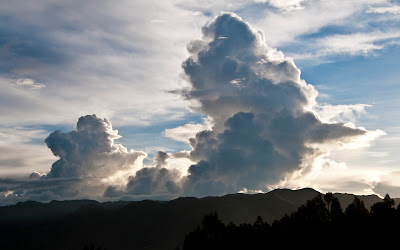
Another one from Peru, not quite so abstract.
To download, click on the picture to view the full size version and then right click and choose Save
Note: These aren't actually 1920 x 1200 like I claimed last time. Picasa seems to have a maximum of 1600 x 1000.

To download, click on the picture to view the full size version and then right click and choose Save
Note: These aren't actually 1920 x 1200 like I claimed last time. Picasa seems to have a maximum of 1600 x 1000.
Business School Damages "Moral Fiber"
"A recent study by the Aspen Institute appears to confirm that business school is, in fact, damaging to the moral fiber of students. Upon entering business school, the researchers found, students cherished noble ambitions to serve customers, create quality products, and otherwise contribute to the progress of humankind. By the time of their graduation, however, students were convinced that the only thing that matters is increasing shareholder value."
- Matthew Stewart in The Management Myth: Why the Experts Keep Getting it Wrong
via Bruce Eckel
That's supposed to be surprising?
- Matthew Stewart in The Management Myth: Why the Experts Keep Getting it Wrong
via Bruce Eckel
That's supposed to be surprising?
Tuesday, February 09, 2010
Story of Stuff
A video on the the underside of our production and consumption patterns.
Nothing new if you're into the environment and sustainability. And if you're not you'll probably just disagree with everything in it. I can only hope it'll sway a few people that might be on the fence.
More on storyofstuff.com
Nothing new if you're into the environment and sustainability. And if you're not you'll probably just disagree with everything in it. I can only hope it'll sway a few people that might be on the fence.
More on storyofstuff.com
Sunday, February 07, 2010
Wallpaper Photo
I was going through more of my Peru photos and came across this one. I like taking photos of "patterns" and I think this one makes a good computer wallpaper. It's an old tiled roof, overgrown with lichen.


1920 x 1200, 1.2 mb
The Joy of Fresh Bread

Back when we quit our jobs and started working full time (~ 1985) for my company (Axon) we used to work out of my apartment and I would regularly bake bread for all of us. Nothing like working at the computer with the smell of fresh bread baking!
It's been a long time since I baked bread. Shelley and I buy most of our bread from Earth Bound Bakery (usually walnut current and 100% whole wheat red fife). We used to buy from them when they were at the farmers market. It was handy for us when they opened their store next door to Dad's Organic Market where we also shop. I like their bread and I like supporting them.
I was also buying bagels to use for my lunches. When we got back from Peru I decided to start baking some of my own bread instead of buying bagels. I'm not much of a cook, in fact I almost never cook anything more complicated that boiling pasta. But baking bread is kinda fun and I like the results.
There are a ton of bread recipes on the internet. I wasn't looking for anything fancy, the simpler the better. I started with the recipe for One-Load Whole Bread. But you can simplify even this simple recipe.
- The vegetable oil, dry milk, and wheat bran are optional. Throw them in if you have them, otherwise, don't worry about it.
- I use all whole wheat flour (organic from Dad's). I'm sure using some white flour makes a difference, but I'm just as happy without it.
- You can skip turning the dough out onto a floured board and just knead it in the original bowl.
- You can skip transferring the dough into a greased bowl and just let it rise in the original bowl.
Simplified like this, it only takes me about 15 minutes to make a loaf of bread. Cleanup is easy because you just have one dirty bowl :-) Of course, you have to be around for 2 or 3 hours but that's not a problem on the days I'm working at home.
Note: I'm no expert, I'm just reporting what works for me i.e. that produces results that I'm happy to eat. Your mileage may differ.
Saturday, February 06, 2010
Photos from Santa Catalina Monastery, Arequipa, Peru
I'm not usually too excited about historical buildings and cultural sites. But I really enjoyed Monasterio de Santa Catalina in Arequipa. It's a beautiful complex of buildings, plazas, and passageways - virtually a village in itself. I can't help but wonder what it was like for the nuns who lived here back then. Or for the nuns who live here now, for that matter.
The lines and colors and shadows and light were wonderful. I hope you enjoy my attempts to capture them.
The lines and colors and shadows and light were wonderful. I hope you enjoy my attempts to capture them.
 |
| Santa Catalina Monastery |
Thursday, February 04, 2010
Margaret Atwood: act now to save our birds
Margaret Atwood: act now to save our birds | Books | The Guardian: "One more statistic: according to Al Gore, 97% of charitable giving goes to human causes. Of the remaining 3%, half goes to pets. That leaves 1.5% devoted to the rest of nature – including the crisis-ridden oceans, the eroding, drying, or flooding land and the shrinking biosphere on which our lives depend. How crazy are we? We're a lot like those old cartoons in which the foolish character is sawing off the same tree branch he's sitting on, while beneath him is a sheer drop to nowhere. It makes you want to stick your head in the sand, like – apparently – almost everyone else, and just eat a lot, watch old movies from the time before things got so scary, and go shopping. Or, as James Lovelock keeps warning us: enjoy it while you can, whatever 'it' is, because it's not going to last much longer."
Sunday, January 31, 2010
Investing in an Empire of Illusion - GetRealList
Investing in an Empire of Illusion - GetRealList:
"Nearly a third of the population is almost or fully illiterate. A third of high school graduates, and 42% of college graduates, never read another book for the rest of their lives. Eighty percent of U.S. families didn’t buy or read one book in 2007. We did, however, watch 28 hours a week of television. Each."
- Empire of Illusion: The End of Literacy and the Triumph of Spectacle by Chris Hedges
To a committed reader, those are horrifying numbers.
"Nearly a third of the population is almost or fully illiterate. A third of high school graduates, and 42% of college graduates, never read another book for the rest of their lives. Eighty percent of U.S. families didn’t buy or read one book in 2007. We did, however, watch 28 hours a week of television. Each."
- Empire of Illusion: The End of Literacy and the Triumph of Spectacle by Chris Hedges
To a committed reader, those are horrifying numbers.
Bruce Sterling: State of the World 2010
The WELL: Bruce Sterling: State of the World 2010
A sample:
A sample:
On the subject of geo-engineering, I think it's a crock. We'll never
get there.  They're all techie fantasies, far-out sci-fi notions, Star
Wars physics-style.  The cheapest and most effective method of
geo-engineering is to cut the world's population in half.

Just a tremendous massacre. That's the genuinely effective
geo-engineering: it's fast, it commonly works, it's been proven
effective for centuries by lebensraum exponents everywhere,  and if you
chose the right tactics and weaponry it might even look like a big
accident.

You don't have to put on a fascist armband and start ranting for the
public's blood; an effort like that could be quite subtle and covert,
the very opposite of showboat geo-engineering.  "Mysterious deadly flu
in the Congo?  We'd better keep all our health workers right here,
they're badly needed in New York!"

Nobody's gonna sit around watching Copenhagen delegates debating giant
phony orbital solar mirrors if the windmills in Copenhagen harbor are
blowing over  When and if it becomes obvious that we truly need
massive, ultra-costly geo-engineering interventions, that we have no
other choice, then somebody -- likely some traumatized veterans of
weather havoc who are full of Al Qaeda self-righteousness -- they're
gonna cut emissions in half by cutting people in half.  Mankind
wouldn't lack for means, motive, opportunity and eager volunteers.

Genocide has much more proven shelf-appeal than any of these hokum
Rube Goldberg geo-schemes.  It's by no means easy to kill off half of
everybody, but we've already invented a wide variety of ingenious ways
to attempt that, and almost all of 'em are much simpler, more rugged
and more plausible than putting the North Pole under a tinfoil hat.

You don't see these Gothic issues raised in public discourse much, but
you go hang out with some Beltway thinktank asymmetric-warfare types,
and man, they talk this kinda stuff all the time.  Kind of a Herman
Kahn think-the-unthinkable industry.   "Should the Center for Disease
Control be scanning flu-strains for signs of designed interventions?"
"Gee uh, maybe not, could cause panic... but if we had some
off-the-books funding for that, that capacity could be pretty handy."
Saturday, January 30, 2010
Friday, January 29, 2010
Last Day in Bonaire
by Shelley
Since we couldn't dive our last day in Bonaire (due to flying the next day) we rented a car and went for a drive. Our main goal was to kayak among the mangroves. We stopped there first and booked a tour for the afternoon (you can't go on your own which is understandable as it would be very hard to find your way through the maze of the mangroves).
Our next stop was the butterfly farm because Andrew doesn't have enough butterfly photos! :-) Seriously though, it was pretty good in terms of the information the woman working there shared with us but they didn't have a whole lot of butterflies (certainly not like the one in Cayman). Nevertheless it was very relaxing just to sit and watch them and the birds especially since we were the only ones there. The koi fish were fun too. Apparently they like to be touched; if you put your hand in the water they come and suck on it (they don't have teeth). Andrew got some good photos of the iguanas outside as well.
We had lunch at Lac Bay beside the windsurfing place. It was very busy here as there is a fairly nice beach right beside the restaurant and bar. Lots of windsurfers out; most people spent more time in the water than actually on their boards but one guy was doing some pretty fancy tricks which was fun to watch.
We then drove the coastal road around the southern end of the island. It's quite flat and barren with plenty of cactus. We learned about the salt mine and its history. There are rows of slave huts along the road that were built in the 1850's. They're made of cement and are so small you'd have to get down on hands and knees to crawl inside. There are also four large obelisks spread out along the shoreline, each a different color. Ships would come in and the quality of salt they were picking up would dictate which color they stopped at.
The salt flats water was very colorful ranging from a bright pink to purple color depending how much salt was in it. Most of the salt now goes to Europe for salting icy roads but some is also used in cosmetics and an even smaller portion as table/cooking salt.
We then made our way back to the mangroves. Our guide was quite a knowledgeable young man who provided lots of interesting information about the area, how the mangroves benefit the environment, and the negative effects in areas where mangroves have been removed.
There were two other couples on the tour with us and we made our way single file through some of the channels that were so narrow you could barely paddle through them. We paddled across the windy inlet and snorkeled for a short time. There were a lot of upsidedown jellyfish and we saw a few other fish but with seven people in shallow water with a silty bottom it didn't take long to not be able to see much of anything!
All in all it was a good day. Next time we'll have to explore the northern part of the island!
Subscribe to:
Posts (Atom)